


Schließen


Implementation of CAV Certification
On November 15th, 2023 the first annual conference of the Motor Vehicle Certification Alliance (Certification Alliance for Vehicle, CAV) took place in Xi’an. The main topics of the conference are the future direction of the alliance as well as the implementation of the first set of harmonized implementation rules for product certification of automotive components.
For products that fall under CQC certification or CCAP certification, CAV certificates can also be obtained instead of the CQC and CCAP authorities’ own certificates. The certification process is identical to the CQC/CCAP certification with the difference that in the end the documents are submitted to CAV by the relevant authority (CQC/CCAP) and the CAV will issue the CAV certificate.
The following CAV implementation rules have been implemented since the conference:
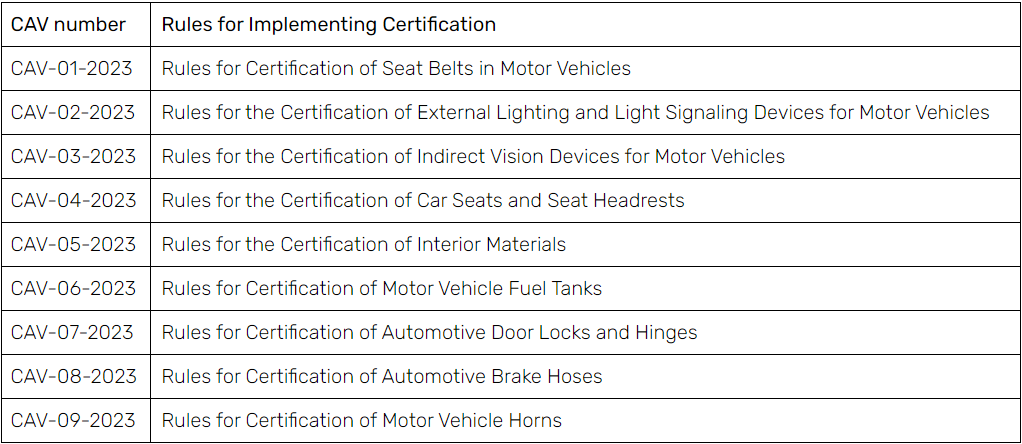
The advantage of the new CAV certification is the wider acceptance of the test and certification results through other certification bodies. If CAV certificates are submitted as part of the entire vehicle homologation, the vehicle manufacturer generally no longer must submit any additional documents such as test reports.
For more information on how CCC certification, the CCC Self-Declaration and voluntary CCAP or CQC certification may affect your company, or for more information about CCC certification in general, please visit our News Section where you will find current updates twice a week.
Please do not hesitate to contact us for further details and consultation. You can contact us via email, Chat, or call us (UK: +44 2071931135, Europe: +49 69 2713769150, US: +1 773 654-2673).
You can also check out our free CCC-Brochure, which can be downloaded as a PDF file. The brochure also contains information on the CCC Self-Declaration and the voluntary CQC- and CCAP-Certification).
New Wi-Fi Standard for SRRC Certification in China
With the Wi-Fi Alliance officially announcing the launch of the Wi-Fi CERTIFIED 7™ certification program this year, more and more new generation Wi-Fi 7 (802.11be) devices will appear on the market. Wireless, radio and telecommunications products in China generally require SRRC Certification in order to be approved for import and use on the Chinese market.
Announcement No. 129 Notice on Strengthening and Standardizing Radio Management in the 2400 MHz, 5100 MHz and 5800 MHz Frequency Bands of the Ministry of Industry and Information Technology (MIIT) was issued in China with the aim of promoting the high-quality development of the WLAN industry and the standardization of products based on the IEEE 802.11be standard. In November 2023, the State Radio Monitoring Center issued a notice on “Technical Requirements and Test Methods for Model Approval of WLAN Devices Using the IEEE 802.11be Technical Standard”.
The State Radio Monitoring Center issued a notice on “Technical Requirements and Test Methods for Model Approval of Wireless LAN Equipment Using the IEEE 802.11be Technical Standard” on November 28th, 2023.
The Notice requires that wireless LAN equipment using IEEE 802.11be technology produced or imported for sale and use in China should comply with the relevant requirements stipulated in Document No. 129 and following three test items:
- Multi-link Operation (MLO) Characteristics
- Multi-resource unit (MRU) Spectrum Template
- Vector Magnitude Error (EVM)
The Notice came into effect on the date of issuance.
For more information about how SRRC Certification might impact your business, or information about SRRC or NAL certification in general, please visit our website.
Please do not hesitate to contact us for further details and advice. You can write to us by email or chat, or call us at +49692713769150. You can also view our free SRRC/NAL brochure, which you can download as a PDF file.
New Coding Format and SRRC Certificate Format in China
According to the “Radio Transmitting Equipment Management Regulations” (MIIT Announcement No. 57 in 2022), the Ministry of Industry and Information Technology (MIIT) of China revised the documents “Radio Transmitting Equipment SRRC Certificate Format” and “Radio Transmitting Equipment SRRC Certificate Coding Rules”. Telecommunications and radio devices generally require SRRC certification in order to be approved for import and sale in China.

These two documents will be effective from December 1, 2023. The original “Notice of the Ministry of Information Industry on Strengthening the Management of Radio Transmitting Equipment” (MIIT Announcement No. 363) and the “Notice of the General Office of the Ministry of Industry and Information Technology on Changing the SRRC Code Format of Radio Transmitting Equipment” (MIIT Announcement No. 9) will be abolished.
New SRRC certificate format:
The new SRRC certificate will be in the following format:
https://www.china-certification.com/wp-content/uploads/SRRC-Certificate-new-format.pdf
The new version of the SRRC certificate consists of a main page and attachments: In the new version of the certificate, main information such as the certified product unit and equipment name is reflected on the first page, and specific information such as technical parameters is reflected on the attachment.
In addition, the new certificate will also have the information of the OEM company through Attachment 2. It contains information such as the device’s manufacturing company information, company attributes, and address.
The new version of SRRC certificate also promotes the development of the conversion from paper certificates to electronic certificates.
New SRRC certificate coding system:
The old version of SRRC code is obtained after the SRRC certificate is issued, while the new version of the code can be obtained in advance when the applicant submits the SRRC application.
The new SRRC code structure is “CMIIT ID: AABCCDDDEEEE”, where the CMIIT ID remains unchanged. The new SRRC code has a total of 12 digits:
– AA represents the year code (2 digits). E.g., 24 for 2024.
– B represents the equipment code (1 capital letter)
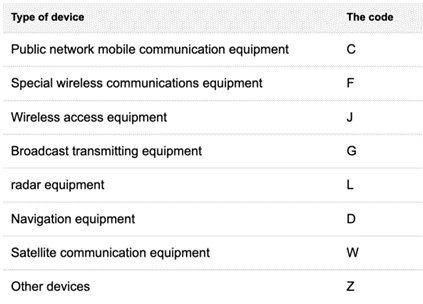
– CC represents the territorial code. (2 digits)
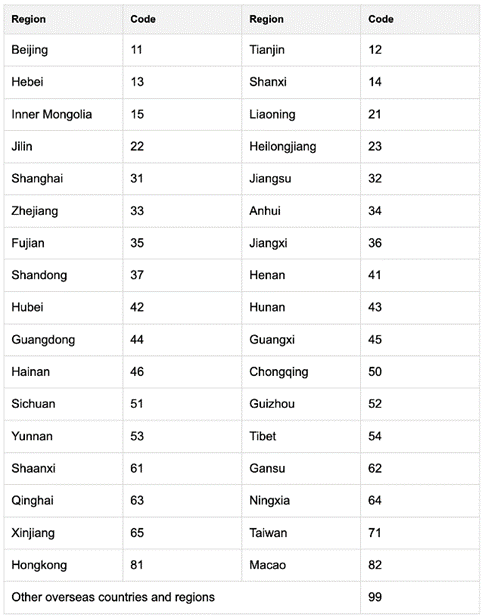
– DDD represents the enterprise code (3 digits, including at least 1 digit)
– EEEE is an autonomous code (4 digits, the first one can be capital letter or number, the last three must be digits).
The SRRC certificate applicants can compile their own codes according to the rules, but they need to pay attention to the following matters:
- The independently compiled SRRC code should comply with radio management laws and regulations and must not violate public order or cause any ambiguity.
- The autonomous part of the code is independently defined and generated by the applicant according to the rules. Applicants should strengthen independent code management to avoid submitting duplicate or invalid codes when applying. After the SRRC application is accepted, the applicant is not allowed to change the SRRC code on its own.
- The year code is the year when the application was submitted. For applications where the application and certification time are not in the same year, the year code should still be filled in according to the time when the application was submitted.
- For applicants who give up on compiling their own SRRC codes, the system will randomly generate the SRRC code.
- The SRRC code can be obtained when submitting the application, but the actual effective date is still after the SRRC certificate is issued. Only after obtaining the SRRC certificate, the enterprises can produce and sell related radio transmitting equipment.
After the new version of the SRRC certificate and coding system are officially implemented, the previous version of SRRC certificate and its original code (CMIIT ID number) are still valid and do not need to be adjusted as long as the certificate is still valid. If the SRRC certificate needs to be extended or changed, the applicant can submit an application in accordance with the relevant regulations of radio management. After obtaining the new version of the SRRC certificate, the CMIIT ID number will remain unchanged. For newly applied equipment, a new version of SRRC certificate and code will be obtained according to the new regulations.
For more information about how SRRC certification or NAL certification might impact your business, or information about SRRC or NAL certification in general, please visit our news section.
Please do not hesitate to contact us for further details and advice. You can write to us by email or chat, or call us at +49692713769150. You can also view our free SRRC/NAL brochure, which you can download as a PDF file.
TC11-2023-02 Revision of GB Standards for Motor Vehicles and Parts in China
On November 9, 2023, the CNCA Automotive and Parts Technical Expert Group (TC11) published a technical resolution on the “Modification and Mandatory Certification Standards for Automobiles and Auto Parts Products” (TC11-2023-02). Affected GB standards are e.g. GB 15084-2022 (Motor vehicles-Device for indirect vision-Requirement of performance and installation), GB/T 4501-2023 (Laboratory test methods for truck and bus tires capabilities).
The majority of automotive parts require CCC certification in order to be approved for import and sale in China.

The resolution contains the following provisions of the product standards to be revised for the automotive industry (see below, Table 1):
1). New certifications will be implemented according to the new standard requirements (including the requirements of the implementation date).
2). If there is no new test item for a revised standard, an already certified product does not need to be tested separately for renewal, the certificate can be updated directly according to the new standard. If there is a new test item, a differential test must be performed. The renewal of a certificate can be issued after passing the exam.
For certified products that were delivered, sold on the market and/or discontinued before the introduction of the new version of the standard, it is not necessary to have the certificate retested and reissued in accordance with the new version of the standard.
3). CCC certificates of affected products that have already been issued may continue to be used for 1 year from the date of publication of this resolution.
If a clear date has been set for the standard as the transition period for the implementation of the modification and renewal of the certificate, then it shall apply to the holder, even if it is longer than 1 year after the publication of this resolution.
If the specified implementation period is less than 1 year after the publication of this resolution, the holder of the certificate may still complete the modification and renewal of the certificate within 1 year from the publication of the resolution in accordance with the relevant standard.
Companies can carry out the renewal of certificates in advance according to their own possibilities.
4). After the expiry of the established deadlines for updating the standards, the requirements of the “Regulation on the Administration of Mandatory Product Certification” of the certification authority shall apply to certificates. The comments on the new CCC certification standards are presented in Table 2 (see below).
For more information on how CCC certification, the CCC Self-Declaration and voluntary CCAP or CQC certification may affect your company, or for more information about CCC certification in general, please visit our News Section where you will find current updates twice a week.
Please do not hesitate to contact us for further details and consultation. You can contact us via email, Chat, or call us (UK: +44 2071931135, Europe: +49 69 2713769150, US: +1 773 654-2673).
You can also check out our free CCC-Brochure, which can be downloaded as a PDF file. The brochure also contains information on the CCC Self-Declaration and the voluntary CQC- and CCAP-Certification).
Table 1: Overview of the provisions of the product standards to be revised
| No. | Standard number | Standard name | Previous version of the standard | Release date | Date of implementation | The new version of the standard implements the transition period requirements | Difference test is required | Certification implementation requirements |
| 1 | GB 15741-1995 | Automobile and trailer number plate plates (racks) and their location "Amendment Order No. 1". | 2023-05-23 00:00:00 | 2026-01-01 00:00:00 | For new models applying for type approval, it will be implemented from the 31st month from the date of issuance of this amendment, and a transition period will be given to models that have been type approved until they are discontinued. | For new applications, it will be implemented from January 1, 2026. For certified models, a transition period until discontinuation is given. | ||
| 2 | GB 13094-2017 | Structural Safety Requirements for Passenger Cars "No. 1 Amendment Order". | 2023-05-23 00:00:00 | 2023-07-01 00:00:00 | For new models applying for type approval, it will be implemented from the date of implementation. For models that have received type approval, a transition period is granted until production is discontinued. | For the new application model, it will be implemented from the date of issuance of the technical resolution. For certified models, a transition period until discontinuation is given. | ||
| 3 | GB 15084-2022 | Performance and installation requirements for indirect field devices for motor vehicles | GB 15084-2013 | 2022-12-29 00:00:00 | 2023-07-01 00:00:00 | For the new application for type approval of the vehicle, from the date of implementation of this document. For models that have obtained type approval, they will be implemented from the 13th month from the date of implementation of this document. | The traditional rearview mirror does not need to make up the difference test, and the version can be changed directly; The Automotive Camera-Monitor System (CIS) will be implemented after the announcement of the adjustment of the Supervisory Committee's catalog | For the new application model, it will be implemented from the date of issuance of the technical resolution. For certified models, it will be implemented from the 13th month from the date of issuance of the technical resolution. |
| 4 | GB 14023-2022 | Vehicle, Ship and Internal Combustion Engine Radio Disturbance Characteristics Limits and measurement methods used to protect receivers outside the vehicle | GB 14023-2011 | 2022-10-12 00:00:00 | 2023-11-01 00:00:00 | The test methods and limits are the same as those of GB34660-2017, and the new application models need to be tested in accordance with GB34660-2017, and are no longer required to be tested in accordance with the GB14023Certified models that have completed testing in accordance with GB14023-2011 are not required to comply with GB34660-2017. GB14023-2022. | For the new application model, it will be implemented from the date of issuance of the technical resolution. For certified models, a transition period until discontinuation is given. | |
| 5 | GB/T 18386.2-2022 | Energy Consumption and Range Test Methods for Electric Vehicles Part 2: Heavy Commercial Vehicles | GB/T 18386-2017 | 2022-10-14 00:00:00 | 2023-05-01 00:00:00 | If the working conditions change, the test will be re-conducted according to the standard | For the new application model, it will be implemented from the date of issuance of the technical resolution. For certified models, it will be implemented from the 13th month from the date of issuance of the technical resolution. | |
| 6 | GB/T 17258-2022 | Compressed natural gas cylinders for automobiles | GB/T 17258-2011 | 2022-10-14 00:00:00 | 2023-05-01 00:00:00 | Only the inspection mark and the manufacturing license number of the safety supervision department are checked | For the new application model, it will be implemented from the date of issuance of the technical resolution. For certified models, it will be implemented from the 13th month from the date of issuance of the technical resolution. | |
| 7 | GB/T 27996-2022 | All-terrain cranes | GB/T 27996-2011 | 2022-07-11 00:00:00 | 2023-02-01 00:00:00 | Changed, increased performance requirements;Re-test according to the corresponding clauses of the standard | For the new application model, it will be implemented from the date of issuance of the technical resolution. For certified models, it will be implemented from the 13th month from the date of issuance of the technical resolution. | |
| 8 | GB/T 26408-2020 | Concrete mixer truck | GB/T 26408-2011 | 2020-12-14 00:00:00 | 2021-11-01 00:00:00 | The operating noise test method and the limit value of the concrete mixer truck have not changed, and the version is changed directly | For the new application model, it will be implemented from the date of issuance of the technical resolution. For certified models, it will be implemented from the 13th month from the date of issuance of the technical resolution. | |
| 9 | QC/T 932-2018 | Road transport liquid dangerous cargo tank vehicle emergency shut-off valve | QC/T 932-2012 | 2018-04-30 00:00:00 | 2018-09-01 00:00:00 | If the limit value and test method change, the test shall be re-conducted according to the standard | For the new application model, it will be implemented from the date of issuance of the technical resolution. For certified models, it will be implemented from the 13th month from the date of issuance of the technical resolution. | |
| 10 | GB/T 3730.1-2022 | Terms and definitions for automobiles, trailers and automobiles and trains Part 1: Types | GB/T 3730. 1-2001 | 2022-12-30 00:00:00 | 2023-07-01 00:00:00 | Standard modifications: change terms and definitions, change vehicle type definitions. The new application model is defined in accordance with the new version of the standard, and the vehicle name and model name are filled. | For the new application model, it will be implemented from the date of issuance of the technical resolution. For certified models, a transition period until discontinuation is given |
Tabelle 2: Stellungnahmen der neuen CCC-Zertifizierungsstandards
| No. | Standard number | Standard name | Date of implementation | Recommended implementation requirements |
| 1 | GB/T 4501-2023 | Truck tire performance indoor test method | The applicable standard GB9743 for tires is quoted, and the whole vehicle is not included separately | |
| 2 | GB/T 4502-2023 | Indoor test method for passenger car tire performance | The applicable standard GB9744 for tires is quoted, and the whole vehicle is not included separately | |
| 3 | GB/T 17729-2023 | Air quality requirements and detection methods in long-distance buses | Dedicated school lanes are referenced with standard GB24407 and are not included separately | |
| 4 | GB/T 42612-2023 | Compressed hydrogen plastic liner for automobiles Carbon fiber fully wound gas cylinder | Not included at this time | |
| 5 | GB/T 41796-2022 | Commercial vehicle lane keeping assist system performance requirements and test methods | Not included at this time | |
| 6 | GB/T 41797-2022 | Performance requirements and test methods of driver attention monitoring system | Not included at this time | |
| 7 | GB/T 41798-2022 | Field test methods and requirements for automatic driving function of intelligent networked vehicles | Not included at this time | |
| 8 | GB/T 41871-2022 | Information security technology automotive data processing security requirements | Not included at this time | |
| 9 | GB/T 41578-2022 | Technical requirements and test methods for information security of electric vehicle charging system | Not included at this time | |
| 10 | GB/T 41601-2022 | Safety and ventilation requirements for residential vehicles | Not included at this time | |
| 11 | GB/T 29307-2022 | Reliability test method for drive motor system for electric vehicle | Not included at this time | |
| 12 | GB/T 41651-2022 | Road vehicles tow tractors with drawbar connectors installed in the front lower part and mechanical connections in the central axle hanger workshop Interchangeability | Not included at this time | |
| 13 | GB/T 41656-2022 | The towing vehicle of the road vehicle tail installation drawbar connector and the mechanical connection of the towbar hanging workshop interchangeability | Not included at this time | |
| 14 | GB/T 26778-2023 | Automobile train performance requirements and test methods | Not included | |
| 15 | GB/T 41630-2022 | Performance requirements and test methods of intelligent parking assistance system | Not included | |
| 16 | GB/Z 41599-2022 | Gross vehicle mass monitoring | Not included | |
| 17 | GB/T 40711.1-202 2 | Passenger car out-of-cycle technology/equipment energy-saving effect evaluation method Part 1: Shift reminder device | Not included | |
| 18 | GB/T 41600-2022 | Test method for straight-line driving stability of automobiles | Not included | |
| 19 | GB/T 41590.1-202 2 | Road vehicles K-line-based diagnostic communication Part 4: Physical layer | Not included | |
| 20 | GB/T 41590.2-2022 | Road vehicles K-line-based diagnostic communication Part 2;Data link layer | Not included | |
| 21 | GB/T 41590.3-2022 | Road vehicles K-line-based diagnostic communication Part 3: Application layer | Not included | |
| 22 | GB/T 41590.4-2022 | Road vehicles K-line-based diagnostic communication Part 4: Emission-related system requirements | Not included | |
| 23 | GB/T 41588.1-2022 | Road Vehicle Controller Area Network (CAN) Part 1: Data Link Layer and Physical Signaling | Not included | |
| 24 | GB/T 41588.2-2022 | Road Vehicles Controller Area Network (CAN) Part 2: High-speed media access unit | Not included | |
| 25 | GB/T 41588.3-2022 | Road Vehicle Controller Area Network (CAN) Part 3: Low-speed fault tolerance, media-dependent connection ☐ | Not included | |
| 26 | GB/T 41588.4-2022 | Road Vehicle Controller Area Network (CAN) Part 4: Time-triggered communication | Not included | |
| 27 | GB/T 41663-2022 | Road vehicle Brake lining friction material Scaled bench test method | Not included | |
| 28 | GB/T 24162-2022 | Periodic inspection and evaluation of compressed natural gas metal liner fiber ring wound gas cylinders for automobiles | Not included | |
| 29 | GB/T 23336-2022 | General technical conditions for semi-trailers | Not included | |
| 30 | GB/T 41589-2022 | On-cable control and protection device (IC-CPD) for EV mode 2 charging | Not included | |
| 31 | GB/T 40887.2-2022 | Wheelchair and Occupant Limit Systems for Accessible Coaches Part 2 Forward-facing Wheelchair Occupant Systems | Not included | |
| 32 | GB/T 25977-2022 | Snow plows | Not included | |
| 33 | GB/T 42193.1-2022 | Road Vehicles Communication of emission-related diagnostics between vehicles and external equipment Part 1: General information and definition of use cases | Not included | |
| 34 | GB/T 42193.2-2022 | Road Vehicles Communication of emission-related diagnostics between vehicles and external equipment Part 2: Guidelines for terms, definitions, abbreviations and abbreviations | Not included | |
| 35 | GB/T 42193.3-2022 | Road vehicles Communication of emission-related diagnostics between vehicles and external devices Part 3: Requirements and use of diagnostic connectors and associated circuits | Not included | |
| 36 | GB/T 42193.4-2022 | Road Vehicles Communication of emissions-related diagnostics between vehicles and external equipment Part 4: External test equipment | Not included | |
| 37 | GB/T 42193.7-2022 | Road Vehicles Communication of emissions-related diagnostics between vehicles and external devices Part 7: Datalink security | Not included | |
| 38 | GB/Z 42285-2022 | Road Vehicles A guide to the method of determining ASIL classes for electrical and electronic systems | Not included | |
| 39 | GB/T 12782-2022 | Automobile heating performance requirements and test methods | Not included | |
| 40 | GB/T 42289-2022 | General requirements for the safety of residential electrical systems for residential vehicles | Not included | |
| 41 | GB/T 13043-2022 | Passenger car finalization test procedures | Not included | |
| 42 | GB/T 4352-2022 | Fuel consumption of cargo trucks running | Not included | |
| 43 | GB/T 4353-2022 | Fuel consumption of passenger vehicles running | Not included | |
| 44 | GB/T 34590.1-2022 | Road vehicles Functional safety Part 1: Terminology | Not included | |
| 45 | GB/T 34590.2-2022 | Road vehicles Functional safety Part 2: Functional safety management | Not included | |
| 46 | GB/T 34590.3-2022 | Road Vehicles Functional Safety Part 3: Concept Phase | Not included | |
| 47 | GB/T 34590.4-2022 | Road Vehicles Functional Safety Part 4: Product Development: System Level | Not included | |
| 48 | GB/T 34590.5-2022 | Road vehicles Functional safety Part 5: Product development: the hardware level | Not included | |
| 49 | GB/T 34590.6-2022 | Road vehicles Functional safety Part 6: Product development: the software level | Not included | |
| 50 | GB/T 34590.7-2022 | Road vehicles Functional safety Part 7: production, operation, service and end-of-life | Not included | |
| 51 | GB/T 34590.8-2022 | Road Vehicles Functional Safety Part 8: Support Procedures | Not included | |
| 52 | GB/T 34590.9-2022 | Road Vehicles Functional Safety Part 9: Automotive Safety Integrity Level-Oriented and Safety-Oriented Analysis | Not included | |
| 53 | GB/T 34590.10-2022 | Road Vehicles Functional Safety Part 10: Guide | Not included | |
| 54 | GB/T 34590.11-2022 | Road Vehicles Functional Safety Part 11: Semiconductor Application Guide | Not included | |
| 55 | GB/T 42284.1-2022 | Road vehicles Environmental conditions and tests for electrical and electronic equipment used in electric vehicle drive systems Part 1: General provisions | Not included | |
| 56 | GB/T 42284.3-2022 | Road vehicles Environmental conditions and tests for electrical and electronic equipment used in electric vehicle drive systems – Part 3: Mechanical loads | Not included | |
| 57 | GB/T 42284.4-2022 | Road vehicles Environmental conditions and tests for electrical and electronic equipment used in electric vehicle drive systems Part 4: Climate loads | Not included | |
| 58 | GB/T 42284.5-2022 | Road vehicles Environmental conditions and tests for electrical and electronic equipment used in electric vehicle drive systems Part 5: Chemical loading | Not included | |
| 59 | GB/T 17346-2023 | Automobile pedal position size measurement method | Not included | |
| 60 | GB/T 42704-2023 | Box method for the determination of volatile organic compounds in textile materials for automotive interiors | Not included | |
| 61 | GB/T 42626-2023 | Regular inspection and evaluation of compressed hydrogen fiber fully wound gas cylinders for vehicles | Not included | |
| 62 | GB/T 12541-2023 | Automobile passability test method | Not included | |
| 63 | GB/T 22551-2023 | Caravan Residency Requirements | Not included | |
| 64 | GB/T 22552-2023 | Caravan Terminology | Not included | |
| 65 | GB/T 42474.1-2023 | Safety Monitoring Systems for Motor Transport of Explosive Hazardous Chemicals Part 1: General Technical Requirements | Not included | |
| 66 | GB/T 42474.2-2023 | Safety Monitoring Systems for the Transport of Explosive Hazardous Chemicals in Vehicles Part 2: On-Board Installations | Not included | |
| 67 | GB/T 42474.3-2023 | Safety Control System for Vehicle Transport of Explosive Hazardous Chemicals Part 3: Installation of on-board units | Not included | |
| 68 | GB/T 42474.4-2023 | Blast Hazardous Chemicals Vehicle Transportation Safety Monitoring System Part 4: Monitoring Client | Not included | |
| 69 | GB/T 42474.5-2023 | Safety monitoring system for the transport of explosive hazardous chemicals in vehicles Part 5: Data interface between the on-board unit and the communication center | Not included | |
| 70 | GB/T 42474.6-2023 | Explosive Hazardous Chemicals Vehicle Transportation Safety Monitoring System Part 6: Data interface between the communication center and the monitoring client | Not included | |
| 71 | GB/T 30195-2023 | Test method for impact resistance of passenger car tires Pendulum method | Not included |
468 new GB standards announced for hydraulic cylinders, among other things
On November 27, 2023, the SAMR issued Announcement No. 13 of 2023, in which it announced the release of 468 recommended national GB standards, including “Test Methods for Hydraulic Cylinders”. Among them, there are more than 40 national GB standards for motor vehicles, both revised and newly formulated standards. Products that fall under one or more GB standards usually require CCC certification to be approved for import and distribution in the Chinese market.

In China, product conformity is based on a large number of standards and norms that apply to both locally manufactured and imported products. The GB standards (Guobiao, Chinese for “national standard”) play a central role here. In addition to these, there are other important standards that must be observed.
Here is a list of the announced standards:
| Nr | New Standard | Name of the Standard | Current Standard | Implementation date |
| 105 | GB/T 43248-2023 | Electric and hybrid vehicles Radio Disturbance Characteristics Limits and measurement methods for protecting receivers outside the vehicle below 30MHz | 2024-06-01 00:00:00 | |
| 126 | GB/T 12428-2023 | Passenger car loading mass calculation method | GB/T 12428-2005 | 2024-06-01 00:00:00 |
| 127 | GB/T 12538-2023 | Determination of the position of the center of mass of a road vehicle | GB/T 12538-2003 | 2024-06-01 00:00:00 |
| 128 | GB/T 17867-2023 | The location of the car's hand control parts, indicators and signaling devices | GB/T 17867-1999 | 2024-03-01 00:00:00 |
| 129 | GB/T 19515-2023 | Road vehicle reusability and recyclability rate requirements and calculation methods | GB/T 19515-2015 | 2024-03-01 00:00:00 |
| 130 | GB/T 26777-2023 | Trailer support device | GB/T 26777-2011 | 2024-06-01 00:00:00 |
| 131 | GB/T 26990-2023 | Technical conditions for on-board hydrogen systems for fuel cell electric vehicles | GB/T 26990-2011,GB/T 29126-2012 | 2023-11-27 00:00:00 |
| 132 | GB/T 28957.1-2023 | Road Vehicles Test Dust for Filter Rating Part 1: Silica Test Dust | GB/T 28957.1-2012 | 2024-08-01 00:00:00 |
| 133 | GB/T 31467-2023 | Test method for lithium-ion power battery pack and system electrical performance for electric vehicles | GB/T 31467.1-2015,GB/T 31467.2-2015 | 2023-11-27 00:00:00 |
| 134 | GB/T 43249-2023 | Passive infrared detection system for automobiles | 2023-11-27 00:00:00 | |
| 135 | GB/T 43250-2023 | Active infrared detection system for automobiles | 2023-11-27 00:00:00 | |
| 136 | GB/T 43252-2023 | Test method for energy consumption and driving range of fuel cell electric vehicles | 2023-11-27 00:00:00 | |
| 137 | GB/T 43253.1-2023 | Road vehicles Functional safety audit and assessment methods Part 1: General requirements | 2023-11-27 00:00:00 | |
| 138 | GB/T 43253.2-2023 | Road Vehicles Functional Safety Audit and Assessment Methods Part 2: Concept Phase and System Level | 2023-11-27 00:00:00 | |
| 139 | GB/T 43253.3-2023 | Road vehicles - Functional safety audit and assessment methods - Part 3: Software level | 2023-11-27 00:00:00 | |
| 140 | GB/T 43253.4-2023 | Road vehicles Functional Safety Audit and Assessment Methods Part 4: Hardware Level | 2023-11-27 00:00:00 | |
| 141 | GB/T 43254-2023 | Functional safety requirements and test methods for drive motor systems for electric vehicles | 2024-06-01 00:00:00 | |
| 142 | GB/T 43255-2023 | Test method for low-temperature cold cranking performance of fuel cell electric vehicle | 2023-11-27 00:00:00 | |
| 143 | GB/T 43258.2-2023 | Road vehicles Internet protocol-based diagnostic communication (DoIP) Part 2: Transport protocols and network layer services | 2023-11-27 00:00:00 | |
| 144 | GB/T 43258.3-2023 | Road Vehicles Internet Protocol-based Diagnostic Communication (DoIP) Part 3: Wired Vehicle Interfaces Based on IEEE 802.3 | 2023-11-27 00:00:00 | |
| 145 | GB/T 43258.4-2023 | Road Vehicles Internet protocol-based diagnostic communication (DoIP) Part 4: Ethernet-based high-speed data link connectors | 2023-11-27 00:00:00 | |
| 146 | GB/T 43267-2023 | Road vehicles are expected to function safely | 2023-11-27 00:00:00 | |
| 147 | GB/T 43299-2023 | Test method for electric heating performance of motor vehicle glass | 2024-06-01 00:00:00 | |
| 148 | GB/T 43332-2023 | Safety requirements for conduction charge and discharge of electric vehicles | 2023-11-27 00:00:00 | |
| 149 | GB/T 43382-2023 | Conventional direction of movement of the road vehicle hand control device | 2024-03-01 00:00:00 | |
| 150 | GB/T 43398-2023 | Safety requirements for passenger car baggage movement for occupant injuries | 2024-06-01 00:00:00 | |
| 151 | GB/T 43399-2023 | Road Vehicles Liquefied Natural Gas (LNG) Filling Connector 3.1MPa Connector | 2024-03-01 00:00:00 | |
| 152 | GB/T 43400-2023 | Road vehicles Trailers below 3.5t Calculation of mechanical strength of steel drawbar | 2024-03-01 00:00:00 | |
| 153 | GB/T 43401.1-2023 | Road vehicles Caravan trailer and light trailer stabilizer Part 1: Integrated | 2024-03-01 00:00:00 | |
| 154 | GB/T 43402-2023 | Passenger cars Driver's hand control area | 2024-03-01 00:00:00 | |
| 155 | GB/T 43403-2023 | Quality inspection of road vehicles after fatigue test of welded traction bracket for connecting balls for trailers below 3.5t | 2024-03-01 00:00:00 | |
| 156 | GB/T 43404-2023 | Light vehicle road load chassis dynamometer reproduction | 2024-06-01 00:00:00 | |
| 157 | GB/T 43405-2023 | Technical requirements and test methods for cargo isolation devices and tie-down points for enclosed trucks | 2024-03-01 00:00:00 | |
| 158 | GB/T 43407.1-2023 | Road vehicles Ergonomic requirements for the driving area of low-floor dedicated line driving passenger cars Part 1: General description and basic requirements | 2024-03-01 00:00:00 | |
| 159 | GB/T 43407.3-2023 | Road vehicles Ergonomic requirements for driving areas for low-floor dedicated line passenger cars Part 3: Information devices and controllers | 2024-03-01 00:00:00 | |
| 160 | GB/T 43408-2023 | Road vehicles Compressed natural gas (CNG) refueling connectors | 2024-03-01 00:00:00 | |
| 274 | GB/T 43081-2023 | Road vehicle bulb and light source size, photoelectric performance requirements | GB/T 15766.1-2008 | 2024-06-01 00:00:00 |
For more information on how CCC certification, the CCC Self-Declaration and voluntary CCAP or CQC certification may affect your company, or for more information about CCC certification in general, please visit our News Section where you will find current updates twice a week.
Please do not hesitate to contact us for further details and consultation. You can contact us via email, Chat, or call us (UK: +44 2071931135, Europe: +49 69 2713769150, US: +1 773 654-2673).
You can also check out our free CCC-Brochure, which can be downloaded as a PDF file. The brochure also contains information on the CCC Self-Declaration and the voluntary CQC- and CCAP-Certification).
Chinese Authorities closed at Turn of the Year – 2023/24
At the end of 2023 and the beginning of 2024, the Chinese authorities and certification bodies will be closed.
New Year celebrations will take place from December 31, 2023 to January 01, 2024, and the offices will resume work on January 02, 2024. This closure period over the turn of the year may lead to delays in certification.

Although New Year’s Eve is celebrated rather quietly in China compared to the Chinese New Year, which is also known as the Spring Festival and is the most important festival in the country, it is still a time to be noticed. The Spring Festival holiday, whose date is determined according to the Chinese lunar calendar, will take place next year from February 9/10 – 17, 2024. We will inform you in time about the exact closing days of the authorities during the Spring Festival.
MPR China Certification GmbH will continue to assist you with your certification processes. If you would like to have your products checked for CCC compliance, please do not hesitate to call or email us between the holidays.
For more information on how CCC certification, the CCC Self-Declaration and voluntary CCAP or CQC certification may affect your company, or for more information about CCC certification in general, please visit our News Section where you will find current updates twice a week.
Please do not hesitate to contact us for further details and consultation. You can contact us via email, Chat, or call us (UK: +44 2071931135, Europe: +49 69 2713769150, US: +1 773 654-2673).
You can also check out our free CCC-Brochure, which can be downloaded as a PDF file. The brochure also contains information on the CCC Self-Declaration and the voluntary CQC- and CCAP-Certification).
MPR China Certification GmbH wishes you a successful New Year 2024!
New Standards for Hydrogen Cylinders in the Field of E-Mobility
On May 2023, the National Standardization Administration Committee (SAC) has announced several new product certification standards, several of which are relevant for the area for E-Mobility. Many E-Mobility products and components often fall under specific product test and registration requirements.

Two of the new standards relevant for e-mobility are covering hydrogen gas cylinders for automotive and land vehicles:
- GB/T 42626-2023 Periodic inspection and evaluation of fully wrapped fibre reinforced composite gas cylinders of compressed hydrogen gas for automotive vehicles
- GB/T 42612-2023 Fully-wrapped carbon fiber reinforced cylinders with a plastic liner for the on-board storage of compressed hydrogen as a fuel for land vehicles
The planned implementation date for GB/T 42626-2023 is December 1, 2023. The implementation date of GB/T 42612-2023 is published for the following next year on June 1, 2024. The Chinese implementation rules set the framework of valid product standards, forming the cornerstone for compliance on the Chinese markets.
Manufacturers need to be prepared for regulation updates to ensure that their product uphold the compliance requirements in order to be approved for import, use, sales and distribution in China.
This kind of approval can be carried out by China Certification Corporation via the CSEI authority. It is also relevant for the CCC complete vehicle certification. You can find an overview of the most important consulting services on our consulting page.
For more information on how CCC certification, the CCC Self-Declaration and voluntary CCAP or CQC certification may affect your company, or for more information about CCC certification in general, please visit our News Section where you will find current updates twice a week.
Please do not hesitate to contact us for further details and consultation. You can contact us via email, Chat, or call us (UK: +44 2071931135, Europe: +49 69 2713769150, US: +1 773 654-2673).
You can also check out our free CCC-Brochure, which can be downloaded as a PDF file. The brochure also contains information on the CCC Self-Declaration and the voluntary CQC- and CCAP-Certification).
Decision on Unit Division and Measurement Tolerances for the CCC Certification of Lithium-Ion Batteries
On September 27, 2023, after internal discussion, the technical expert group CNCA TC03 announced its decision on the division of lithium-ion batteries into different CCC certification units. The corresponding implementation rule for CCC certification is CNCA-C09-01. Lithium-ion batteries generally require CCC certification. Many regulations are also defined for batteries in China regarding product testing and battery system registration. According to the CNCA-C09-01 implementation rule, lithium-ion batteries are divided into different units if they have different sizes.

To ensure the standardization of the unit division, the following points have been defined:
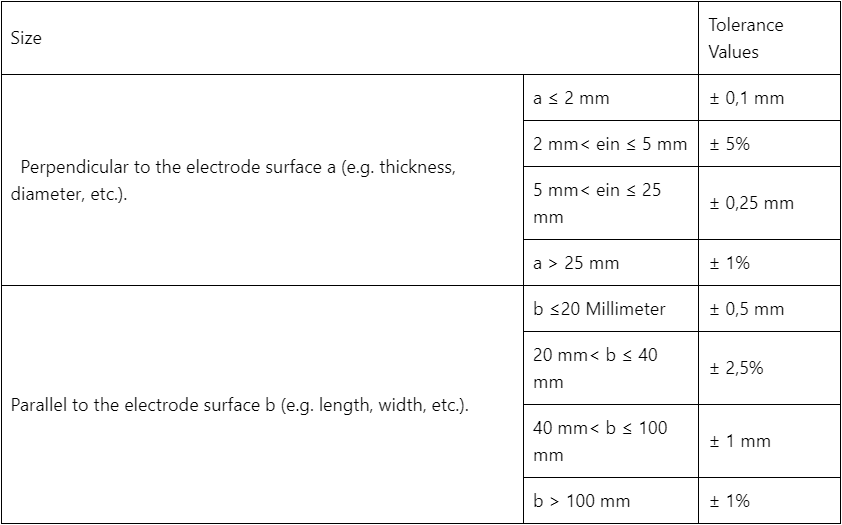
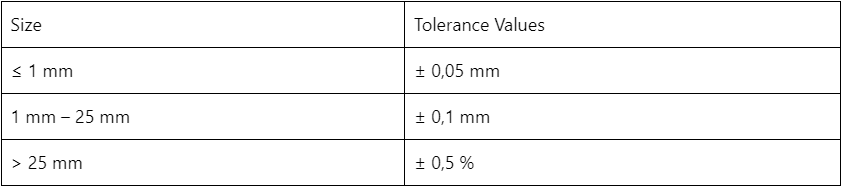
1. lithium-ion batteries are divided into different units according to the size, and test laboratories must perform appropriate measurements and tests according to them.
2. measurement tolerances were defined.
I.The dimensions and measurement tolerances of soft pack batteries are listed in the following table:
II. The dimensions and measurement tolerances of other battery types are listed in the following table:
For more information on how CCC certification, the CCC Self-Declaration and voluntary CCAP or CQC certification may affect your company, or for more information about CCC certification in general, please visit our News Section where you will find current updates twice a week.
Please do not hesitate to contact us for further details and consultation. You can contact us via email, Chat, or call us (UK: +44 2071931135, Europe: +49 69 2713769150, US: +1 773 654-2673).
You can also check out our free CCC-Brochure, which can be downloaded as a PDF file. The brochure also contains information on the CCC Self-Declaration and the voluntary CQC- and CCAP-Certification).
New Regulation for NAL Labels
China´s Ministry of Industry and Information Technology (MIIT) has recently published Announcement No. 79, 2023 and announced new regulations for NAL labels.
The goal is to improve the management efficiency regarding NAL labels, helping manufacturers to save costs, allow users to query label information more conveniently and better adapt to market development needs. The new regulation also makes the process more environment friendly. NAL (Network Access License) is mandatory for telecommunications products that are exported to China.
Manufacturers now have various options to create new digital NAL labels themselves if they follow the MIIT guidelines. Digital NAL labels are a new option and can be displayed in different ways, such as on the screen of the device and operating system. In the past, manufacturers could only use NAL labels in paper form.
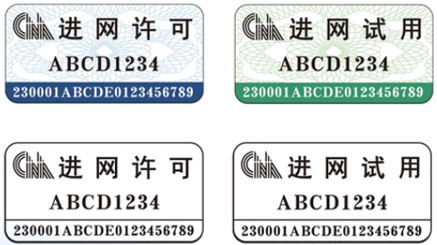
During the NAL registration process, a 21-digits number will be created, which constitutes the final NAL code for a telecommunications product.
The final NAL labels in their new form will look like this (with multiple color choices):
New NAL Labeling methods for China
The applicant can decide to use one of the following methods to display the NAL license logo:
1. Electronic display
2. Physical printing
3. Adhesion of label
Other Approved methods work as well, as long as it meets the requirements of the MIIT.
For more detailed information, please visit our overview of NAL Licensing for China.
For more information on how CCC certification, the CCC Self-Declaration and voluntary CCAP or CQC certification may affect your company, or for more information about CCC certification in general, please visit our News Section where you will find current updates twice a week.
Please do not hesitate to contact us for further details and consultation. You can contact us via email, Chat, or call us (UK: +44 2071931135, Europe: +49 69 2713769150, US: +1 773 654-2673).
New announcement by the CQC on the implementation of performance certification for hydrogen fuel cells in China
The CQC (China Quality Certification Center) has announced that a performance certification for hydrogen fuel cells will be implemented in the near future. In addition to CCC certification, this will become an important component for hydrogen fuel cell engines in the overall vehicle homologation process. On August 31, 2023, the CQC announced that the application for certification of a hydrogen fuel cell engine can soon be submitted to the CQC.

The certification is based on two main documents: These are the Implementation Rules “CQC 1672-2023 Technical Specification for the Performance Level of Hydrogen Fuel Cell Engine” and the Implementation Rule “CQC11-464123-2023 Hydrogen Fuel Cell Engine (Performance) Certification Rules”.
As soon as more details on the certification process and implementation become available, we will provide this information.
For more information on how CCC certification, the CCC Self-Declaration and voluntary CCAP or CQC certification may affect your company, or for more information about CCC certification in general, please visit our News Section where you will find current updates twice a week.
Please do not hesitate to contact us for further details and consultation. You can contact us via email, Chat, or call us (UK: +44 2071931135, Europe: +49 69 2713769150, US: +1 773 654-2673).
You can also check out our free CCC-Brochure, which can be downloaded as a PDF file. The brochure also contains information on the CCC Self-Declaration and the voluntary CQC- and CCAP-Certification).
 We are part of the CERTANIA-Group.