


Schließen


MAN Energy assures China of help to achieve climate targets
Augsburg, Germany-based MAN Energy reiterated its pledges to help the country achieve its climate goals through further investment in China, a top company official told Chinadaily. For example, China offers excellent opportunities for the company in the areas of hydrogen, CO₂ capture, CO₂ storage and the growing demand for renewable energy. MAN Energy Solutions will therefore invest more in China in these areas and also push its heat pump business, said MAN Energy Solutions Global CEO Uwe Lauber. Based in Augsburg, Germany, MAN Energy Solutions is a provider of CO₂ reduction solutions for shipping and other industries and has been doing business in China for around 100 years. Components in the industrial and energy sectors must be awarded a CCC certificate in order for the products to be exported to China or manufactured locally.

For example, demonstration plants for CO₂ capture and storage are currently being built in China with local partners. These are expected to be further expanded over the next two years, eventually reaching a capacity of 500,000 tonnes of carbon dioxide annually. Zhu Yi, a senior analyst at Bloomberg Intelligence, said that despite high operating and investment costs, CO₂ capture and storage plants are one of the most effective ways for Chinese factories to reduce greenhouse gases. Increasing adoption and scaling of these plants will also reduce future costs, she said. MAN Energy Solutions is currently in early-stage discussions with Chinese partners such as China Petrochemical Group (Sinopec), the world’s largest refining company by volume, and Hangzhou Oxygen Plant Group. It was indicated that China continues to account for the largest share of the company’s revenue at 30 per cent. He expects this share to increase further as China has committed to achieving a carbon-neutral economy.
For more information on how CCC certification, the CCC Self-Declaration and voluntary CCAP or CQC certification may affect your company, or for more information about CCC certification in general, please visit our News Section where you will find current updates twice a week.
Please do not hesitate to contact us for further details and consultation. You can contact us via email, Chat, or call us (UK: +44 2071931135, Europe: +49 69 2713769150, US: +1 773 654-2673).
You can also check out our free CCC-Brochure, which can be downloaded as a PDF file. The brochure also contains information on the CCC Self-Declaration and the voluntary CQC- and CCAP-Certification).
BYD signs another Deal to develop Autonomous Vehicles
Earlier this year Chinese automaker BYD inked a deal with startup Nuro to develop and produce a third-generation self-driving delivery vehicle. The partnership announcement came shortly after a successful Series D funding round in the fourth quarter of 2021, which saw U.S.-based Nuro raise a total of $600 million. BYD plans to increase manufacturing capacity at its Lancaster plant and create more jobs, according to Stella Li, vice president of BYD Co. Ltd. and president of BYD North America. Together with Nuro, BYD will launch a self-driving delivery vehicle that will make road travel safer in the U.S., Li added. Vehicles and components must be awarded a CCC certificate in order for the products to be exported to China or manufactured locally.
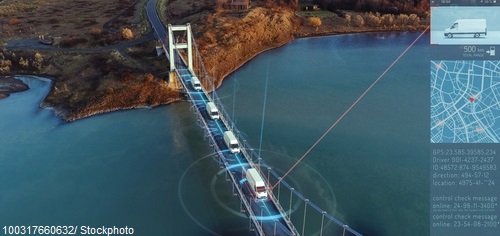
The third-generation vehicle has a larger payload as well as novel safety technology. For example, the cargo volume is said to be twice that of the previous Nuro R2 model, and the cargo area features variable compartments. Also new are temperature-controlled compartments that can keep goods cold or hot. Safety improvements include external airbags for pedestrian protection and a new sensor package with cameras, radar, lidar and thermal imaging cameras that provide 360-degree all-around vision.
“BYD has a large network of global OEM suppliers in the EV field. Therefore, we are looking forward to cooperating and expanding our production,” said Jiajun Zhu, co-founder and CEO of Nuro. According to Zhu, the plan is to use hardware components from BYD’s EV platform to develop innovative autonomous vehicles for the U.S. market. Details of the collaboration were also revealed: For example, BYD will be responsible for the development, construction and testing of the vehicles. In addition, hardware such as batteries, motors, electronics and displays will come from BYD. Nuro contributes its technology in the field of autonomous driving, control and sensors. The first assembly step with components purchased worldwide is done by BYD at its Lancaster, USA plant. Then Nuro completes the vehicles with the electronic systems at their new plant in Southern Nevada.
For more information on how CCC certification, the CCC Self-Declaration and voluntary CCAP or CQC certification may affect your company, or for more information about CCC certification in general, please visit our News Section where you will find current updates twice a week.
Please do not hesitate to contact us for further details and consultation. You can contact us via email, Chat, or call us (UK: +44 2071931135, Europe: +49 69 2713769150, US: +1 773 654-2673). You can also check out our free CCC-Brochure, which can be downloaded as a PDF file. The brochure also contains information on the CCC Self-Declaration and the voluntary CQC- and CCAP-Certification).
New CQC Implementation Rules for Hydrogen Fuel Cells
The CQC (China Quality Certification Centre) authority has revised the following regulations concerning the CQC certification of fuel cells as part of its regular updates of implementation rules.

| No. | CQC Standard | CQC Number |
| 013069 | Certification rules for hydrogen fuel cell electric vehicles with refueling equipment | CQC13-491207-2023 |
| 013070 | Safety certification rules for hydrogen fuel cell systems | CQC11-464124-2023 |
Voluntary CQC certification can be used to demonstrate the conformity of products to the underlying Chinese standards. CQC certification can also be used as a basis for CCC certification, which may be required at a later date, and can be converted directly.
In the field of hydrogen fuel cells, many new rules and regulations are currently being published and implemented in China. In this context, MPR supports manufacturers in the field of hydrogen with all questions and uncertainties regarding product testing and approvals.
For more information on how CCC certification, the CCC Self-Declaration and voluntary CCAP or CQC certification may affect your company, or for more information about CCC certification in general, please visit our News Section where you will find current updates twice a week.
Please do not hesitate to contact us for further details and consultation. You can contact us via email, Chat, or call us (UK: +44 2071931135, Europe: +49 69 2713769150, US: +1 773 654-2673).
You can also check out our free CCC-Brochure, which can be downloaded as a PDF file. The brochure also contains information on the CCC Self-Declaration and the voluntary CQC- and CCAP-Certification).
Improvement of the Management of CCC Certificates and Logo according to CNCA Announcement No. 12 of 2023
On August 10, 2023, the CNCA released a new announcement about improving the management of CCC certificates and the CCC logo. The main ambition is to improve the digitalization of certificates in order to facilitate the mutual recognition of certificates.

The most important contents of the announcement are as follows:
Firstly, full implementation of the e-certificate; only if the applicant so wishes, the additional paper certificate will be issued by the certification authority. Valid paper certificates that have already been issued can still be used. It will be the natural transition to the e-certificate through modification, expiration of the replacement certificate and other means.
Secondly, the production and use of the CCC certificate and CCC logo should comply with the “CCC Certificate Management Requirements” and the “CCC Logo Management Requirements”. The new version of the logo management requirements, for the style, type, printing and use of the CCC logo should be observed.
This announcement will take effect from January 1, 2024. At the same time, CNCA Announcement No. 10 of 2018 on the “CCC logo, as well as the application of management requirements” is replaced.
For more information on how CCC certification, the CCC Self-Declaration and voluntary CCAP or CQC certification may affect your company, or for more information about CCC certification in general, please visit our News Section where you will find current updates twice a week.
Please do not hesitate to contact us for further details and consultation. You can contact us via email, Chat, or call us (UK: +44 2071931135, Europe: +49 69 2713769150, US: +1 773 654-2673).
You can also check out our free CCC-Brochure, which can be downloaded as a PDF file. The brochure also contains information on the CCC Self-Declaration and the voluntary CQC- and CCAP-Certification).
SAIC Motor announces possible partnership with Audi for EV development
Chinese carmaker SAIC Motor announced at the end of June that it could partner with Audi on electric vehicles. Zu Sijie, vice president and chief engineer at SAIC Motor, said: “Licensing, joint development and other ventures are possible ways of cooperation in the future. Vehicles and components must be awarded a CCC certificate so that the products can be exported to China or be distributed on the Chinese market.
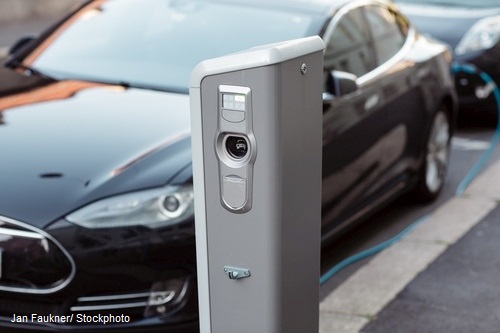
The Chinese automotive market is undergoing unprecedented changes. We will deepen strategic cooperation to ensure a win-win situation.” Zu said SAIC Motor and Audi have been strategic partners for some time and both sides agreed to accelerate the development of EVs through joint cooperation. Shanghai-based SAIC Motors recently unveiled a three-year plan to boost annual sales of alternative-drive vehicles to 3.5 million units by 2025. This would be equivalent to two and a half times the number of vehicles sold in 2022.
For more information on how CCC certification, the CCC Self-Declaration and voluntary CCAP or CQC certification may affect your company, or for more information about CCC certification in general, please visit our News Section where you will find current updates twice a week.
Please do not hesitate to contact us for further details and consultation. You can contact us via email, Chat, or call us (UK: +44 2071931135, Europe: +49 69 2713769150, US: +1 773 654-2673).
You can also check out our free CCC-Brochure, which can be downloaded as a PDF file. The brochure also contains information on the CCC Self-Declaration and the voluntary CQC- and CCAP-Certification).
Implementation of GB/T 19056-2023 Standard for Tachographs
On April 3, 2023, the communication meeting of TC11 and TC15 expert groups on “Implementation of National Specifications for Tachographs” was held in Beijing. Vehicle recorders and similar products are generally covered by the CCC certification requirement.
CCC certification is a compulsory certification that is mandatory for many product categories to be approved for export and sales in China. It is used to ensure product quality and safety, which roughly equivalent to European CE certification. However, China does not recognize CE, so CCC certification must be applied for and acquired.
At the meeting, the following points were determined:
1. The implementation of national standard GB/T 19056-2023 shall continue to be handled according to the decisions of the expert group.
2. Car manufacturers should only install car recorders that meet the requirements for new models. These shall apply to all new models after June 1, 2023.
3. Vehicles produced before the aforementioned deadline do not have to be re-equipped.
4. It was acknowledged that retrofitting can be difficult in individual cases, but car manufacturers should nevertheless press ahead with speeding up the process.
5. The expert group will promote implementation, build a centralized platform, and provide effective installation support.
For more information on how CCC certification, the CCC Self-Declaration and voluntary CCAP or CQC certification may affect your company, or for more information about CCC certification in general, please visit our News Section where you will find current updates twice a week.
Please do not hesitate to contact us for further details and consultation. You can contact us via email, Chat, or call us (UK: +44 2071931135, Europe: +49 69 2713769150, US: +1 773 654-2673).
You can also check out our free CCC-Brochure, which can be downloaded as a PDF file. The brochure also contains information on the CCC Self-Declaration and the voluntary CQC- and CCAP-Certification).
Determination of Accredited Test Laboratories for Lithium-Ion Battery Certification in China
In Announcement No. 9/2023, dated June 07, 2023, the Certification and Accreditation Administration of the People’s Republic of China (CNCA) issued an overview of approved accredited test laboratories for testing of lithium-ion batteries.
Lithium-ion batteries and accumulators for cell phones, but also for other electronic and electrical devices, have recently been made subject to mandatory CCC certification in China according to CNCA announcement No. 5/2023. Many other electrical devices and components are also subject to CCC certification in China, or voluntary CQC certification or CCAP certification.
According to the Chinese Standard CNCA-C09-01 for lithium-ion batteries and accumulators, the CCC certification process requires product testing to the applicable GB standard in an accredited Chinese test laboratory. CNCA designated 20 test labs throughout China for this purpose, whose names and contact information were also published as part of the announcement.
List of accredited test laboratories
| Specified project number | Business area according to CNCA-C09-01 | Specified lab accredited to perform approval tests |
| 2.1. | Lithium-ion batteries and battery packs used in electronic and electrical products, power banks | China Electronics Standardization Institute Saixi Laboratory/Electronic Industry Safety and Electromagnetic Compatibility Testing Center (00101) |
| National Radio and Television Product Quality Inspection and Testing Center (Beijing Tirt Testing Technology Service Co., Ltd.) (00201) | ||
| The Fifth Institute of Electronics, Ministry of Industry and Information Technology/China Ceprei Laboratory (00401) | ||
| CVC Testing Technology Co., Ltd. (00501) | ||
| CHEARI (Beijing) Certification & Testing Co., Ltd. (China Household Electric Appliance Research Institute) (00601) | ||
| Shanghai Electrical Apparatus Testing Institute (STIEE) Co., Ltd. (00901) | ||
| Zhongxing Shangdong (Shanghai) Testing Technology Co., Ltd. (Shanghai Electrical Tool Research Center) (01001) | ||
| CCIC Southern Testing Co., Ltd. (02101) | ||
| Guangdong Testing Institute of Product Quality Supervision (02301) | ||
| Fujian Inspection and Research Institute for Product Quality (02501) | ||
| Shenzhen Academy of Metrology & Quality Inspection (02801) | ||
| Beijing ZunGuan Science & Technology Co.,LTD (03301) | ||
| Zhejiang Kezheng Electronic Information Products Inspection Co., Ltd. (National Electronic Computer Peripheral Equipment Quality Inspection and Testing Center) (03701) | ||
| CQC Testing Technical Services Co., Ltd. (06901) | ||
| Beijing Products Quality Supervision And Inspection Institute (08102) | ||
| Jiangsu Electronic Information Product Quality Supervision & Inspection Institute (Jiangsu Information Security Evaluation Center) (08701) | ||
| The State Radio monitoring center Testing Center (09101) | ||
| CHINA QUALITY CERTIFICATION CENTRE South China Laboratory (15801) | ||
| Shenzhen Global Test Service Co., Ltd. (26001) | ||
| Noa Testing and Certification (Beijing) Co., Ltd. (Noa Group) (27301) |
Chinese regulations and norms, specifically GB Standards and Implementation Rules, are regularly issued or updated by the authorities, often having considerable implications for the corresponding product manufacturers. Updates are usually not announced and must be independently tracked and implemented by certified factories.
For more information on how CCC certification, the CCC Self-Declaration and voluntary CCAP or CQC certification may affect your company, or for more information about CCC certification in general, please visit our News Section where you will find current updates twice a week.
Please do not hesitate to contact us for further details and consultation. You can contact us via email, Chat, or call us (UK: +44 2071931135, Europe: +49 69 2713769150, US: +1 773 654-2673).
You can also check out our free CCC-Brochure, which can be downloaded as a PDF file. The brochure also contains information on the CCC Self-Declaration and the voluntary CQC- and CCAP-Certification).
New Implementation Rules CNCA-C09-01:2023 and CQC-C0901:2023 for Batteries, Power Supplies and Power Banks
CNCA (Certification and Accreditation Administration of the People’s Republic of China) published the new implementation rule CNCA-C09-01:2023 on June 28, 2023. In the new standard, product areas 0807, 0907 power supply, 0914 power bank and 0915 lithium-ion batteries and battery pack have been added.
It is possible to prepare for the CCC certification with the information given by the publication of the regulations. The official application and issuance of CCC certificates will begin August 1, 2023, according to the implementation regulations.

The CQC (China Quality Certification Centre) has published the detailed implementation regulations CQC-C0901-2023. These describe in detail the necessary requirements for obtaining CCC certification.
The CCC certificate is a mandatory certification in China, which was introduced in 2002. It is similar to the European CE system and stipulates that products requiring CCC certification may only be imported, sold and used in China after they have obtained CCC certification.
Please note that products covered by the new CNCA-C09-01:2023 must be certified by August 1, 2024. If the certification process is not completed by that date, import, sale and use will be prohibited.
Read more detailed information about the announcement of CCC certification of Li-ion batteries and packs in the linked news article.
For more information on how CCC certification, the CCC Self-Declaration and voluntary CCAP or CQC certification may affect your company, or for more information about CCC certification in general, please visit our News Section where you will find current updates twice a week.
Please do not hesitate to contact us for further details and consultation. You can contact us via email, Chat, or call us (UK: +44 2071931135, Europe: +49 69 2713769150, US: +1 773 654-2673).
You can also check out our free CCC-Brochure, which can be downloaded as a PDF file. The brochure also contains information on the CCC Self-Declaration and the voluntary CQC- and CCAP-Certification).
Announcement on the Implementation of China VI Emission Standards for Automobiles
In announcement no. 14/2023, dated May 17, 2023, the State Administration for Market Regulation (SAMR) announced the implementation of China’s national emission standards phase VI (B). The new stage’s revised requirements focus on the pollutant emission limits for light vehicles subject to the GB standard GB 18352.6-2016 and heavy-duty diesel vehicles under GB standard GB 17691-2018. Both will need to surpass enhanced minimum limits starting from July 1, 2023. Many products of the automotive industry (such as complete vehicles as well as numerous components) require CCC certification in China, and/or CCAP certification or CQC certification.
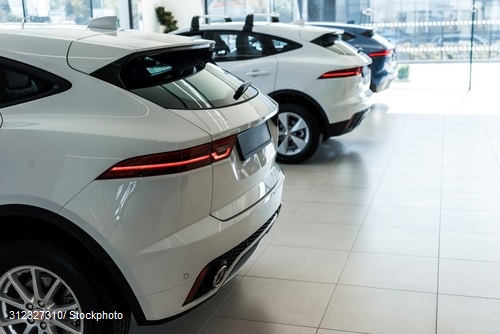
The new phase VI (B) for emission restrictions will be implemented simultaneously throughout the People’s Republic of China. From July 1, 2023 onwards, the import, production and sale of vehicles that do not meet the new limits will be prohibited. Vehicle manufacturers and importers are required to submit relevant certificates, and further evidence (if applicable) to the relevant Chinese authorities before the implementation date.
Pollutant emission limits are a central topic of Chinese politics and legislation, the importance of which is also underlined by the given announcement. The announcement was made jointly by the Ministry of Ecology and Environment of the People’s Republic of China, the Ministry of Industry and Information Technology of the People’s Republic of China, the Ministry of Commerce of the People’s Republic of China, the General Administration of Customs of the People’s Republic of China (GACC), and SAMR.
Chinese guidelines and norms as well as the GB standards and product specific implementation rules related to the automotive sector are regularly updated by the authorities of the Peoples Republic of China (PRC), often having considerable implications for the corresponding product manufacturers. Updates are usually not announced and must be independently tracked and implemented by certified factories. Failure to do so may result in severe consequences, including withdrawal of CCC certification.
For more information on how CCC certification, the CCC Self-Declaration and voluntary CCAP or CQC certification may affect your company, or for more information about CCC certification in general, please visit our News Section where you will find current updates twice a week.
Please do not hesitate to contact us for further details and consultation. You can contact us via email, Chat, or call us (UK: +44 2071931135, Europe: +49 69 2713769150, US: +1 773 654-2673).
You can also check out our free CCC-Brochure, which can be downloaded as a PDF file. The brochure also contains information on the CCC Self-Declaration and the voluntary CQC- and CCAP-Certification).
BYD invests $4.2 billion in lithium projects in Jiangxi province
Chinese EV manufacturer and battery producer BYD plans to invest the equivalent of US$4.2 billion in various projects in Yichun, Jiangxi province. The group’s battery division’s plan includes the annual production of batteries totaling 30 GWh, a lithium carbonate plant with an annual output of 100,000 tons, and the expansion of lithium mining sites. This information was provided by Chinese news portal Caixin Global based on a publication from the local provincial government. Battery-related products often require CCC certification to be approved for import and operation in China.
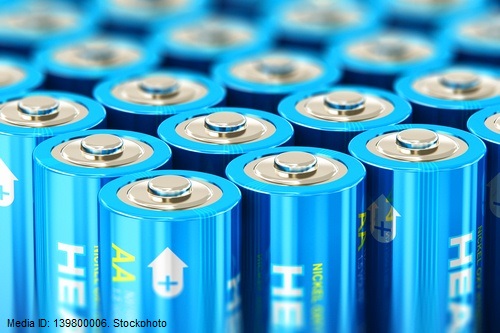
BYD is the third major battery company to invest in Yichun’s lithium industry after CATL and Gotion High-Tech. The lithium deposits in Yichun are present as the widely occurring mineral lepidolite. According to data from Yichun’s official website, mining companies extracted more than 83,000 tons of lithium carbonate from lepidolite last year, accounting for about 28 percent of China’s total production. Among them, lithium carbonate is mainly used for the production of cathodes in lithium iron phosphate batteries. In April and May of this year, the aforementioned three companies secured additional mining rights of lithium-bearing rock in Jiangxi province.
In March 2022, BYD acquired a 5 percent stake in Shengxin Lithium Group, China’s leading lithium miner, as a strategic partner with more than $415 million. A few months later in July, BYD bought a 2.11 percent stake in Anda Energy, a lithium iron phosphate producer, making it the ninth largest shareholder. Even before the planned expansion of lithium production in Yichun, BYD announced an expansion of its production capacities. Thus, another five projects are to be advanced and the annual production is to be expanded to 172 GWh. According to South Korean research institute SNE Research, BYD brought batteries with a capacity of 24 GWh to market in the first half of 2022. This represents a global market share of 12 percent and a rise from fourth to third place among the world’s largest battery manufacturers.
Vehicles and components such as batteries of EVs must be awarded a CCC certificate in order for the products to be exported to China or manufactured locally. CCC certification is a complex project that requires professional supervision at all stages. For several years, MPR China Certification GmbH has been entrusted with large CCC projects for the vehicle manufacturers Lotus, Tesla and Bugatti. We will be pleased to provide you with non-binding advice on the scope and requirements of a China CCC certification.
 We are part of the CERTANIA-Group.