


Schließen


New CQC Implementation Rules for Voluntary CQC Certification
The CQC (China Quality Certification Centre) issued new Implementation Rules for the voluntary CQC certification. The new Implementation Rules were released on December 30, 2022 and were implemented on January 1, 2023.
The new Implementation Rules for the voluntary CQC certification contain some changes regarding application documents, as well as other changes, including certification modes/remote audit options, added descriptions about BIW (body in white) requirements for seats and headrests, and more.
This is an overview of some products that are affected by the changes:
| Product category | New IR as of 1st Jan 2023 | Certification mode |
| Motor vehicle brake hose | CQC16-491284-2022 | Voluntary |
| Seat and seat headrest | CQC16-491261-2022 | Type II |
| Car door lock and door retainer | CQC16-491289-2022 | Voluntary |
| Retroreflector | CQC16-491286-2022 | Voluntary |
| Rearview mirror | CQC16-491201-2022 | Type II |
| Interior material | CQC16-491264-2022 | Voluntary |
| Car fuel tank | CQC16-491285-2022 | Voluntary |
| Automotive lighting | CQC16-491269-2022 | Type II |
We will publish more detailed information for each category in our news-articles during the following weeks.
For more information on how CCC certification, the CCC Self-Declaration and voluntary CCAP or CQC certification may affect your company, or for more information about CCC certification in general, please visit our News Section where you will find current updates twice a week.
Please do not hesitate to contact us for further details and consultation. You can contact us via e-mail, Chat, or call us (UK: +44 2071931135, Europe: +49 69 2713769150, US: +1 773 654-2673).
You can also check out our free CCC-Brochure, which can be downloaded as a PDF file. The brochure also contains information on the CCC Self-Declaration and the voluntary CQC- and CCAP-Certification).
New GB Standard GB 31241-2022 for Lithium-Ion Cells and Batteries in China
The SAC (Standardization Administration of the People’s Republic) issued an announcement from December 29, 2022 notifying that an updated version of GB Standard GB 31241-2014: Safety Specifications for Lithium-Ion Cells and Batteries for Portable Electronic Devices will be effective from January 1, 2024. The new standard will be GB 31241-2022 and lithium-ion cells and batteries may be covered by CCC certification and battery registration for China.
More information about the changes to the GB 31241-2022 standard will be posted on our website as soon as they are known. It is expected that the new version of the standard will set higher requirements for the safety and reliability of lithium-ion cells and batteries for portable electronic devices to further ensure consumer safety.
The CCC certificate is a mandatory certification in China that was introduced in 2002. It is similar to the European CE system and regulates that products requiring CCC certification can only be imported, sold, and used in China after they have received CCC certification.
The GB standards are one of the most important groups of standards in China that define the requirements for product conformity according to Chinese requirements. They apply to all products available on the market and are a prerequisite for production facilities to obtain a CCC certificate for their products.
For more information on how battery registration for China, CCC certification, the CCC Self-Declaration and voluntary CCAP or CQC certification may affect your company, or for more information about CCC certification in general, please visit our News Section where you will find current updates twice a week.
Please do not hesitate to contact us for further details and consultation. You can contact us via e-mail, Chat, or call us (UK: +44 2071931135, Europe: +49 69 2713769150, US: +1 773 654-2673).
You can also check out our free CCC-Brochure, which can be downloaded as a PDF file. The brochure also contains information on the CCC Self-Declaration and the voluntary CQC- and CCAP-Certification).
Sany introduces new tower crane
Sany introduces new tower crane
Chinese machinery giant Sany Group recently unveiled the latest generation of its tower crane. With this, the group once again demonstrates its strong expertise in construction equipment, reports Chinadaily. Tower cranes are one of three main products of Sany’s heavy lifting equipment business. In addition, the company manufactures mobile truck cranes and crawler cranes. Tower cranes operate at great heights and their development also represents the progress of China’s crane industry. Machinery and components in the construction sector must be awarded a CCC certificate in order for products to be exported to China or manufactured locally.

According to Sany, the latest generation of tower cranes incorporates 15 patented technologies and has undergone improvements in safety, ease of operation and control. Work at airy heights can now be controlled from the ground, and with the help of artificial intelligence, multiple cranes connect to ensure safe working and prevent collisions. Technicians can remotely identify and fix specific problems. Yu Hongfu, director of Sany Group and also chairman of Sany Heavy Machinery, plans to further expand the heavy lifting equipment business, especially tower cranes, in the future. Industry experts noted an increased demand for tower cranes for high-rise buildings in recent years. The entire construction industry is also moving toward sustainable construction, industrialization and intelligent control, experts said.
Sany said it has invested around US$148 billion in a crane factory in Ningxiang, Hunan province. The production facility has an annual capacity of 8,000 tower cranes and 70 percent of the manufacturing is done by robots. In the future, Sany plans to further expand research and development to make the tower crane business a growth driver within the company.
For more information on how CCC certification, the CCC Self-Declaration and voluntary CCAP or CQC certification may affect your company, or for more information about CCC certification in general, please visit our News Section where you will find current updates twice a week.
Please do not hesitate to contact us for further details and consultation. You can contact us via e-mail, or call us (UK: +44 2071931135, Europe: +49 69 2713769150, US: +1 773 654-2673).
You can also check out our free CCC-Brochure, which can be downloaded as a PDF file. The brochure also contains information on the CCC Self-Declaration and the voluntary CQC- and CCAP-Certification).
Chinese Authorities Closed During New Year – 2022/23
Chinese Authorities Closed During New Year
The Chinese authorities and certification institutions will be closed for the New Year Holidays.
The New Year holidays will be from December 31, 2022 to January 02, 2023. This year, the New Year’s Eve falls on a weekend, so the authorities will resume their work from 03 January 2023.
Due to the closing delays in the certification process may occur.
In China, New Year’s Eve is celebrated more quietly in comparison to the Chinese New Year celebrations. The Chinese New Year is also known as Spring Festival and is considered as the most important celebration in China.
The Chinese New Year’s Day which is calculated according to the Chinese lunar calendar and will start in end of January for 2023. We will inform you about the exact days when the authorities will close for the Spring Festival when we get the official notice.

MPR China Certification GmbH will continue to support you in your certification processes. If you would like to have products checked for CCC you can call or email us any time.
For more information on how CCC certification, the CCC Self-Declaration and voluntary CCAP or CQC certification may affect your company, or for more information about CCC certification in general, please visit our News Section where you will find current updates twice a week.
Please do not hesitate to contact us for further details and consultation. You can contact us via e-mail, or call us (UK: +44 2071931135, Rest of Europe: +49 69 2713769150, US: +1 773 654-2673).
Please don’t hesitate to also use our chat-window in the bottom right corner if you have any questions. (Please check your browser settings if you can’t see the window)
MPR China Certification GmbH wishes you a succesfull New Year 2023!
Revision of the CCC Certification Regulations for Automotive Tires
At the beginning of September 2022 the remote conference of the TC14 technical expert group for automotive tires was held in China. The discussion topic was the revision and implementation of CCC certification regulations and regulations for laboratory testing in the certification processes. Problems observed in testing for annual inspections were also discussed. Tires require CCC certification to be approved for import and use in China.
The following subject matters were discussed:
- Revision of the implementation rules:
It was announced that the implementation rules will be revised according to the new version of the standard for car tires.
- Plan for CCC certification implementation after GB standards implementation:
According to the implementation rules, the new version of the GB Standard GB 9743 “car tires” and GB 9744 “truck tires” standards (in which rolling resistance and skid resistance of tires are newly added) will be implemented into the CCC certification process after they are published. The principle of division of certificate units remains unchanged, tire sample information must be added to certificates as an appendix. The specific content of the implementation plan will be published in a timely manner in accordance with the revision process of national standards.
- Random sampling during the annual inspections:
There is a possibility that certain factors in the tire production process may occasionally cause a very small number of products to fail tests. To avoid the influence of random factors, products not qualified at the first Follow-Up (FU) inspection are allowed to be tested again in a second FU inspection. If the tests are passed during the second inspection, the annual FU inspection counts as passed. If the tests are not passed during the second inspection, the annual FU inspection will be counted as failed.
- Simultaneous marking of TUBELESS and TUBETYPE on the side surface of tires:
TUBELESS shall stand as a marking for tires mounted on tubeless rims without tubes.
TUBETYPE is to indicate that the tire is installed on the inner tube rim, its bead structure is correspondingly different, and that if the tire does not fit the rim, there may be potential safety hazards during use. THEREFORE, TUBELESS AND TUBETYPE SHOULD NOT BE IDENTIFIED ON THE SIDEWALL AT THE SAME TIME.
- Marking imperial and metric tire specifications on the side surface of tires:
Tire specifications are the identification of tire size characteristics. Of these, some are listed metrically, and others are listed according to the Anglo-American system of measurement. To avoid confusion for users, sidewalls are not intended to list both metric and Anglo-American tire specifications, in part to avoid problems with market enforcement inspections.
For more information on how CCC certification, the CCC Self-Declaration and voluntary CCAP or CQC certification may affect your company, or for more information about CCC certification in general, please visit our website and our News Section where you will find current updates twice a week.
Please do not hesitate to contact us for further details and consultation. You can contact us via e-mail, or call us (UK: +44 2071931135, Europe: +49 69 2713769150, US: +1 773 654-2673).
Please don’t hesitate to also use our chat-window in the bottom right corner if you have any questions. (Please check your browser settings if you can’t see the window)
You can also check out our free CCC-Brochure, which can be downloaded right here as a PDF file.
Here you can download our brochure about the CCC Self-Declaration.
Here you can download our brochure about the voluntary CCAP or CQC certification.
New GB Standard GB/T12350-2022 for Low-Power Motors
Low-power motors are subject to strict regulatory guidelines in many countries. This applies to China as well, where the GB standard GB/T12350-2009 was defining the relevant technical requirements for this product group since 2009. However, a new version GB/T12350-2022 was published on April 15, 2022. This new standard, which is merely recommendatory in nature like its predecessor, officially came into force on January 1, 2022.
New requirements are included in almost every section of the document and even include basic definitions as well as the general scope of the standard. For example, new motor types including servo motors, are now covered by this standard. The specification as a “stand-alone power source”, on the other hand, has been deleted from the definition.
The most important innovations of the revised standard certainly refer to its test requirements, which, depending on the classification of the motor type, have been expanded and/or adapted. This includes for example, additional flammability tests for non-metallic components, dielectric strength tests, modified requirements for any plugs and markings if applicable, and much more. The official overview of all technical changes alone covers 12 pages, parts of which being merely additional references to sections in the new standard.
Motors and their components represent a complex product group whose certification requirements must be individually checked for the Chinese market. They fall under different standards and certification categories, depending on their characteristics and often require mandatory certification. Numerous motor products fall under the CCC Certification (China Compulsory Certification) or CCC Self-Declaration requirements for the Chinese market.
The Chinese GB Standards and Implementation Rules are regularly updated by the authorities, often having considerable implications for the corresponding product manufacturers. Updates are usually not announced and must be independently tracked and implemented by certified factories. Failure to do so may result in severe consequences, including cancellation of certification.
MPR China Certification GmbH will inform you as early as possible about any changes to the GB Standards and Implementation Regulations relevant to you. In the case of modifications to the content, we will be happy to check the relevance for you individually. This is enabled through our long-term relationships with the certification bodies and close coordination with the relevant authorities and test laboratories. Our services allow you to focus on your core business by protecting you from potential certification-related consequences in your China affairs.
Please do not hesitate to contact us for further details and consultation. You can contact us via e-mail, or call us (UK: +44 2071931135, Europe: +49 69 2713769150, US: +1 773 654-2673).
Expansion of CCC Catalog to Include Batteries, Adapters and Chargers
In announcement 31 from September 23, 2022 the General Office of the State Council proclaimed that the government has set several new guiding principles and opinions to further support the expansion, innovation, approval and supervision in the field of electric mobility, including a planned optimization of the administrative system for access to electric and electronic products. As part of the innovations, two new types of products are to be added to the catalog of products subject to CCC for this purpose:
- Lithium-ion batteries and battery packs, as well as mobile power supplies used in electronic and electrical products
- Power adapters/chargers for telecommunications terminals.
Implementing regulations for CCC certification have not yet been published by CNCA/SAMR yet. We will be happy to inform you as soon as the regulations have been published.
According to the current announcement, batteries to be used in electric vehicles in China are not yet included in the CCC catalog. Nevertheless, these must meet various GB standards and be registered with the MIIT. Voluntary CQC certification can be obtained to demonstrate compliance with the safety requirements.
For more information on how CCC certification, battery registration for batteries to be used in electric vehicles, or other certifications could impact your business, visit our website and news section.
You can contact us via email or give us a call:
UK: +44 2071931135
Europe: +49 69 2713769150
US: +1 773 654-2673
You can also check out our free CCC-Brochure, which can be downloaded here.
MPR at the Expert Forum Future Battery 2022 on November 3rd and 4th in Berlin
For the third year in a row, experts in battery solutions from industry and academia came together at Future Battery to talk about the latest issues that are upcoming in battery applications and to participate in various workshops. This year the topic was “Next level: Establishing the battery society”, highlighting five strategic future topics on the role of battery technology for industry and society. Aspects of material and component supply, production scaling, regulatory requirements and sustainability issues such as recyclability or raw material optimization were the focus.
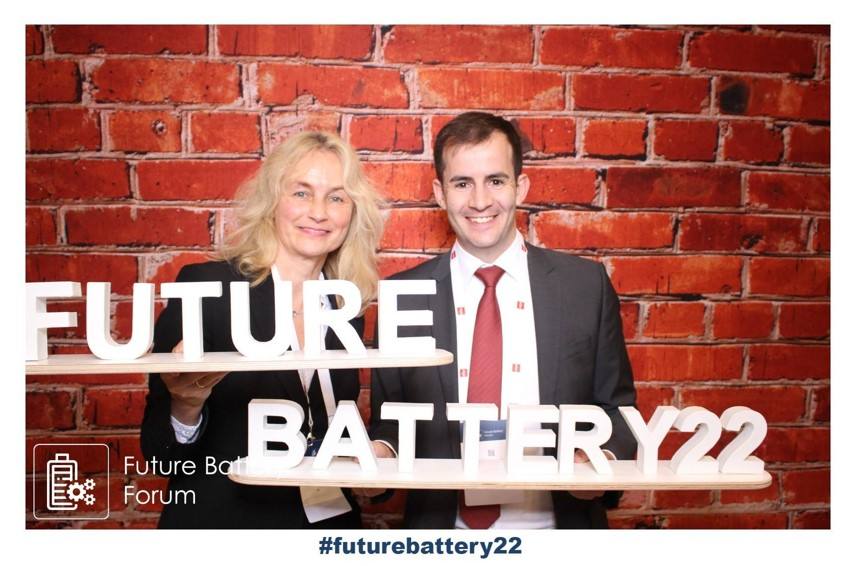
This year, the Future Battery conference was held as a hybrid event at the EstrelConferenceCenter (ECC) Berlin and online with a supporting app. With 80 exhibition booths, visitors could explore the new ideas and technologies of the participating companies on site and obtain valuable information about products and developments. A very agile event format that brought together about 500 participants directly and another 2,500 participants online. This brought together automotive OEMs, manufacturers of battery systems and cells, and their suppliers, so that the complete value-added spectrum of battery technology could be included.
It was a lively and exciting exchange with a view far into the future to technological leaps that are already emerging today. For MPR International there were many insights to current and future opportunities. The massive increase in demand for batteries themselves in the field of e-mobility, as well as the demand for battery testing and approval oand/or registration in countries around the world has increased enormously. For MPR International this means that we have significantly increased our testing capacities therough our partner network. We have been receiving requests for testing from manufacturers who can no longer keep up with their test capacities. We are now able to offer extensive testing in Germany, other EU countries, the UK and the USA for battery testing at short notice and to carry out any necessary certifications. For China this includes the CCC certification of batteries which will soon be mandatory, as well as battery system registration for automotive batteries.
CNCA and SAMR confirm the adjustment of the CCC catalog and implementing regulations
On September 17, 2022, the General Office of the State Council of the PRC issued a new announcement on the adjustment and simplification of the CCC Catalog. Lithium-ion batteries and power supplies/chargers with high safety risks will be included in the compulsory certification management (CCC) certification, while the formerly compulsory CCC will no longer be implemented for 9 product categories such as data terminals, multimedia terminals audio power amplifiers and others with low safety risks and more mature technology (see article: Adjustment of the CCC catalog regarding Li-ion batteries, power supplies and other products).
Until now, most information technology devices required CCC certification in China. The announcement of the simplification of regulations is divided into four sections:
- 9 types of electronic products that are considered very low risk will not require CCC in the future.
- the corresponding products will be removed from the implementing regulations CNCA-C08-01:2014 and CNCA-C16-01:2014. Implementing rule CNCA-C19-01:2014 will be removed in its entirety.
- the scope will be adjusted by the authority and laboratories.
- the competent authority will refrain from certifications of the affected products in the future.
This information is made according to announcement No. 34, 2022 of SAMR (State Administration for Market Regulation) and announcement of CNCA (Certification and Accreditation Administration) on Oct. 11, 2022.
Thus, the new CCC catalog is effective immediately.
Products removed from the CCC catalog (9 types):
- active loudspeaker systems with one or more loudspeakers with a maximum output power below 500 W (R.M.S.) (Category No.: 0801, CNCA-C08-01: 2014).
- audio power amplifiers (Category No.: 0802, CNCA-C08-01: 2014)
- various carrier forms of audio and video recording, reproducing, and processing equipment (including various types of optical discs, tapes, hard disks, and other carrier forms) (Category-No.: 0805, 0812, CNCA-C08-01: 2014)
- electronic piano (Category No.: 0813, CNCA-C08-01: 2014)
- cordless telephone terminal equipment (Category No.: 1604, CNCA-C16-01: 2014)
- data terminal (category no.: 1608, CNCA-C16-01: 2014)
- multimedia terminal (category no.: 1609, CNCA-C16-01: 2014)
- intruder detector (category no.: 1901, CNCA-C19-01: 2014)
- anti-theft alarm system controls (Category No.: 1902, CNCA-C19-01: 2014).Please do not hesitate to contact us for further details and consultation. You can contact us via e-mail, or call us (UK: +44 2071931135, Europe: +49 69 2713769150, US: +1 773 654-2673).
Please don’t hesitate to also use our chat-window in the bottom right corner if you have any questions. (Please check your browser settings if you can’t see the window)You can also check out our free CCC-Brochure, which can be downloaded right here as a PDF file.
Chinese EV manufacturer Nio celebrates European premiere in Berlin
Nio chose the legendary Tempodrom in Berlin as the venue for its European launch premiere celebration. Initially, three models will be offered in Europe, as well as the establishment of battery swap stations has been announced. Instead of car dealerships and showrooms, the young company is focusing on presenting the vehicles in so-called “Nio Homes,” which are a mixture of café, shopping center and lounge. Two sedans, the ET7 and ET5, and an electric SUV, the EL7, are available. The name of the latter was changed at short notice from ES 7 (international market) to EL 7 (European market) due to a legal dispute with Audi. All models are available and are already on the road in China. The technical details therefore differ only slightly for the European versions.
A special feature of Nio is the battery concept: These can either be purchased with the car or rented. Customers can choose from the standard battery or a long-distance variant. The batteries can be exchanged at one of the Nio battery exchange stations, the first of which in Germany is located on Berlin’s Kurfürstendamm. By the end of next year, 120 such stations will be open in Europe. As Nio chief engineer Teobaldi said, the 150-kWh long-range battery can achieve a range of up to 1,000 kilometers. To speed up the charging process, Nio unveiled its own 500-kW DC charging station this summer. Similar to Tesla’s Powerchargers, Nio plans to build a network of charging stations. In addition to a purchase option for the EVs, Nio is suggesting a subscription model to its future customers. Prices for this start at 999 euros per month for the Nio ET5.
The certification of vehicles is a highly complex project that requires professional support in all phases. MPR China Certification GmbH has been active in this field for several years.
We will be happy to advise you without obligation on the scope and requirements for the approval of vehicles. In China, CCC certification is required for vehicles.
Please do not hesitate to contact us for further details and consultation. You can contact us via e-mail, or call us (UK: +44 2071931135, Europe: +49 69 2713769150, US: +1 773 654-2673).
Please don’t hesitate to also use our chat-window in the bottom right corner if you have any questions. (Please check your browser settings if you can’t see the window)
 We are part of the CERTANIA-Group.