


Schließen


Battery giant CATL invests 2 billion US dollars in new factory
The world’s largest manufacturer of vehicle batteries, CATL, is investing the equivalent of US$2.09 billion in a new manufacturing facility in China to produce a new type of lithium battery. In mid-September 2021, the Chinese company announced the agreement on the project with the municipal government of Yichun, Jiangxi province. The new factory will exclusively produce batteries for electric vehicles such as cars, commercial vehicles and two-wheelers. CATL has not yet given any details about the exact production capacity and the start of construction. According to CATL, the factory will complement the current capacities and is intended to respond to the increased demand in the market. The production of lithium batteries depends, among other things, on components and production equipment requiring CCC certification, as these can only be imported into and sold on the Chinese market in a certified manner.
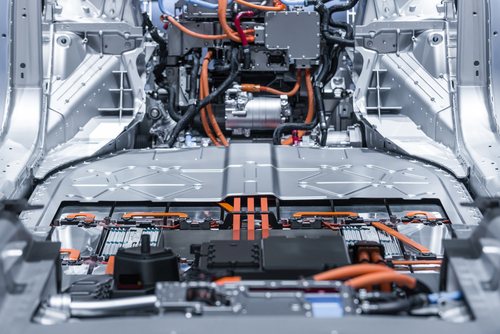
Including joint ventures, CATL operates 20 production facilities in China and one in Germany, Chinese stockbroker SooChow Securities reported. CATL’s total battery production volume is expected to be about 600 gigawatt hours in 2025, five times the amount from 2020. CATL, whose full name is Contemporary Amperex Technology Co Ltd, has already increased spending on expanding production capacity in the past two years. In December 2020, a plan was revealed to invest the equivalent of US$6.1 billion, then in February the amount was reduced to US$4.5 billion. In order to fund such large sums, CATL raised about US$9.1 billion through a private placement of shares last month.
Batteries and their components have to be CCC certified in order to be exported to China or manufactured locally. CCC certification is a complex project that requires professional support at all stages. For several years, MPR China Certification GmbH has been entrusted with large CCC projects for the vehicle manufacturers Lotus, Tesla and Bugatti. We will be pleased to provide you with non-binding advice on the scope and requirements of a China CCC certification.
Please do not hesitate to contact us for further details and consultation. You can contact us via e-mail, or call us (UK: +44 2071931135, Rest of Europe: +49 69 2713769150, US: +1 773 654-2673).
Please don’t hesitate to also use our chat-window in the bottom right corner if you have any questions. (Please check your browser settings if you can’t see the window)
You can also check out our free CCC-Brochure, which can be downloaded right here as a PDF file or you consult our book (in English) “A Brief Guide to CCC: China Compulsory Certification”, which can be found directly here on Amazon.
Here you can download our brochure about the CCC Self-Declaration.
Here you can download our brochure about the voluntary CCAP or CQC certification.
VSTD test standard for lamps for VSCC certification in Taiwan
Taiwan offers many opportunities for car companies. Since 2014, the number of new vehicle registrations has steadily increased, and a record number of new vehicle registrations were reported in 2020, despite the pandemic.
To obtain a VSCC certification for Taiwan, testing in accordance with the relevant Taiwanese Vehicle Safety Testing Directions (VSTD) must also be submitted as part of the documentation submitted for testing and approval.
The testing standards are issued by the Taiwan Ministry of Transportation (MoTC), which has authorized the Vehicle Safety Certification Center (VSCC) to test and approve vehicles and components for the Taiwan market. These tests must be conducted either in a test laboratory approved by the MoTC, or an accredited technical service with its own test laboratories.
Comparability
Although the Vehicle Safety Testing Directions are largely based on the international ECE regulations, testing according to ECE is not recognized by the VSCC. Testing must be conducted in accordance with the VSTD regulations.
Automotive lamps can be complex and must meet several criteria to be considered for testing. There are photometry requirements, installation considerations (VSTD 03 The Installation of Lighting and Light-signaling Devices) and lamp functions to consider:
VSTD 31 Turn Signal Lamps
VSTD 31 specifically addresses the differences between turn signals that are mounted on the front or rear of the vehicle and the tests required. The turn signal performs the directional indicator function when engaged. The area to be illuminated by the turn signal, the acceptable intensity, the orientation of the lamp in relation to the axis of the car and the behavior of the turn signal when several lamps located in the turn signal are illuminated sequentially are all considered.
VSTD 32 fog lights
VSTD 32 defines what defines a lamp a fog lamp and specify test requirements. Unlike turn signals, for example, they are tested for the durability of their continuous output. This means that only minor visual deviations should occur, with no deformities or color changes. In addition, they are subjected to contamination tests and exposed to continuous loads.
VSTD 33 reversing spotlight
VSTD 33 defines the permitted area to be illuminated per square meter, test intervals, as well as lower and upper limits of the measured light values to be met. In contrast to the fog lights, no continuous load is tests are required for reversing lights – which are not intended for continued use over a long period.
VSTD 34 Front headlights
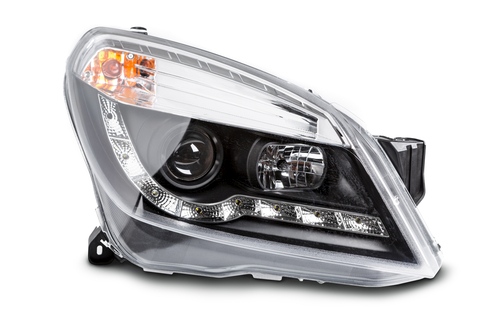
VSTD 34 defines the test requirements as well as permissible values for front headlamps. The front headlights cover a large area to ensure the safety of the vehicle. The illuminated area per square meter must be checked as well as the position and alignment of the beam must be tested. The test requirements as well as permissible values are defined in VSTD 34.
VSTD 35 Taillights
VSTD 35 describes the taillights, which must also produce a uniform light pattern while keeping the intensity of their light within the specified limits. In addition, taillights must be red color-specific and the way in which they are installed in the vehicle must be such that they cannot be manipulated or installed elsewhere.
VSTD 37 Brake lights
VSTD 37 also provides a definition for brake lights and specifies the requirements to be met: They should have a uniform light pattern, be mounted at a specified angle, may only illuminate a specified area, and should be applied for with a product-specific description to the VSCC.
If you still have questions about the process or you would like to have your product checked for VSCC certification requirements, please feel free to contact us.
Send us an e-mail or call us at +49-69-2713 769 150 (EU) or +1 773-654-2673 (US). We will be happy to support you.
We also have the option of answering your questions via online chat. You will find the chat window on the bottom right of every page (if this is not visible, please check your browser settings).
New GB standard GB 16897 for brake hoses in vehicles, motorcycles, mopeds and trailers
A new GB Standard for brake hoses is expected to come into force on July 1, 2022. The previously used GB 16897-2010 standard was implemented in July 2011 and has now been comprehensively revised. The new GB 16897 standard makes it necessary to update existing voluntary CCAP and CQC certificates as well as existing national test reports. According to the. A transition period of 12-18 months is usually granted for manufacturers for this purpose. The transition period will be officially announced after the new GB Standard is formally introduced.
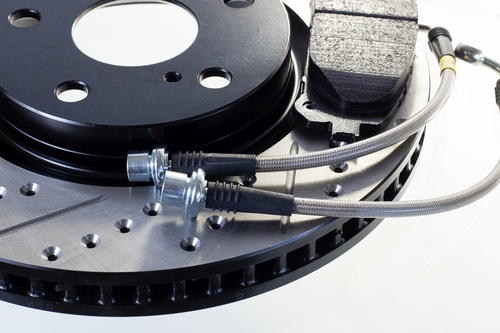
The main changes in the new GB 16897 standard are:
- The term “brake hose” has been redefined
- The term “nominal inside diameter” has been revised and the term “nominal outside diameter” has been added
- Hydraulic brake hose assemblies have received new performance requirements and test methods with “quick tensile strength” and “dynamic ozone resistance” also being added
- Test procedures for hydraulic brake hose assemblies such as “inner hole throughput after necking”, “intermiscibility of brake fluid”, “cold resistance” and “ozone resistance” were revised
- For pneumatic brake hose assemblies, new performance requirements and test methods for “flexural fatigue” were added
- For vacuum brake line assemblies, the performance requirements and test methods for “heat resistance,” “cold resistance” and “fuel resistance” have been revised
- Performance requirements and test methods for plastic pneumatic brake hose assembly were added
- For vacuum brake hose assemblies, the performance requirements and test methods for “heat resistance”, “cold resistance” and “fuel resistance” were revised
- The term “burst” and its definition were deleted
- For pneumatic brake hose assemblies, the technical requirements and test methods for “zinc chloride resistance” were deleted
As with previous adaptations of GB standards, it is expected that product re-testing will be required to verify product compliance.
We will be happy to support you in these product tests as well as in updating your CCAP or CQC certificates in China and are always available to answer any further questions you may have.
Please feel free to contact us for more information. Send us an email or call us at +49-69-2713769150 (in Europe) or +1-773-654-2673 (in the Americas)
You can also get detailed information about CCC certification in general on our website and learn more about GB standards, the CCC certification process and the costs. You can also find information on our CCC certification package in detail and get an overview of our references.
Vivo releases new Android operating system for high-end devices
Vivo, a leading manufacturer in the Chinese smartphone market, released its own operating system, OriginOS Ocean, in early December. It offers direct access to apps, artificial intelligence (AI) features and enhanced privacy protection, according to Vivo. Vivo is another major Android device manufacturer developing its own operating system to compete against Apple’s iOS and Huawei’s HarmonyOS in the high-end market segment. The new operating system is designed to allow users direct access to various apps even when the screen is locked. Also included are services for entertainment, AI-powered fitness apps and advanced protection for private or sensitive data. The expected increase in demand would also mean an increase in smartphone production figures. Many components require CCC certification or SRRC certification so that they can be imported to and used on the Chinese market.

OriginOS Ocean will be available for some Vivo smartphones already shipped and all new devices. The number of users of Vivo handsets is reported by the manufacturer to be more than 400 million worldwide. As of Q3 2021, Vivo owned 23 per cent market share in China, followed by Oppo and Xiaomi, market researchers Counterpoint report. The high-end market for Android devices has recently been subject to greater competitive pressure in China after Huawei was ousted from the top position.
Electronic items and their components, such as smartphones, must conduct a CCC certification in order for the products to be exported to China or manufactured locally. The CCC certificate was introduced in 2002 and is comparable to the European CE marking. If you need CCC certification in the electronics sector, China Certification is an excellent partner for you. We have been advising leading suppliers and manufacturers on their CCC certifications for years.
For more information on how CCC certification, the CCC Self-Declaration and voluntary CCAP or CQC certification may affect your company, or for more information about CCC certification in general, the process, and the associated costs, please visit our website and our News Section where you will find current updates twice a week.
Please do not hesitate to contact us for further details and consultation. You can contact us via e-mail, or call us (UK: +44 2071931135, Rest of Europe: +49 69 2713769150, US: +1 773 654-2673).
Please don’t hesitate to also use our chat-window in the bottom right corner if you have any questions. (Please check your browser settings if you can’t see the window)
For more info on the certification of telecom products in China, please visit the SRRC certification subpage.
You can also check out our free CCC-Brochure, which can be downloaded right here as a PDF file or you consult our book (in English) “A Brief Guide to CCC: China Compulsory Certification”, which can be found directly here on Amazon.
Here you can download our brochure about the CCC Self-Declaration.
Here you can download our brochure about the voluntary CCAP or CQC certification.
Monthly sales figures of vehicles with alternative drive types exceed 320,000 units for the first time
Monthly sales figures in China of alternative drive vehicles continue to show robust growth in August. Alternative drive vehicles, also called NEVs (New Energy Vehicles) in China, include e-cars as well as plug-in hybrids. According to the Chinese Association of Automobile Manufacturers (CAAM), 321,000 units were sold in August. This represents an increase of 181.9 per cent over the same month last year and 18.6 per cent over the previous month of July. The figures are made up of 307,000 passenger cars and 14,000 commercial vehicles. Of all-electric passenger cars, 251,000 were sold in August, an increase of 198.2 per cent over the same month last year and 21.8 per cent more than in July. Plug-in hybrid vehicles sold 56,000 times in August, up 55.8 per cent from the identical period in 2020 and 11.7 per cent from July. NEV commercial vehicles accounted for 14,200 units, up 55.8 per cent from the same month last year. However, this included only 200 plug-in hybrids. Components for the production of NEV vehicles largely require CCC certification before they can be imported, traded or used on the Chinese market.
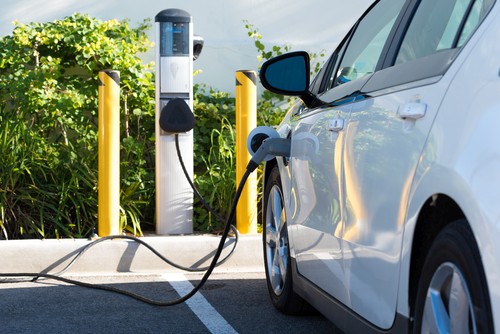
China’s production of NEVs totalled 309,000 units in August, up 180.6 per cent from the same period last year. About 1.79 million NEVs were sold in China in the first eight months of 2021, an increase of 194 per cent over the same period in 2020. Exports of vehicles from China also rose to a new record of 187,000 units in August, or an increase of 161.9 per cent year-on-year. Among the exported vehicles were 46,000 NEVs, which increased sevenfold compared to the same month last year.
However, overall vehicle sales in China fell 17.8 per cent in August to 1.79 million units, down 3.5 per cent from July. Production was down 18.7 per cent to 1.72 million units, 7.4 per cent less than in July. The CAAM attributed the decline to supply chain disruptions due to continued Covid 19 restrictions in China and Malaysia. Many automakers in China have had to cut back production due to a lack of parts and components. The market share of NEVs in China averaged 11 per cent for the current year, according to CAAM data. The output of automotive batteries for NEVs used in August was 12.6 GWh, up 114.9 per cent from the same month last year and 11.2 per cent more than in July.
Vehicles and components must be awarded a CCC certificate in order for the products to be exported to China or manufactured locally. CCC certification is a complex project that requires professional support at all stages. For several years, MPR China Certification GmbH has been entrusted with large CCC projects for the vehicle manufacturers Lotus, Tesla and Bugatti. We will be pleased to provide you with non-binding advice on the scope and requirements of a China CCC certification.
For more information on how CCC certification, the CCC Self-Declaration and voluntary CCAP or CQC certification may affect your company, or for more information about CCC certification in general, the process, and the associated costs, please visit our website and our News Section where you will find current updates twice a week.
Please do not hesitate to contact us for further details and consultation. You can contact us via e-mail, or call us (UK: +44 2071931135, Rest of Europe: +49 69 2713769150, US: +1 773 654-2673).
Please don’t hesitate to also use our chat-window in the bottom right corner if you have any questions. (Please check your browser settings if you can’t see the window)
You can also check out our free CCC-Brochure, which can be downloaded right here as a PDF file or you consult our book (in English) “A Brief Guide to CCC: China Compulsory Certification”, which can be found directly here on Amazon.
Here you can download our brochure about the CCC Self-Declaration.
Here you can download our brochure about the voluntary CCAP or CQC certification.
Successful Conclusion of 2021
The MPR Group looks back on an extremely successful 2021, even with the ongoing Covid-19 challenges. Many of our clients had to deal with delivery bottlenecks, high shipping costs and material shortages. Looking back, we can say that our clients overcame these hurdles very professionally and were still able to complete all projects successfully. Thanks to our clients and our motivated staff working hand in hand, there were no critical delays in our certification projects.
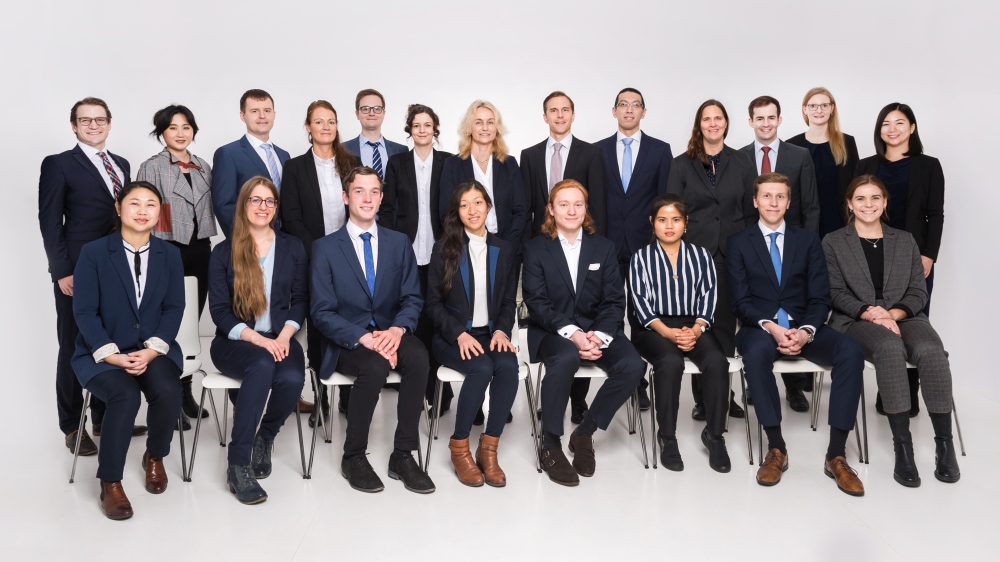
Our direct contacts within the certification authorities and testing laboratories in Asia have allowed us to continue to offer expedited services and certification completions comparable to pre-pandemic times. The pandemic changed the certification process due to travel restrictions, temporary shutdowns and customs delays. Fortunately, we were able to work with our clients, the test labs and the certification authorities to adapt and coordinate alternative methods and processes to meet our clients’ crucial deadlines. In many cases, the factory audits were carried out remotely and the exchange of information with the test laboratories was adjusted accordingly.
From the beginning of the pandemic MPR Group hired additional staff, invested in IT infrastructure, implemented remote work from home and mapped out alternative plans to optimize capacities for the additional workload of the new processes of certifications. The planning paid off and allowed us to offer our clients the efficient, seamless process they have come to expect from us. The consistent switch to working from home and the implementation of technical systems required for this were implemented very quickly and has proven successful. All certification projects are accompanied by an individual contact person who is replaced by a permanent representative in case of absence. This guarantees our clients continuous availability and a consistently high quality of service.
We are very happy that in the end we did not get into the situation of having to carry out any substitutions due to illness, and that our masking, safe-distance and hygiene measures worked well, and we did not have a single Covid-19 infection transmitted among colleagues during the entire pandemic.
In the meantime, our employees were able to take advantage of the vaccination and everyone in our offices is fully vaccinated or recovered from Covid-19.
The MPR Group wishes all employees, clients, family and suppliers a relaxing holiday season and a great start into the new year!
First wind turbines of the Shandong Peninsula South 4 wind farm go online
The first wind turbines of the Shandong Peninsula South 4 wind farm were recently connected to the power grid and began generating electricity, China Daily reported in mid-September. The wind farm is thus the first commercial offshore wind power generation project in the coastal province of Shandong, south of Beijing. There are 58 wind turbines in the entire wind farm, and the complete connection of all wind turbines is to be completed by the end of this year. Most products used for wind turbine production in China require CCC certification (the CCC certificate was introduced in 2002 and applies to both imported and Chinese products).
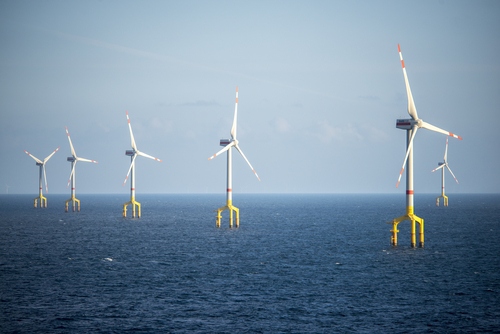
The annual output generated will then be up to 820 kilowatt hours of emission-free energy and cover the electricity needs of up to 300,000 households. In total, the wind farm has a capacity of 300 megawatts and is the first section of offshore wind turbines to test this technology in the eastern Chinese province of Shandong. The energy generated replaces the combustion of 253,000 tonnes of coal and saves 560,000 tonnes of CO₂. By planning and commissioning wind farms, the Chinese government is pursuing the goal of a greener economy with emissions peaking by 2030 and CO2 neutrality by 2060.
The list of CCC mandatory product groups is constantly expanding and, depending on the category, a mandatory certification China Compulsory Certificate or, since 2019, a CCC Self-Declaration or voluntary certification must be obtained. The CCC certificate was introduced in 2002 and applies to both imported and Chinese products. CCC stands for China Compulsory Certificate. The Chinese CCC is comparable to other certifications for standardising product quality, such as the European CE system, but there are important differences. We will be pleased to advise you without obligation about the scope and requirements of a China CCC certification.
For more information on how CCC certification, the CCC Self-Declaration and voluntary CCAP or CQC certification may affect your company, or for more information about CCC certification in general, the process, and the associated costs, please visit our website and our News Section where you will find current updates twice a week.
Please do not hesitate to contact us for further details and consultation. You can contact us via e-mail, or call us (UK: +44 2071931135, Rest of Europe: +49 69 2713769150, US: +1 773 654-2673).
Please don’t hesitate to also use our chat-window in the bottom right corner if you have any questions. (Please check your browser settings if you can’t see the window)
You can also check out our free CCC-Brochure, which can be downloaded right here as a PDF file or you consult our book (in English) “A Brief Guide to CCC: China Compulsory Certification”, which can be found directly here on Amazon.
Here you can download our brochure about the CCC Self-Declaration.
Here you can download our brochure about the voluntary CCAP or CQC certification.
China’s leading bicycle manufacturers expect growing sales and profits
China’s leading bicycle manufacturers are reporting good business figures in the first seven months of the year, combined with growing sales and profits in the double-digit percentage range. This is according to official statistics. Bicycle manufacturers with annual operating sales of more than 3.1 million US dollars (20 million RMB) reported profits of 909 million US dollars in the January-July period. This represents a year-on-year growth of 51.2 per cent. The figures were provided by the Ministry of Industry and Information Technology. The combined turnover of all bicycle manufacturers rose 38.6 per cent year-on-year to US$19.4 billion. Production figures in the first seven months of the year also increased. Output of non-electric bicycles increased by 13.3 per cent year-on-year to approximately 29.79 million units. A total of 20.16 million units of electric bicycles were produced in the identical period, an increase of 26 per cent.
The strong increase in demand also means increased demand for materials and components in bicycle factories. In many cases, CCC certifications are required for the import of corresponding products for bicycle manufacturing so that they can be used in accordance with Chinese regulations.
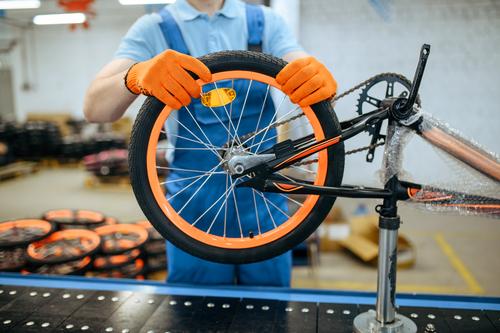
Products such as bicycles or their components that are sold to China and used in business activities in China require CCC certification. The list of product groups is constantly being expanded and, depending on the category, a mandatory certification China Compulsory Certificate or, since 2019, a CCC Self-Declaration or voluntary certification must be obtained. The CCC certificate was introduced in 2002 and applies to both imported and Chinese products. CCC stands for China Compulsory Certificate. The Chinese CCC is comparable to other certifications for standardising product quality, such as the European CE system, but there are important differences. We would be pleased to advise you without obligation about the scope and requirements of a China CCC certification.
For more information on how CCC certification, the CCC Self-Declaration and voluntary CCAP or CQC certification may affect your company, or for more information about CCC certification in general, the process, and the associated costs, please visit our website and our News Section where you will find current updates twice a week.
Please do not hesitate to contact us for further details and consultation. You can contact us via e-mail, or call us (UK: +44 2071931135, Rest of Europe: +49 69 2713769150, US: +1 773 654-2673).
Please don’t hesitate to also use our chat-window in the bottom right corner if you have any questions. (Please check your browser settings if you can’t see the window)
You can also check out our free CCC-Brochure, which can be downloaded right here as a PDF file or you consult our book (in English) “A Brief Guide to CCC: China Compulsory Certification”, which can be found directly here on Amazon.
Here you can download our brochure about the CCC Self-Declaration.
Here you can download our brochure about the voluntary CCAP or CQC certification.
Chinese brand Xiaomi overtakes Apple in smartwatch market
Chinese tech giant Xiaomi overtook Apple in global smartwatch shipments in the second quarter of 2021, industry sources report. According to the report, Xiaomi took the top spot in the segment with 8 million products shipped and a market share of nearly 20 per cent. This was shown by data from the market researchers at Canalys. According to the figures, however, Apple is only just behind with 7.9 million products, while Huawei is in third place with 3.7 million products. The early market launch of the Mi Band 6 enabled Xiaomi to secure important market shares. The new smartwatch has numerous advantages over its predecessor, according to Canalys analyst Cynthia Chen. An equally quick response to the growing market with the launch of entry-level smartwatches secured Xiaomi a gain of 1.3 million items in the second quarter of 2021. Globally, smartwatch shipments grew 5.6 per cent to 40.9 million in the second quarter of 2021. The production of smartwatches depends on the import of parts and components. For the Chinese market, the majority of such goods require CCC certification in order to be imported and used.
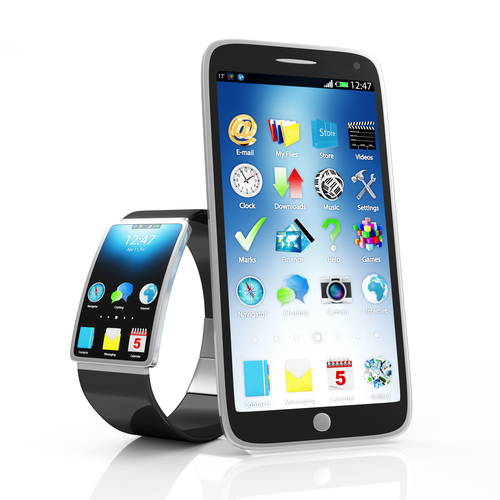
Xiaomi (officially Xiaomi Tech) was founded by Lei Jun in 2010 and is now one of the top three smartphone manufacturers in the world. In addition, the company also produces smartwatches, notebooks, vacuum robots and lifestyle products. Xiaomi also has a stake in Ninebot, which bought the American company Segway in 2015. In March, Xiaomi announced that it would invest 10 billion US dollars in electric vehicles over the next ten years. More recently, in August 2021 it bought Deepmotion, a self-driving vehicle company, for US$77 million. Revenues last reported in 2020 were $43.36 billion, with after-tax profits of $3.11 billion.
Electronic items and their components, such as smartwatches or smartphones, must be awarded a CCC certificate in order for the products to be exported to China or manufactured locally. The CCC certificate was introduced in 2002 and is comparable to the European CE marking. If you need CCC certification in the electronics sector, China Certification is an excellent partner for you. We have been advising leading suppliers and manufacturers on their CCC certifications for years.
For more information on how CCC certification, the CCC Self-Declaration and voluntary CCAP or CQC certification may affect your company, or for more information about CCC certification in general, the process, and the associated costs, please visit our website and our News Section where you will find current updates twice a week.
Please do not hesitate to contact us for further details and consultation. You can contact us via e-mail, or call us (UK: +44 2071931135, Rest of Europe: +49 69 2713769150, US: +1 773 654-2673).
Please don’t hesitate to also use our chat-window in the bottom right corner if you have any questions. (Please check your browser settings if you can’t see the window)
You can also check out our free CCC-Brochure, which can be downloaded right here as a PDF file or you consult our book (in English) “A Brief Guide to CCC: China Compulsory Certification”, which can be found directly here on Amazon.
Here you can download our brochure about the CCC Self-Declaration.
Here you can download our brochure about the voluntary CCAP or CQC certification.
Chinese automaker Geely enlists Tencent as third tech partner
Chinese carmaker Geely has signed key partnerships in recent weeks for its projects related to e-mobility and autonomous driving. After internet all-rounder Baidu and Apple supplier Foxconn, it is now also working with technology provider Tencent. Geely aims to develop smart vehicle cockpits and autonomous driving capabilities with its partners. Chinese entrepreneur and Daimler partner Li Shufu is behind Geely’s agreements with companies from the technology sector. The components and parts required for the construction of such cockpits are usually subject to CCC Certification and must undergo product certification before they can be introduced into the Chinese market.
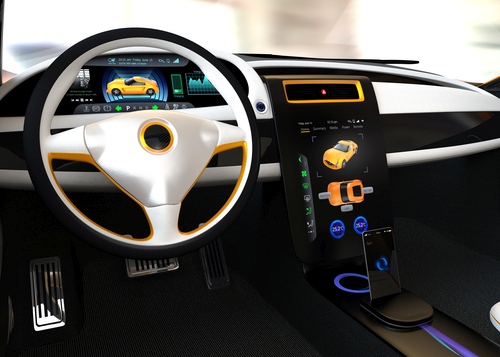
The collaboration is already bearing fruit: Baidu has announced that it will launch a new subsidiary brand together with Geely to develop intelligent electric cars. Baidu had already previously collaborated with BMW on similar projects. According to insider information from Reuters, Baidu will have a majority stake in the new joint venture. Geely is to provide the necessary automotive know-how, as the Chinese carmaker is increasingly focusing on electric vehicles. After acquiring the Swedish car brand Volvo in 2010, Geely developed a new platform for e-cars, which resulted in the Volvo XC40 Recharge and a new sub-brand, Polestar, among others.
In addition, Geely CEO Li Chufu is also a major shareholder in German automaker Daimler. Their cooperation is to be expanded in the future at Li’s insistence: The next generation of the now all-electric Smart will be built by Geely in China. In addition, there will again be a four-seater as well as a new compact electric SUV. Despite all of Geely’s ambitions regarding the expansion of electric mobility, internal combustion engines will continue to be developed and manufactured. In the future, it will also build powertrains for Daimler in its own company, which is operated jointly with Volvo. Geely has also founded the Lynk&Co brand, which offers both combustion engines and electric cars. On the global market, Geely is the largest shareholder in the Malaysian car manufacturer Proton and the traditional British brand Lotus.
Vehicles and components must be awarded a CCC certificate in order for products to be exported to China or manufactured locally. CCC certification is a complex project that requires professional support at all stages. For several years MPR China Certification GmbH has been entrusted with large CCC projects for the vehicle manufacturers Lotus, Tesla and Bugatti. We will gladly advise you on the scope and requirements of a China CCC certification without obligation.
For more information on how CCC certification, the CCC Self-Declaration and voluntary CCAP or CQC certification may affect your company, or for more information about CCC certification in general, the process, and the associated costs, please visit our website and our News Section where you will find current updates twice a week.
Please do not hesitate to contact us for further details and consultation. You can contact us via e-mail, or call us (UK: +44 2071931135, Rest of Europe: +49 69 2713769150, US: +1 773 654-2673).
Please don’t hesitate to also use our chat-window in the bottom right corner if you have any questions. (Please check your browser settings if you can’t see the window)
You can also check out our free CCC-Brochure, which can be downloaded right here as a PDF file or you consult our book (in English) “A Brief Guide to CCC: China Compulsory Certification”, which can be found directly here on Amazon.
Here you can download our brochure about the CCC Self-Declaration.
Here you can download our brochure about the voluntary CCAP or CQC certification.
 We are part of the CERTANIA-Group.