


Schließen


Optimization of SRRC application process and adjustment of NAL catalogue
In order to support the development of the electronics industry, reduce the burden on enterprises and promote the optimal development of the electronics industry, the General Office of the State Council of the PRC issued Notice No. 31 of 2022 which aims to optimize the SRRC application process and adjust the NAL catalogue.

- Adjustment of NAL Catalogue:
Satellite Internet devices and function virtualization devices will be included in the administration of the network access license (NAL) certification. In addition, network access license (NAL) management is no longer implemented for 11 types of telecommunications equipment, such as fixed-line telephone terminals and fax machines, which have more mature technology and are relatively less relevant to telecommunications security (see Appendix).
The process for NAL applications has been modified as follows:
- Optimization of SRRC review items. Appropriate reduction of the corresponding review fees.
- Shortening the deadline for network access approvals to 15 business days.
- Promotion of electronic labeling of network access permits, gradual phasing out of labeling with paper tags.
- No more obligation to mark the network access license number on the packaging of telecommunication equipment
- Goal: Approved products should be able to be placed on the market as soon as possible after receiving NAL approval (products may not be sold or used until they are approved)
- Optimization the SRRC type approval system for radio transmitting equipment:
- Shortening the deadline for SRRC approval to 15 working days.
- Extending the validity period of SRRC certificates that were previously valid for less than 2 years to more than 2 years. This excludes certificates for which an adjustment of the radio frequency planning and the duration of the frequency use license is required.
- Optimization of the coding mode of the SRRC code: MIIT (Ministry of Industry and Information Technology) formulates and publishes coding rules, and enterprises independently establish SRRC codes in accordance with the coding rules (products cannot be sold or used before they are approved by SRRC certificate).
Annex:
I. Telecommunications equipment no longer covered by the NAL catalogue (11 types).
Landline telephone terminals
- Cordless telephone terminals
- Group telephones
- Fax machines
- Modems (including cards)
- Wireless pagers
- Service integrating digital narrowband network terminals (ISDN terminals)
- Multimedia terminals for access to mobile communication networks
- Frame relay switches
- Asynchronous transfer mode switches (ATM switches)
- Call center equipment
II. New NAL equipment (2 types)
- Satellite-based Internet equipment
- Functional virtualization equipment
For more information on how SRRC- and NAL type approval, CCC certification, the CCC Self-Declaration and voluntary CCAP or CQC certification may affect your company, or for more information about CCC certification in general, the process, and the associated costs, please visit our website and our News Section where you will find current updates twice a week.
Please do not hesitate to contact us for further details and consultation. You can contact us via e-mail, or call us (UK: +44 2071931135, Rest of Europe: +49 69 2713769150, US: +1 773 654-2673).
Tesla competitor Nio celebrates German premiere
Chinese EV manufacturer Nio announced it will launch its flagship ET7 model on the German market in the fourth quarter of this year. The around five-meter sedan with a range of up to 700 kilometers is causing a stir among competitors from Tesla and Co in view of a low base price of the equivalent of 56,500 euros. The ET7 is to be offered in two configurations with 70 or 100 kWh battery capacity. In addition, Nio is the first manufacturer to install a production-ready solid-state battery in the ET7, while other brands are still researching this technology. With a system output of 648 hp in the top version, the e-sedan accelerates from zero to 100 in 3.9 seconds, competing against the Tesla Model S and the Porsche Taycan.
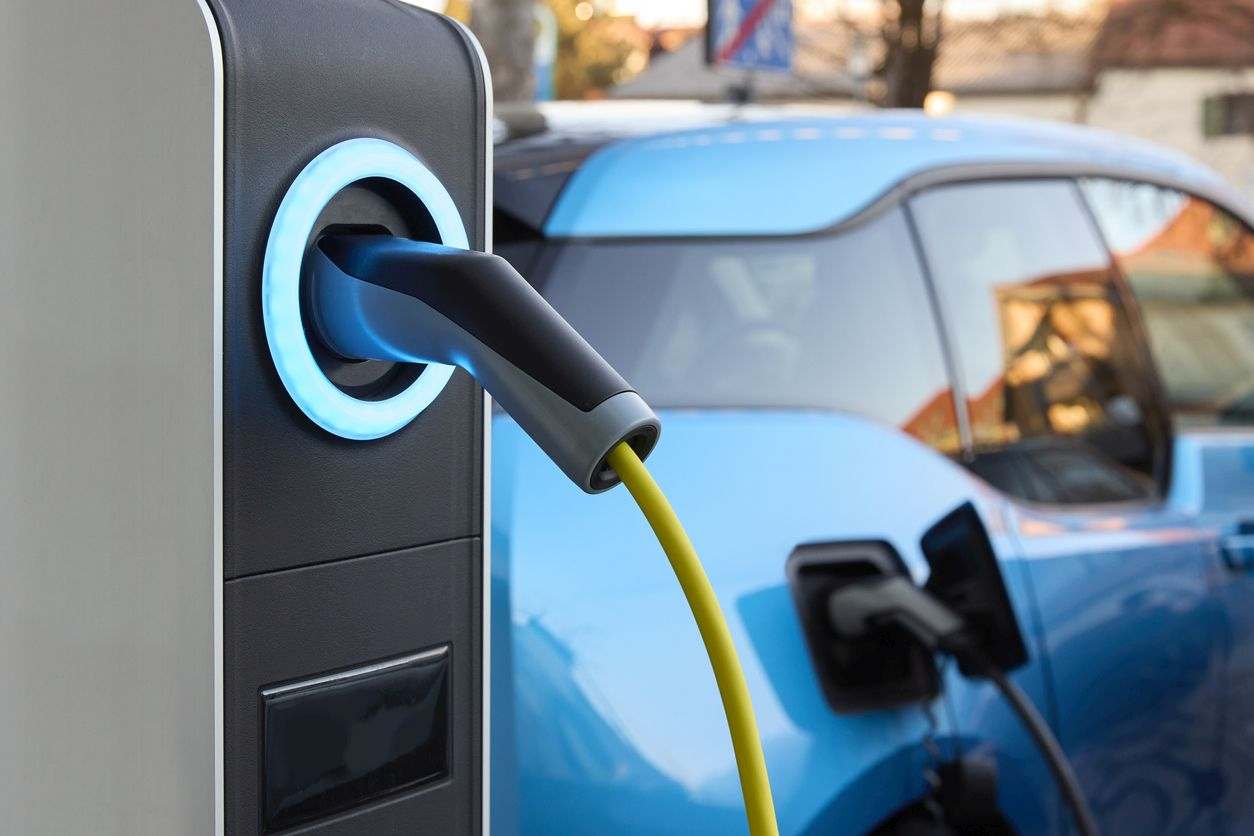
However, German customers will have to wait until 2024, as the basic version will presumably be offered first. In Norway, on the other hand, Nio is already established as an EV brand and offers the ES8 SUV there. Nio’s battery swap concept is also interesting, allowing EVs to drive into an automatic swap station that replaces the battery on the underbody, eliminating the need for charging by cable. The method has already been tested in Chinese cities with success. Currently, Nio is even building a plant for this in Hungary, where components for the changing stations are produced. By contrast, the EVs themselves will continue to be manufactured in China and shipped to Europe as complete vehicles.
Nio is a Chinese start-up based in Shanghai and was only founded in 2014. A design and development center with more than 120 employees is located in Munich. There, work is done on brand development and the product range for the European market. In addition, Nio is involved in the FIA Formula E all-electric racing series.
The certification of vehicles is a highly complex project that requires professional support in all phases. MPR China Certification GmbH has been active in this field for several years.
We will be happy to advise you without obligation on the scope and requirements for the approval of vehicles. In China, CCC certification is required for vehicles.
Please do not hesitate to contact us for further details and consultation. You can contact us via e-mail, or call us (UK: +44 2071931135, Europe: +49 69 2713769150, US: +1 773 654-2673).
Please don’t hesitate to also use our chat-window in the bottom right corner if you have any questions. (Please check your browser settings if you can’t see the window)
Great Wall Motor plans to launch 2 EVs in Germany in late 2022
Chinese vehicle company Great Wall Motor (GWM) plans to launch its Ora and Wey brands on the German market from the end of 2022. To this end, the company entered into a partnership with car dealer Emil Frey Group. As Xiangjun Meng, European market manager of GWM told mobility blog Ecomento, other countries besides Germany will be targeted by the new alliance in the future. GWM announced the expansion of its business to Europe as early as 2021 at IAA Mobility, with the first vehicles to be delivered in the fourth quarter of 2022. The e-car brand Ora will kick things off with the all-electric Funky Cat (known as the Good Cat in other markets) and the premium brand Wey with the plug-in hybrid Coffee 01.
The SUV, which is just under five meters long, is in the premium segment and has a combined gasoline and electric motor output of 350 kW / 476 hp. Acceleration from zero to 100 takes five seconds, the top speed is 235 km/h. GWM states a purely electric range of up to 150 kilometers. The compact Ora Funky Cat comes as a hatchback variant in retro design at 4.24 m in length. The soft lines and round headlights are somewhat reminiscent of the classic VW Beetle, but inside the Funky Cat is state-of-the-art technology. As an all-electric vehicle, it is offered in two battery sizes and engine options: 49 kWh for 300 km and 63 kWh for 400 km range according to the WLTP standard. The smaller engine produces 105 kW / 143 hp, the larger 126 kW / 171 hp. At 160 km/h, the speed of the Funky Cat is electronically limited. Gerhard Schürmann, CEO of the Emil Frey Group, expects a successful sales launch and many prospective buyers.
The certification of vehicles is a highly complex project that requires professional support in all phases. MPR China Certification GmbH has been active in this field for several years.
We will be happy to advise you without obligation about the scope and requirements for vehicle registration. In China, CCC certification is required for vehicles.
Please do not hesitate to contact us for further details and consultation. You can contact us via e-mail, or call us (UK: +44 2071931135, Europe: +49 69 2713769150, US: +1 773 654-2673).
Please don’t hesitate to also use our chat-window in the bottom right corner if you have any questions. (Please check your browser settings if you can’t see the window)
MPR at the 6th German-Chinese Automotive Congress in Berlin
On September 20, 2022, MPR China Certification GmbH participated in the 6th German-Chinese Automotive Congress in Berlin. The top-class event was organized by CIPA (China International Investment Promotion Agency) and aBB automotive BerlinBrandenburg e.V..
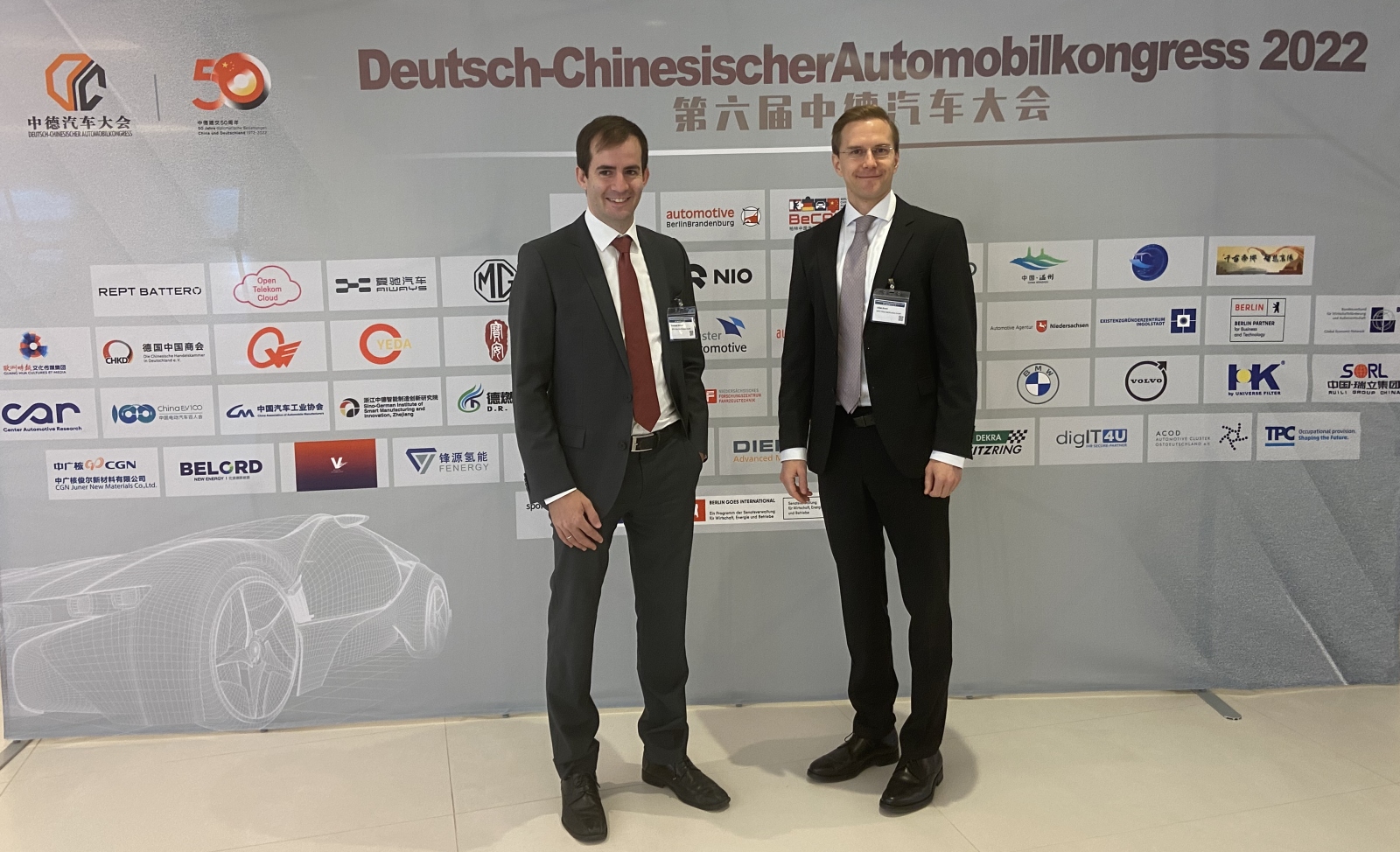
Under the motto of the congress “Climate neutrality and future mobility”, important industry representatives from Germany and China met for a diverse exchange of ideas. In addition to the hundreds of participants on site, several thousand participants from China were also connected virtually.
Julian Busch, Managing Director of MPR China Certification GmbH and Christoph Graffius, Business Development Manager of MPR China Certification GmbH, were in attendance and actively participated in the conversation and exchange of ideas.
Greetings were given by the Chinese Ambassador in Berlin Mr. Ken Wu and the Director General of CIPA Dianxun Liu. There were many interesting speakers including Dr. Hans-Peter Friedrich (Member of the Bundestag and former Federal Minister), Rudolf Scharping (former Federal Minister) and Prof. Ferdinand Dudenhöfer (CAR Center Automotive Research) to mention a few.
Numerous Chinese vehicle manufacturers presented themselves at the congress and outlined their strategy for opening up the European market.
Nio presented the soon to be available high-quality vehicles as well as their own interchangeable battery stations.
Xiaopeng/ Xpeng presented the latest vehicle models and equipment variants of the vehicles on site.
Geely has already been present on the European market for many years and presented the structures it has built up to date and the impressive growth of its development site in Frankfurt.
Aiways also introduced its vehicles and its strategy of simplifying processes in production and market entry.
Great Wall Motor was also present with its own vehicles and gave insight into the model range that is to be launched in Europe in the coming years.
Also present was MG Motor/ SAIC Motor, which introduced its range of vehicles.
Numerous manufacturers of battery systems also informed the audience about the latest trends in their industry.
Here, the system from the German-Chinese joint venture INFRAMobility-Dianba GmbH, which offers a manufacturer-independent battery exchange system, is particularly interesting.
MPR China Certification GmbH participated with great pleasure in this successful congress and is looking forward to the 7th German-Chinese Automotive Congress to be held in China.
For more information on how CCC certification, the CCC Self-Declaration and voluntary CCAP or CQC certification may affect your company, or for more information about CCC certification in general, the process, and the associated costs, please visit our website and our News Section where you will find current updates twice a week.
Please do not hesitate to contact us for further details and consultation. You can contact us via e-mail, or call us (UK: +44 2071931135, Europe: +49 69 2713769150, US: +1 773 654-2673).
Please don’t hesitate to also use our chat-window in the bottom right corner if you have any questions. (Please check your browser settings if you can’t see the window)
You can also check out our free CCC-Brochure, which can be downloaded right here as a PDF file or you consult our book (in English) “A Brief Guide to CCC: China Compulsory Certification”, which can be found directly here on Amazon.
Here you can download our brochure about the CCC Self-Declaration.
Here you can download our brochure about the voluntary CCAP or CQC certification.
BYD, market leader for EVs in China, will launch three models on the German market
For some time now, the Chinese manufacturer of EVs BYD has displaced the previous global market leader Tesla from the top position. Now the company, whose abbreviation BYD stands for “Build your Dreams”, will also start selling three models in Germany towards the end of the year. The Atto 3 will be the entry-level model and will compete against EVs like the VW ID.3. The compact SUV with a length of 4.45 m has a motor on the front axle with 150 kW / 204 hp output, which allows a top speed of 160 km/h. According to BYD, a range of 420 kilometers can be covered with the 60.5 kWh battery.
The second model is the larger Tang, also designed in the style of an SUV. Two motors, one per axle, provide all-wheel drive and together produce 380 kW / 517 hp. In line with the more powerful engine, the top speed of the Tang is 180 km/h, and there is room for up to seven people inside. According to BYD, an 86.4 kWh battery installed in the underbody as a structural element should enable a range of up to 400 kilometers on a single charge.
Last but not least, after the two SUVs, the Han electric sedan joins BYD’s preliminary German portfolio. The five-meter-long vehicle is in the same class as the Tesla Model S or the Mercedes EQE. The Han has the same motorization and battery capacity as the Tang, but is said to be able to travel up to 521 kilometers due to better aerodynamics.
Since the technology of BYD’s EVs for Germany are identical to the global specifications, the manufacturer can already provide detailed information for this. BYD’s European headquarters are located in The Hague, Netherlands. BYD has not yet named a partner or distribution channel for sales in Germany. Likewise, the prices for the EVs are not to be disclosed until the market launch in the fall of this year.
For more information on how CCC certification, the CCC Self-Declaration and voluntary CCAP or CQC certification may affect your company, or for more information about CCC certification in general, the process, and the associated costs, please visit our website and our News Section where you will find current updates twice a week.
Please do not hesitate to contact us for further details and consultation. You can contact us via e-mail, or call us (UK: +44 2071931135, Europe: +49 69 2713769150, US: +1 773 654-2673).
Please don’t hesitate to also use our chat-window in the bottom right corner if you have any questions. (Please check your browser settings if you can’t see the window)
You can also check out our free CCC-Brochure, which can be downloaded right here as a PDF file or you consult our book (in English) “A Brief Guide to CCC: China Compulsory Certification”, which can be found directly here on Amazon.
Here you can download our brochure about the CCC Self-Declaration.
Here you can download our brochure about the voluntary CCAP or CQC certification.
MPR and CATARC at the International Forum (TEDA) on Chinese Automotive Industry Development (Europe)
On September 2, 2022 MPR China Certification GmbH participated in the “International Forum (TEDA) on Chinese Automotive Industry Development (Europe)” in Munich, Germany. The event was organized by CATARC (China Automotive Technology and Research Center Co., Ltd.). MPR China was represented by Managing Director Julian Busch and Business Development Manager Christoph Graffius.
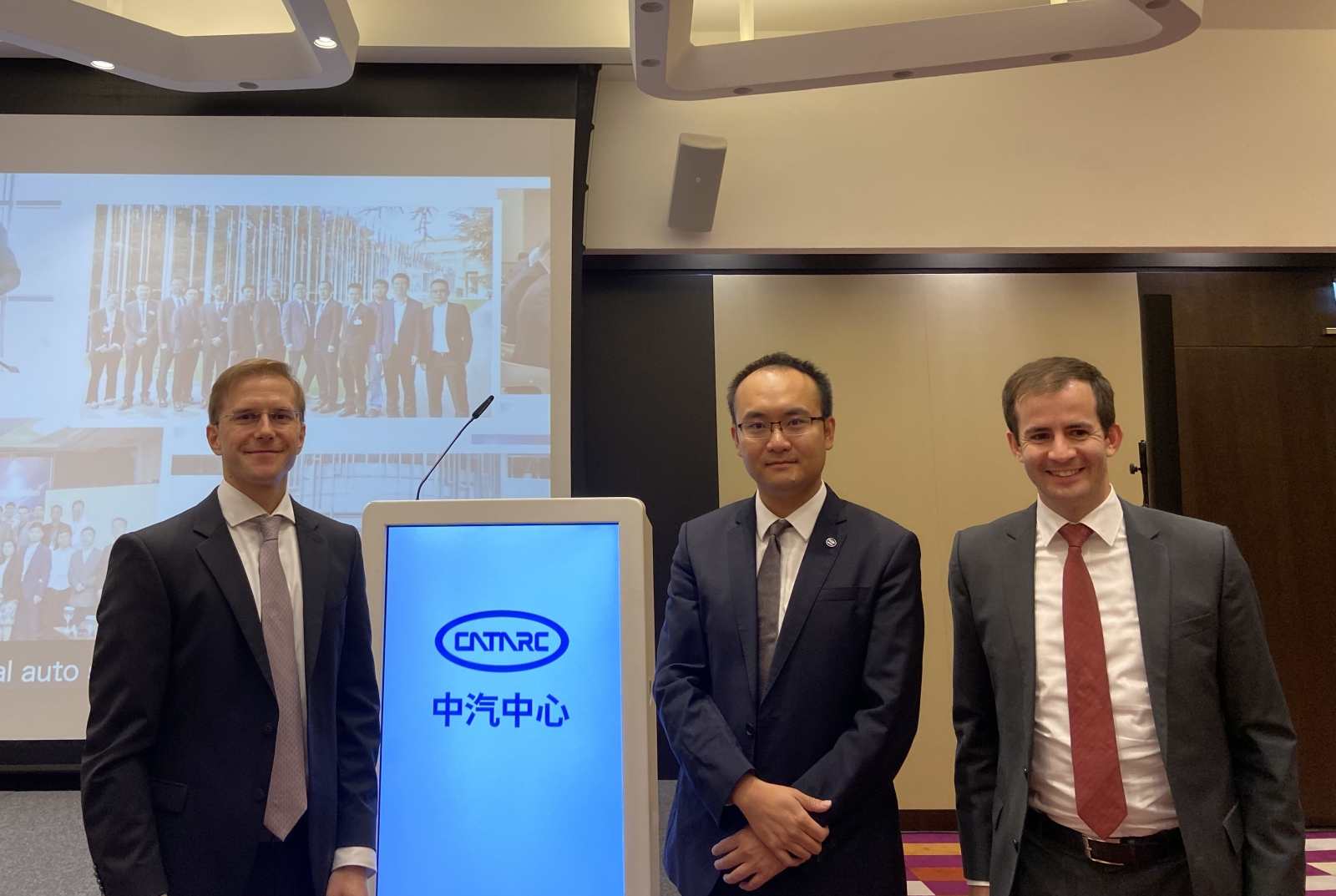
The forum offered a variety of presentations on the Chinese and German automotive industry. High-ranking representatives of CATARC presented new developments in the field of electric mobility and autonomous driving. The Chinese vehicle manufacturer Great Wall presented its plans to introduce its vehicles to the German market.
The VDA and German manufacturers BMW, Mercedes-Benz and Webasto were also in attendance and had interesting presentations.
The forum opened a new perspective on the groundbreaking current developments in the automotive industry, first and foremost electrification, autonomous and connected driving and standardization. The topic of standards and norms for electromobility, battery systems, autonomous and connected driving will play an important role in future developments in the automotive industry.
CCC certification, CCC self-declaration as well as voluntary CQC certification and CCAP certification are among the most important quality and safety certifications that must be obtained for import and distribution of automotive products in China. MPR China Certification GmbH offers vehicle manufacturers and suppliers individual services for certification and testing.
Mutual Recognition of Chinese Certifications
Standardization and mutual recognition of certifications in the automotive sector are the main goals of the Motor Vehicle Certification Alliance, which was ceremonially founded in Nanning, Guangxi, on Aug. 29, 2022. Several important Chinese certification and testing institutions joined the alliance, among them the organizing China Quality Certification Center (CQC) and the China Certification Center for Automotive Products (CCAP).

The automotive sector has been identified and promoted as key industry by the Chinese government. This is mainly due to its major role for the development of a wide range of other branches, including iron and steel, machinery, electronics, and many more. In this context, certifications like the CCC certification, or voluntary CQC certification and voluntary CCAP certification play a key role as an internationally recognized regulatory mechanism for ensuring product quality.
The Motor Vehicle Certification Alliance is intended to accompany and shape this process as a service platform, exchange platform, and innovation platform, which will lead to an improvement in market efficiency and an increase in the overall welfare of the Chinese public. Its central concern is to combine the testing and certification resources of its various members.
The efforts of the Motor Vehicle Certification Alliance focus on the mutual recognition of certificates, which shall avoid repeated product testing and save costs for manufacturing companies. The alliance additionally aims to increase the quality of the services they provide through joint efforts, as well as to strengthen the credibility of Chinese certifications by forming an overarching homologation brand.
Since 2005 MPR China Certification GmbH has been supporting companies in the automotive industry in obtaining their certifications for the Chinese market. We work closely with all major certification institutions and were even awarded the distinction of “Outstanding Certification Company” by CCAP, being the only foreign certification company having achieved this.
We will be happy to check for you whether a particular product is subject to mandatory certification, enable you to obtain the required certifications quickly and hassle-free, and ensure that the certification complies with your requirements as part of the overall vehicle homologation process.
For more information on voluntary CCAP or CQC certification and other Chinese product certifications and how they may affect your company, or for more information about CCC certification in general, the process, and the associated costs, please visit our website and our News Section.
Please do not hesitate to contact us for further details and consultation. You can contact us via e-mail, or call us (UK: +44 2071931135, Rest of Europe: +49 69 2713769150, US: +1 773 654-2673).
Please don’t hesitate to also use our chat-window in the bottom right corner if you have any questions. (Please check your browser settings if you can’t see the window)
You can find more information to download in our free brochure about the voluntary CCAP or CQC certification.
Waymo selects Chinese automaker for its electric robo-taxis
In December 2021, Alphabet subsidiary Waymo announced it would partner with Chinese automaker Geely for its fleet of self-driving cabs. The all-electric and autonomous vehicles will be designed in Sweden (Geely owns Swedish car brand Volvo) and based on Geely’s Zeekr EV. Waymo will take care of the necessary technical equipment and software needed for autonomous driving. In this regard, Waymo announced that there are plans to deploy the vehicles in the U.S. at some point to complement its existing fleet of robo-taxis. Vehicles and components must be awarded a CCC certificate in order for the products to be exported to China or manufactured locally.
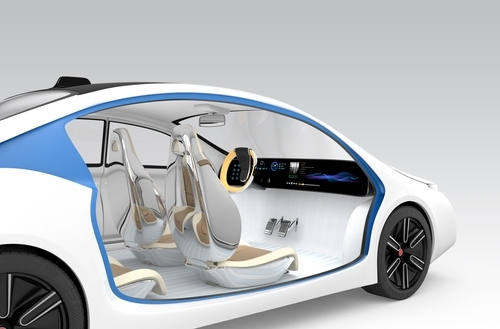
Images of a finished concept car show a vehicle designed specifically for autonomous cab driving. It has a level floor space, low step-in height, and the lack of a B-pillar makes it easier to get in and out. In addition, sliding doors and seats that fold back are used, sufficient headroom is also provided. Waymo shared that future models will not have a steering wheel or pedals. Only a screen is planned, on which passengers will be able to follow the progress of the journey.
Geely and Waymo’s collaboration highlights how almost the entire automotive industry is currently trying to capitalize on the self-driving EV market through partnerships and joint ventures. Waymo is already working with Stellantis and Jaguar Land Rover on autonomous vehicles. Geely, on the other hand, wants to transform Volvo into an all-electric car brand, as it did previously with Polestar.
CCC certification for automotive products is a complex project that requires professional support at all stages. For several years, MPR China Certification GmbH has been entrusted with large CCC projects for the vehicle manufacturers Lotus, Tesla and Bugatti. We will be pleased to provide you with non-binding advice on the scope and requirements of a China CCC certification.
For more information on how CCC certification, the CCC Self-Declaration and voluntary CCAP or CQC certification may affect your company, or for more information about CCC certification in general, the process, and the associated costs, please visit our website and our News Section where you will find current updates twice a week.
Please do not hesitate to contact us for further details and consultation. You can contact us via e-mail, or call us (UK: +44 2071931135, Rest of Europe: +49 69 2713769150, US: +1 773 654-2673).
Please don’t hesitate to also use our chat-window in the bottom right corner if you have any questions. (Please check your browser settings if you can’t see the window)
You can also check out our free CCC-Brochure, which can be downloaded right here as a PDF file or you consult our book (in English) “A Brief Guide to CCC: China Compulsory Certification”, which can be found directly here on Amazon.
Here you can download our brochure about the CCC Self-Declaration.
Here you can download our brochure about the voluntary CCAP or CQC certification.
BSMI Updates Technical Specification for Verification and Inspection of Equipment for Electric Vehicles
In February 2022 BSMI in Taiwan updated the technical specification for the verification and inspection of electrical vehicle supply equipment (EVSE).
This technical specification applies to electric vehicle (EV) supply equipment, which includes, but is not limited to, equipment for charging electric vehicles with a specified nominal supply voltage and a specified nominal output voltage, which must be subject to testing and inspection.
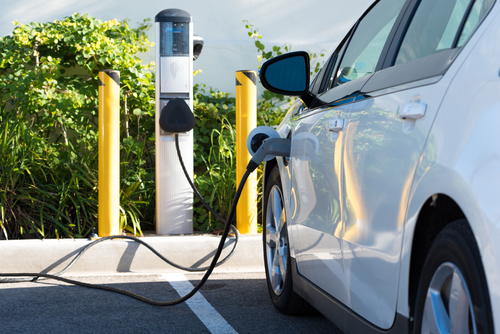
As a rule, a transition period is always granted by the Taiwanese authorities until the technical specifications or regulations then come into force. In this case the update will be implemented from January 2023 and will apply to both Taiwanese manufactured and imported EVSE.
The technical specification has been formulated with reference to the following international regulations and technical specifications:
| No. | Standard | Titel |
| 1 | IEC 62052-11:2020 | Electricity metering equipment – General requirements, tests and test conditions – Part 11: Metering equipment |
| 2 | IEC 62053-21:2016 | Electricity metering equipment (AC) – Particular requirements – Part 21: Static meters for active energy (classes 1 and 2) |
| 3 | IEC 62053-41:2020 | Electricity metering equipment – Particular requirements – Part 41: Static meters for DC energy (classes 0,5 and 1) |
| 4 | National Institute of Standards and Technology Handbook 44, §3.40, 2019 | |
| 5 | PTB-A 50.7 | Requirements for electronic and software
controlled measuring instruments and auxiliary equipment for electricity, gas, water and heat |
| 6 | CNS 15511-1:2021 | Electric vehicle conductive charging system – Part 1: General requirements + Amendment 1 |
| 7 | CNS 14607:2017 | Static electricity meters |
Depending on the product there are various certification requirements in Taiwan for which different authorities are responsible. In the automotive sector, the VSCC is primarily responsible, but also BSMI. The relevant authorities or certifications must be checked with the authorities. In some cases, only one certification is sufficient to be able to market the product in Taiwan.
If you are unsure whether your product needs to obtain BSMI certification or VSCC certification, please do not hesitate to contact us. We will be happy to assist you in determining which certification requirements apply to you.
Please contact us with any questions regarding VSCC or BMSI certification. You can contact us by e-mail or call us at +49 (0) 69 271 3769 150 (EU) or +1-773-654-2673 (US).
New EMC and Safety Norms GB/T 9254.1-2021 and GB 4943.1-2022 for communication equipment
On 1 July 2022, the new Chinese EMC standard GB/T 9254.1-2021 became effective. The new standard for electromagnetic compatibility (EMC) corresponds to the international standard CISPR 32:2015. A total of four national standards, GB 4943.1-2011, GB 8898-2011, GB/T 9254-2008 and GB/T 13837-2012, have been revised and partially consolidated, resulting in the new standards GB/T 9254.1-2021 and GB 4943.1-2022. The corresponding implementing regulations CNCA-C08-01:2014, CNCA-C09-01:2014 and CNCA-C16-01:2014 have also been revised.
Most information technology equipment needs CCC certification in China. Previously certification was divided according to product category. Standard GB/T 9254-2008 regulated the EMC guidelines for general information technology equipment, while standard GB/T 13837-2012 was specifically aimed at television and radio equipment.
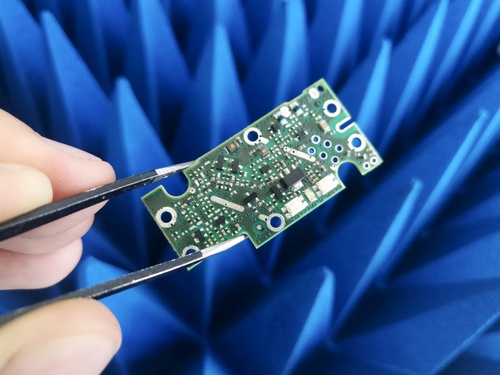
The new standard now combines the two into one standard. As a result, the requirements for devices have also changed slightly, but overall, the new standard makes the CCC certification itself more clear and more uniform than before.
Moving forward, all new certification applications must be submitted under the new standard. At the same time, Chinese authorities granted a generous transition period for existing CCC certifications. All CCC certificates must then be updated to the new standard by July 31, 2024. This transition period is intended to facilitate the renewal of certificates and keep the associated costs low.
Manufacturers whose CCC certificate is still based on the old standard must adapt their certificates to the new standards. This requires an application and a corresponding product test.
| List of standards for Compulsory product certification of audio and video equipment | ||||
| Product types | Safety Standards | EMC Standards | CNCA Implementation Rules | |
| 1 | Active loud speaker systems having single or multiple speaker with max. output power under 500W (R.M.S.) | GB 4943.1 | GB/T 9254.1
GB 17625.1 |
CNCA-C08-01:2014 |
| 2 | Audio power amplifier | |||
| 3 | Various carrier forms of audio and video recording, playback and processing equipment (including various types of optical discs, tapes, hard drives and other carrier forms) | |||
| 4 | Color TV receivers and TV set-top boxes for various imaging modes | |||
| 5 | Electronic piano | |||
| 6 | Power adapter for Audio and video equipment power adapter ( including charger / discharger ) | |||
| List of standards for Compulsory product certification of information technology equipment | ||||
| Product types | Safety Standards | EMC Standards | CNCA Implementation Rules | |
| 1 | Microcomputer | GB 4943.1 | GB/T 9254.1
GB 17625.1 |
CNCA-C09-01:2014 |
| 2 | Portable computers | |||
| 3 | Display device used in conjunction with a computer | |||
| 4 | Printing device used in conjunction with a computer | |||
| 5 | Multi-purpose printing copier | |||
| 6 | Scanner | |||
| 7 | Server | |||
| 8 | The power adapter for information technology equipment (including charger/discharger) and built-in power supply for computer/server | |||
| List of standards for Compulsory product certification of telecommunication terminal equipment | ||||
| Product types | Safety Standards | EMC Standards | ||
| 1 | Fax | GB 4943.1 | GB/T 9254.1 | |
| 2 | Cordless telephone terminal | GB/T 19483 | ||
| 3 | Mobile user terminals | GB/T 19484.1 GB/T 22450.1 YD/T 1592.1 YD/T 1595.1 YD/T 2583.14 YD/T 2583.18 |
CNCA-C16-01:2014 | |
| 4 | Data terminal | GB/T 9254.1 | ||
| 5 | Multimedia terminal | GB/T 9254.1 | ||
For more information on how CCC certification, the CCC Self-Declaration and voluntary CCAP or CQC certification may affect your company, or for more information about CCC certification in general, the process, and the associated costs, please visit our website and our News Section where you will find current updates twice a week.
Please do not hesitate to contact us for further details and consultation. You can contact us via e-mail, or call us (UK: +44 2071931135, Rest of Europe: +49 69 2713769150, US: +1 773 654-2673).
Please don’t hesitate to also use our chat-window in the bottom right corner if you have any questions. (Please check your browser settings if you can’t see the window)
You can also check out our free CCC-Brochure, which can be downloaded right here as a PDF file or you consult our book (in English) “A Brief Guide to CCC: China Compulsory Certification”, which can be found directly here on Amazon.
Here you can download our brochure about the CCC Self-Declaration.
Here you can download our brochure about the voluntary CCAP or CQC certification.
 We are part of the CERTANIA-Group.