


Schließen

Malaysia cooperates with China in the development of electric vehicles
For the purpose of cooperation, 3 separate MoUs were signed by Malaysian and Chinese automotive scientists and the manufacturer Proton. One of them was concluded between the Malaysian Automotive, Robotics and IoT Institute (MARii) and the Chinese Automotive Technology and Research Center (CATARC). The purpose of the agreement is to share knowledge, harmonize technical standards and establish a test center for next-generation vehicles (NxGV).
The second cooperation was agreed between Proton majority owner DRB-Hicom and MARii. The aim is to train scientists and specialists for new technologies in the automotive sector. A further cooperation was announced between CATARC and the car manufacturer Proton. The aim is to enable Proton to use CATARC’s numerous test stands and facilities in China. For CATARC, Malaysia is the third country, after Germany and Japan, in which the research facility is active outside China. Inquiries from reporters regarding the specific investment amount were answered in the negative by MARii Chairman Madani. However, he made it clear that the facilities must be completed by 2023.
Furthermore, there is a draft for a further investment by CATARC together with grants from industry and government funds. Further research and development centres in the fields of Big Data, robotics, IoT and urban planning are under discussion. All these facilities are part of an overall concept for networked mobility, Madani said. His institute MARii has already been able to win over 10 well-known companies for cooperation in the aforementioned areas, and further companies for telematics and from the automotive industry will be added. For the export of vehicle components to China or local production, your company needs a CCC certificate. The Chinese CCC (China Compulsory Certificate) is a system for standardizing product quality, similar to DIN or ISO standards. We would be pleased to advise you in the context of an upcoming CCC certification.
For more information on how CCC certification, the CCC Self-Declaration and voluntary CCAP or CQC certification may affect your company, or for more information about CCC certification in general, the process, and the associated costs, please visit our website and our News Section where you will find current updates twice a week.
Please do not hesitate to contact us for further details and consultation. You can contact us via e-mail, or call us (UK: +44 2071931135, Rest of Europe: +49 69 2713769150, US: +1 773 654-2673).
You can also check out our free CCC-Brochure, which can be downloaded right here as a PDF file or you consult our book (in English) “A Brief Guide to CCC: China Compulsory Certification”, which can be found directly hier on Amazon.
Here you can download our brochure about the CCC Self-Declaration.
Here you can download our brochure about the voluntary CCAP or CQC certification.
Car manufacturer Hongqi reaches new sales record
Hongqi tripled its sales figures compared to 2018, making it China’s first premium car brand with more than 100,000 vehicles sold annually. In addition, the company already achieved its sales figures at the end of December, which were only planned for the coming year. Hongqi launched three new models in 2018: the HS5 and HS7 SUVs and the all-electric E-HS3. These new models made the biggest contribution to sales, with around 33,000 vehicles. Other available models are the H7 and H5 sedans and the long-wheelbase version L5.
Founded in 1958, Hongqi was known in the past for state cars of the Chinese party leadership. The brand fell into oblivion and sales figures were negligible until 2018 when a new start was dared under the umbrella of the FAW Group. Together with FAW as a renowned manufacturer, the Hongqi brand wants to rise again to the number 1 in China. Chairman Liuping plans to launch a total of 17 new models by 2025, both sedans and SUVs. The sales figures show 300,000 units by 2025 and 500,000 in 2035, with analysts highlighting Hongqi’s good performance this year, when the general market declined by 9.1 percent.
Hongqi was also present at numerous trade shows. At CES 2019 in Las Vegas, the vision of future cockpits as well as self-driving vehicles and electric drives were shown. Two concept studies were presented at the Frankfurt IAA in September 2019. The S9 super sports car reaches a top speed of 400 km/h and an acceleration from 0 to 100 km/h within 1.9 seconds. It is equipped with a newly developed V8T hybrid engine with a maximum system output of 1,400 HP. Another vehicle that was presented is the E115 SUV. This electrically powered off-road vehicle with four-wheel drive has a range of 600 km on one battery charge and can accelerate to 100 km/h in less than four seconds.
To keep pace with technological development, Hongqi has entered into partnerships with companies such as Huawei, Intel and Baidu and collaborates with institutions such as Jilin University. In order to export products to China, many automotive and electronics products require mandatory CCC certification. We will be happy to advise you on the procedure and obtaining a CCC (China Compulsory Certificate) certificate.
For more information on how CCC certification, the CCC Self-Declaration and voluntary CCAP or CQC certification may affect your company, or for more information about CCC certification in general, the process, and the associated costs, please visit our website and our News Section where you will find current updates twice a week.
Please do not hesitate to contact us for further details and consultation. You can contact us via e-mail, or call us (UK: +44 2071931135, Rest of Europe: +49 69 2713769150, US: +1 773 654-2673).
You can also check out our free CCC-Brochure, which can be downloaded right here as a PDF file or you consult our book (in English) “A Brief Guide to CCC: China Compulsory Certification”, which can be found directly hier on Amazon.
Here you can download our brochure about the CCC Self-Declaration.
Here you can download our brochure about the voluntary CCAP or CQC certification.
Battery Registration for China required for TESLA as they set partnership with Chinese battery supplier CATL
Tesla’s partnership with the Chinese battery manufacturer Contemporary Amperex Technology Co Ltd. (CATL) for its Model 3, which is manufactured in China, illustrates Tesla’s strategy to become the leader in electric cars in the world’s largest automotive market. CATL is expected to supply Tesla with a so-called ‘zero cobalt’ lithium iron phosphate (LFP) battery. This in turn will be installed by the car manufacturer in the Model 3, which is produced entirely in China and is offered exclusively on the domestic market.
The new LFP batteries are estimated to be a double-digit percentage cheaper than the batteries previously used by Tesla in the USA. The consulting firm Benchmark Mineral Intelligence, which specializes in the cost analysis of lithium-ion batteries, estimates a cost saving of more than 25 percent compared to the batteries currently used in Model 3. For its US production, Tesla uses nickel-cobalt-aluminum (NCA) batteries that contain the rare metal cobalt. The main deposits of cobalt are in the Democratic Republic of Congo and Zambia, where there have been past reports of human rights abuses, child labour and the involvement of military personnel in mining the ore. This is why Tesla’s Chairman Elon Musk wants to avoid the use of cobalt in batteries in the future. The partnership with CATL, who require no or very little cobalt for the production of battery cells, is therefore an important step for Tesla.
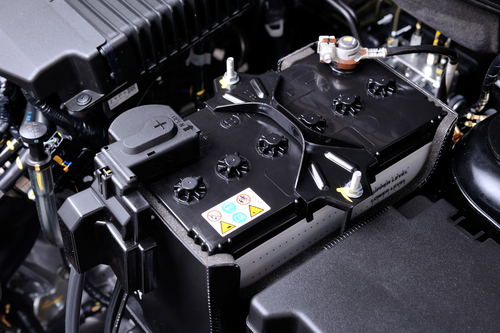
CATL also owns other technologies, including 70 patents, which improve the energy density and safety of LFP batteries. It is stated that the energy density has been increased by 10 to 15 percent, the parts used for battery cells have been reduced by 40 percent and the batteries can now be made 15 to 20 percent more compact. In addition to the reduced costs for Tesla, the partnership with a local battery supplier also means an increase in productivity for the new gigafactory near Shanghai. Tesla expects to produce around 3,000 vehicles per week at full capacity. The Chinese Model 3 is slightly different from the US model in order to save costs and is adapted to the needs of Chinese customers. Due to the production of the Tesla Model 3 in China and its high demand for electric cars, analysts expect that this could massively increase sales and profits. Drive batteries for electric vehicles are subject to voluntary CQC certification in China. This is to ensure that the batteries meet safety standards. Contrary to CQC certification, the application of a traceability code according to the Chinese GB standard is mandatory to track the life cycle of a battery and to recycle it at the end of its life. We would be pleased to advise you on CQC certification and GB standards for products exported to China.
For more information on how CCC certification, the CCC Self-Declaration and voluntary CCAP or CQC certification may affect your company, or for more information about CCC certification in general, the process, and the associated costs, please visit our website and our News Section where you will find current updates twice a week.
Please do not hesitate to contact us for further details and consultation. You can contact us via e-mail, or call us (UK: +44 2071931135, Rest of Europe: +49 69 2713769150, US: +1 773 654-2673).
You can also check out our free CCC-Brochure, which can be downloaded right here as a PDF file or you consult our book (in English) “A Brief Guide to CCC: China Compulsory Certification”, which can be found directly hier on Amazon.
Here you can download our brochure about the CCC Self-Declaration.
Here you can download our brochure about the voluntary CCAP or CQC certification.
Volkswagen plans investment in Chinese battery manufacturer
The completion of the share purchase would be Volkswagen’s first direct investment in a Chinese manufacturer of vehicle batteries and is in line with the Group’s strategy of selling 1.5 million vehicles with alternative drive systems in China by 2025. VW, the leading foreign car manufacturer in China, plans to acquire the stake via a private share placement on the Shenzhen stock exchange. Based on Guoxuan’s market value of 2.8 billion US dollars, a 20 percent stake is worth approximately 560 million US dollars. The details of the investment have been finalized over the past two weeks and the companies are now awaiting approval from the Chinese regulatory authorities. After a successful share purchase, Volkswagen would be the second largest shareholder after the 25 percent of Zhuhai Guoxuan Trading Ltd, a company owned by the founder Li Zhen.
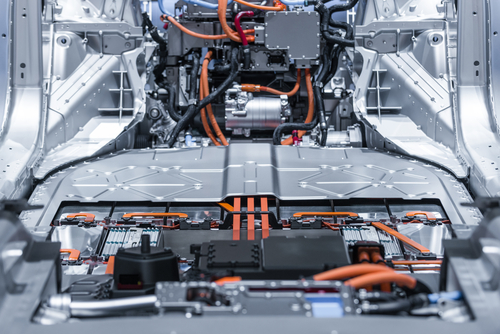
Guoxuan is one of several medium-sized companies of Chinese battery manufacturers after the market leaders CATL and BYD. It is based in the eastern Chinese city of Hefei, where Volkswagen already produces electric vehicles with its joint venture partner JAC Motor. According to unconfirmed sources, Volkswagen has been looking for a battery manufacturer as a partner for some time to gain more control over its supply chain. Volkswagen’s long-term plan to build around 26 million electric vehicles by 2029 will require more than the current global production of vehicle batteries.
To meet its sales targets for alternative and new drive (NEV) vehicles, consisting of plug-in hybrids and electric vehicles, Volkswagen and its partner SAIC Motor recently built a new 2.5 billion US dollar plant. The new plant will produce 300,000 vehicles a year. Furthermore, the capacity of a production facility in Foshan in south-east China has been expanded, where VW and the FAW Group manufacture electric vehicles. In addition to its stake in Guoxan, Volkswagen has appointed CATL as a strategically important supplier, and Volkswagen Supervisory Board member Stefan Sommer told Reuters last July that his company would also set up its own factories for the production of batteries in China if necessary. Does your company want to export its products to China? Then in many cases they will need certification in accordance with the CCC (China Compulsory Certificate) guidelines. We would be pleased to advise you and carry out the CCC certification for your company.
For more information on how CCC certification, the CCC Self-Declaration and voluntary CCAP or CQC certification may affect your company, or for more information about CCC-certification in general, the process, and the associated costs, please visit our website and our News Section where you will find current updates twice a week.
Please do not hesitate to contact us for further details and consultation. You can contact us via e-mail, or call us (UK: +44 2071931135, Rest of Europe: +49 69 2713769150, US: +1 773 654-2673).
You can also check out our free CCC-Brochure, which can be downloaded right here as a PDF file or you consult our book (in English) “A Brief Guide to CCC: China Compulsory Certification”, which can be found directly hier on Amazon.
Here you can download our brochure about the CCC Self-Declaration.
Here you can download our brochure about the voluntary CCAP or CQC certification.
CNCA publishes updated CCC product certification catalogue
In their announcement no. 18 from 2020 the CNCA published a revised list of compulsory product certification, dividing the 103 products in 17 categories. With the new announcement the description and definition form of the compulsory product certification catalogue as published in announcement No. 45 of 2014 is consequently eliminated.
The table shows which certification mode (A or B) is applying to each product category of the CCC Self- Declaration. While single asterisk (*) marked products are products that implement self-declaration program A (optional laboratory type test + self-declaration), double asterisk (**) marked products are self-declaration program B (designated laboratory type test + self-declaration).
For all other product categories CCC self-declaration is not possible, but the common CCC certification method applies as described in the respective implementation rules.
The compulsory product certification catalogue:
| 1. Wire and Cable (3) | 1. Wire assembly(0101) |
| 2. Rubber insulated wire and cable with rated voltage of 450/750 and below(0104) | |
| 3. Polyvinyl chloride insulated wire and cable with rated voltage 450/750 and below(0105) | |
| 2. Circuit switch and electrical device for protection or connection (5) | 4. Plug and socket (Household and similar uses) (0201) |
| 5. Switches for household and similar fixed-electrical installations(0202) | |
| 6. Appliance coupler(0204) | |
| 7. Boxes and enclosures for electrical accessories for household and similar fixed electrical installations(0206) | |
| **8. Fuse Link(0205, 0207) | |
| 3. Low-voltage apparatus (2) | **9. Low-voltage switchgear assemblies(0301) |
| **10. Low voltage components(0302、0303、0304、0305、0306、0307、0308、0309) | |
| 4. Low power motor (1) | **11. Low power motor(0401) |
| 5. Electrical tools (3) | *12. Electric drill(0501) |
| *13. Electric grinder(0503) | |
| *14. Electric hammer(0506) | |
| 6. Electric welder (4) | *15. DC arc welder(0603) |
| *16. TIG arc welder(0604) | |
| *17. MIG/MAG arc welder(0605) | |
| *18. Plasma arc cutting machine(0607) | |
| 7. Equipment for Household and similar uses (19) | 19. Household refrigerators and food freezers(0701) |
| 20. Electric fan(0702) | |
| 21. Air conditioner(0703) | |
| **22. Motor-compressor(0704) | |
| 23. Household electric washing machine (0705) | |
| 24. Water heater(0706) | |
| 25. Indoor heater(0707) | |
| 26. Vacuum cleaner(0708) | |
| 27. Skin and hair care appliances(0709) | |
| 28. Electric iron(0710) | |
| 29. Induction cooker(0711) | |
| 30. Electric oven (portable grill, bread toaster and similar cooking utensils) (0712) | |
| 31. Electric food processing equipment (food processing machine (kitchen machinery)) (0713) | |
| 32. Microwave oven(0714) | |
| 33. Electric cooktops, cooktops, ovens and similar appliances (standing electric ovens, stationary grills and similar cooking appliances) (0715) | |
| 34. Extractor hood(0716) | |
| 35. Liquid heater, hot and cold water dispenser(0717) | |
| 36. Rice cooker(0718) | |
| 37. Electric blanket, Electric heating pad and similar flexible heating appliances(0719) | |
| 8. Electronic products and safety accessories (18) | 38. Single and multi-speaker active speakers with total output power below 500W (Effective values) (0801) |
| 39. Audio power amplifier(0802) | |
| 40. Audio and video recording and playback equipment in various types of carriers (including various types of discs, tapes, hard disks, etc.) (0805, 0812) | |
| 41. Color TV receivers and TV set-top boxes for various imaging methods(0813) | |
| 42. Electronic organ(0813) | |
| 43. Microcomputer(0901) | |
| 44. Laptop(0902) | |
| 45. Display device for use with a computer(0903) | |
| 46. Printing equipment connected to a computer(0904) | |
| 47. Multi-purpose ALL-IN-ONE pinter(0905) | |
| 48. Scanner(0906) | |
| 49. Server(0911) | |
| 50. Fax(1602) | |
| 51. Cordless telephone terminal(1604) | |
| 52. Mobile user terminal(1606) | |
| 53. Data terminal (1608) | |
| 54. Multimedia terminal (1609) | |
| 55. Power supply (0807, 0907) | |
| 9. Lighting appliances (2) | 56. Lamp (1001) |
| 57. Ballast(1002) | |
| 10. Motor vehicle and safety accessories (13) | 58. Automobiles(1101) |
| 59. Motorcycle(1102) | |
| 60. Electric bicycle(1119) | |
| 61. Motor vehicle tires(1201,1202) | |
| 62.Motorcycle occupant helmet(1105) | |
| 63. Brake lining for automobile (1120) (implemented from June 1, 2020) | |
| **64. Car safety glass(1301) | |
| **65. Car seat belt(1104) | |
| **66. Motor vehicle exterior lighting and light signal devices(1109, 1116) | |
| ** 67. Motor vehicle indirect vision device(1110, 1115) | |
| **68. Car seat and seat headrest(1114) | |
| **69. Car drive recorder(1117) | |
| **70. Car reflecting marking(1118) | |
| 11. Agricultural machinery products (2) | 71. Plant protection machinery(1401) |
| 72. Wheel tractor(1402) | |
| 12. Fire products (3) | 73. Fire alarm products(1801) |
| 74. Fire extinguisher(1810) | |
| 75. Refuge escape products(1815) | |
| 13. Security and protection products (2) | 76. Intrusion detector(1901) |
| 77. Anti-theft alarm controller(1902) | |
| 14. Building materials products (3) | 78. Solvent-based wood coating(2101) |
| 79. Porcelain tile(2102) | |
| 80. Building safety glass(1302) | |
| 15. Children’s products (3) | 81. Baby carriage products(2201) |
| 82. Electric toy products(2202) | |
| 83. Motor vehicle child occupant restraint system(2207) | |
| 16. Explosion-proof electrical (17) | 84. Explosion-proof motors(2301) |
| 85. Explosion-proof electric pump(2302) | |
| 86. Explosion-proof power distribution equipment(2303) | |
| 87. Explosion-proof switch, control and protection products(2304) | |
| 88. Explosion-proof starter products(2305) | |
| 89. Explosion-proof transformer products(2306) | |
| 90. Explosion-proof electric actuators, solenoid valves(2307) | |
| 91. Explosion-proof plug-in device(2308) | |
| 92. Explosion-proof monitoring products(2309) | |
| 93. Explosion-proof communication and signaling device(2310) | |
| 94. Explosion-proof air conditioning, ventilation equipment(2311) | |
| 95. Explosion-proof electric heating products(2312) | |
| 96. Explosion-proof accessories, Ex components(2313) | |
| 97. Explosion-proof instrumentation products(2314) | |
| 98. Explosion-proof sensor(2315) | |
| 99. Safety barrier products(2316) | |
| 100. Explosion-proof instrument box products(2317) | |
| 17. Household gas appliances (3) | 101. Household gas cooker(2401) |
| 102. Domestic gas fast water heater(2402) | |
| 103. Gas heating water heater(2403) |
For more information on how CCC certification, the CCC Self-Declaration and voluntary CCAP or CQC certification may affect your company, or for more information about CCC certification in general, the process, and the associated costs, please visit our website and our News Section where you will find current updates twice a week.
Please do not hesitate to contact us for further details and consultation. You can contact us via e-mail, or call us (UK: +44 2071931135, Rest of Europe: +49 69 2713769150, US: +1 773 654-2673).
You can also check out our free CCC-Brochure, which can be downloaded right here as a PDF file or you consult our book (in English) “A Brief Guide to CCC: China Compulsory Certification”, which can be found directly hier on Amazon.
Here you can download our brochure about the CCC Self-Declaration.
Here you can download our brochure about the voluntary CCAP or CQC certification.
Korea Certification (KC) is gaining importance due to estimated growth of South Korean electric vehicle market
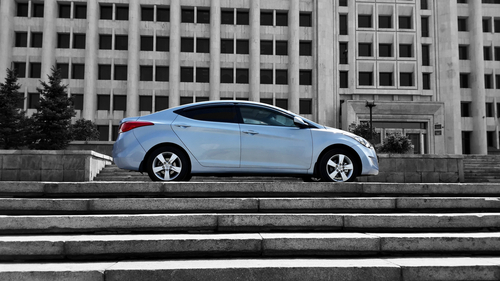
The government of South Korea announced that it plans to secure a 10 percent share of the global market for electric vehicles by 2023. The emerging segment of electric vehicles is an important factor for the domestic automotive industry and contributes to the reduction of pollutant emissions and greenhouse gases. Analysts expect the market for electric vehicles to grow by more than 19 percent between 2019 and 2025. Korean companies are already investing a considerable amount of money in the development of new and innovative technologies in the automotive sector. Hyundai has announced that it will invest 86.4 million US dollars worldwide by 2025 in future-oriented mobility concepts. Other companies contributing to the growth of the South Korean electric vehicle market include BMW AG, Audi AG, Ford Motors Co., Tesla Inc. and Volkswagen.
The government is also supporting the industry with subsidies of 1.8 billion US dollars. Further subsidies totaling 609 million US dollars have been promised for battery-powered electric vehicles and the development of an infrastructure with charging stations in 2020. The subsidies are paid to companies that are actively involved in the electric vehicle segment. The leaders in terms of innovation and market share are BMW AG, General Motors Co. and Hyundai Motor Co.
The market for electric vehicles can be broken down into vehicle types, drive technology and the type of battery. Vehicle types are commercial vehicles, passenger cars and two-wheeled vehicles, and a distinction is made between purely electric vehicles and plug-in hybrid vehicles. NiMH and Li-ion batteries are suitable for the design of the corresponding batteries. Due to the higher energy density and general acceptance, Li-ion batteries will be in greater demand. The automotive industry in South Korea has a high level of manufacturing expertise and, measured by production figures, ranks sixth in the world and fifth in terms of vehicle exports. At present, Hyundai in particular can supply the domestic market with its electric vehicles such as the Ioniq or Kona. General Motors Korea, formerly Daewoo Motor, also has an electric vehicle on offer in the form of the Chevrolet Bolt which is imported. Other well-known vehicle manufacturers who export their models to South Korea also offer cars with alternative drive systems. A KC Korea certificate is mandatory for the import of automotive components. A distinction is made between spare parts and complete vehicles. We would be pleased to advise you regarding Korea certification and the corresponding KC mark.
If you need assistance with your KC Certification or have any questions, please feel free to contact us any time. Call us directly: EU: +49-69-2713769150, UK: +44-2071931135 or send us an email.
Compulsory CCC certification for brake linings from June 1, 2021
With the announcement number 19/2020, the state market regulatory authority SAMR announced that CCC for brake linings of motor vehicles will be mandatory starting June 1, 2021. Up until now, these products could be imported to China by using a product licensing process. After this date, brake lining products without CCC can no longer be imported or sold in China.
As of June 1, 2020, applications for product licensing will no longer be accepted, but applications for CCC certification can be submitted to the relevant Chinese authorities.
The applicable standard for brake linings is GB 5763-2018 which became effective on October 1, 2019.
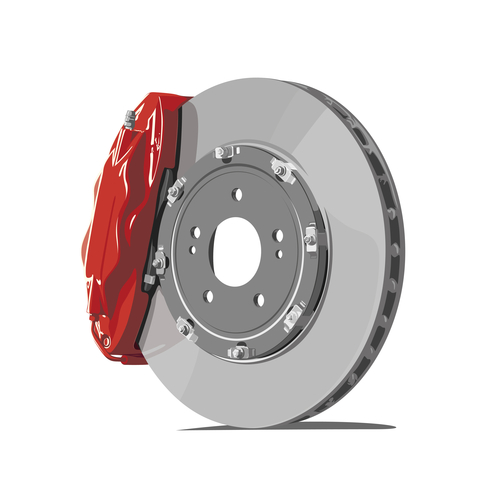
Manufacturers currently in possession of valid Chinese product licenses and no longer importing brake linings to China after June 1, 2021 will not need to apply for the CCC certification.
The CCC certification for brake linings includes application with supporting documentation, product tests and a factory inspection/audit. Test reports, inspection reports or other documents previously obtained during the product licensing process can be checked by the certifying authority and may be acknowledged where applicable.
The CCC certification is significantly more extensive and time-consuming than the product licensing process. We encourage manufacturers to start this process as soon as possible since we would anticipate test delays and limited certification inspection delays due to capacities and the rush for certifications to complete before the June 1, 2021.
For more information on how CCC certification, the CCC Self-Declaration and voluntary CCAP or CQC certification may affect your company, or for more information about CCC certification in general, the process, and the associated costs, please visit our website and our News Section where you will find current updates twice a week.
Please do not hesitate to contact us for further details and consultation. You can contact us via e-mail, or call us (UK: +44 2071931135, Rest of Europe: +49 69 2713769150, US: +1 773 654-2673).
You can also check out our free CCC-Brochure, which can be downloaded right here as a PDF file or you consult our book (in English) “A Brief Guide to CCC: China Compulsory Certification”, which can be found directly hier on Amazon.
Here you can download our brochure about the CCC Self-Declaration.
Here you can download our brochure about the voluntary CCAP or CQC certification.
IEC Explosion Protection Certificates and NEPSI Certificates will be Accepted for CCC Ex Certification
For the CCC certification of explosion-proof products tests must be carried out in addition to audits similar to the conventional CCC certification. According to a current statement by the certification authority NEPSI, both IECEx certificates and test reports as well as NEPSI or CNEx certificates can be submitted for the CCC certification.
IECEx certificates and test reports are checked by NEPSI for an inspection fee and then may be recognized for the CCC-Ex certification.
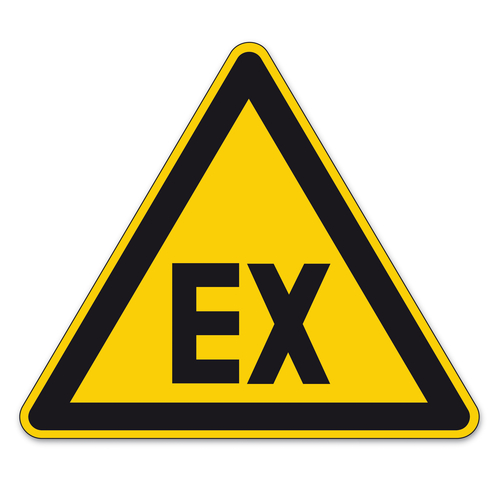
NEPSI as well as CNEx certificates which were the official explosion protection certificates in China prior to the introduction of the CCC obligation for explosion protection products, may also accepted and can be converted directly into CCC Ex certificates.
In both cases according to the current statement by NEPSI, if acceptable test reports are submitted there is no need to carry out additional product tests for the CCC certification of these Ex products. Products that do not yet have IECEx, NEPSI or CNEx certificates will have to undergo product test in an accredited laboratory of the certification authority in China.
Manufacturers of affected products from the explosion protection area are encouraged to start the certification process quickly in order to have the CCC-Ex certificates available in time for October 1, 2020.
You can download our free brochure for CCC-Ex certification here.
Do you have questions about certification? Please do not hesitate to contact us via chat. You will find the chat window at the bottom right of every page (if this is not visible, please check your browser settings).
For more information on how CCC certification, the CCC Self-Declaration and voluntary CCAP or CQC certification may affect your company, or for more information about CCC-certification in general, the process, and the associated costs, please visit our website and our News Section where you will find current updates twice a week.
Please do not hesitate to contact us for further details and consultation. You can contact us via e-mail, or call us (UK: +44 2071931135, Rest of Europe: +49 69 2713769150, US: +1 773 654-2673).
You can also check out our free CCC-Brochure, which can be downloaded right here as a PDF file or you consult our book (in English) “A Brief Guide to CCC: China Compulsory Certification”, which can be found directly hier on Amazon.
Here you can download our brochure about the CCC Self-Declaration.
Here you can download our brochure about the voluntary CCAP or CQC certification.
New vehicle registrations of Tesla in China increased
The manufacturer Tesla was able to report a new high in December with 6,643 newly registered vehicles. This is shown by figures from the state-owned China Automotive Information Net, which has analysed data from insurance companies in the automotive sector. 30 of these vehicles originate from the first production of the new plant in Shanghai and were exclusively given to employees at the end of December. The production facility in Shanghai is Tesla’s first and so far the only one outside the USA.
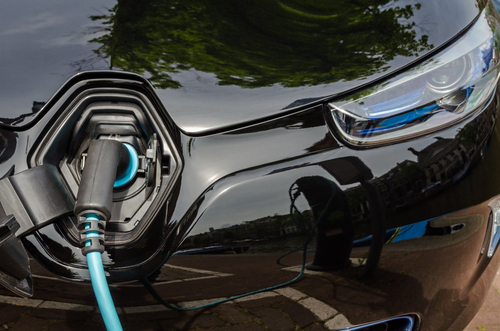
Together with the December figures, Tesla’s 2019 sales in China amount to 42,715 vehicles compared to 16,360 last year. The country remains the world’s largest market for electric vehicles, even though general sales figures declined for the second year in a row. Sales of electric vehicles last year were also affected as the government cut subsidies.
Tesla announced in October that it would stop selling its Model 3 imported from the US. This may have prompted some buyers to order the US version of the vehicles that are still available. This could explain the increase in Tesla sales figures towards the end of the year. The California-based company does not itself publish figures on monthly sales in the respective regions. Worldwide, 112,000 vehicles were delivered in the 4th quarter, and for the full year 2019 the figure was 367,500.
The Tesla Model 3, which is manufactured in China, officially went on sale on January 7, 2019, and Tesla boss Elon Musk expressed his thanks to the Chinese government at the launch ceremony for making it possible to build the new production facility near Shanghai in just one year. Tesla is also reducing the price of Model 3 cars manufactured in China by 9 percent to CNY 299,050. The new plant in Shanghai is capable of producing more than 1000 vehicles per week. Tesla plans to double this rate in the course of the year. According to insiders, it is also likely that the manufacturer will be able to further reduce its prices in the second half of 2020, as some of the components will then be available from local manufacturers in China. The import of vehicle components to China requires a CCC certificate. We would be happy to advise you on how to obtain a CCC (China Compulsory Certificate) for your products.
For more information on how CCC certification, the CCC Self-Declaration and voluntary CCAP or CQC certification may affect your company, or for more information about CCC certification in general, the process, and the associated costs, please visit our website and our News Section where you will find current updates twice a week.
Please do not hesitate to contact us for further details and consultation. You can contact us via e-mail, or call us (UK: +44 2071931135, Rest of Europe: +49 69 2713769150, US: +1 773 654-2673).
You can also check out our free CCC-Brochure, which can be downloaded right here as a PDF file or you consult our book (in English) “A Brief Guide to CCC: China Compulsory Certification”, which can be found directly hier on Amazon.
Here you can download our brochure about the CCC Self-Declaration.
Here you can download our brochure about the voluntary CCAP or CQC certification.
No Initial Factory Audits for Certification of Explosion Proof Products In China Due to the Coronavirus Pandemic
Due to the worldwide travel restrictions due to the coronavirus pandemic, no initial factory audits will be required for Chinese explosion protection CCC certification (CCC-Ex Certification). Please note this is based on the current situation and may change without notice. The Chinese authority NEPSI, which is responsible for the CCC certification of explosion-proof products, now issues the CCC certificates after the application has been submitted and product tests have been passed.
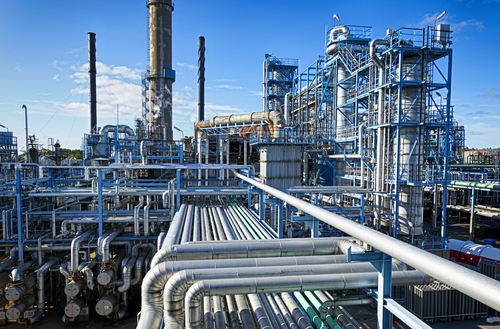
The audits must be rescheduled as soon as the situation has improved. A fixed date as to when the initial factory audits will need to be rescheduled has not yet defined.
Initial factory audits are usually the prerequisite for obtaining CCC certificates in connection with positive product tests and are always carried out by the auditors of the certification authorities from China.
For manufacturers of explosion-protected products, this offers the possibility of an enormous time savings in the certification process, especially in regard to the implementation deadline of the China Ex-Certification on October 1, 2020.
Manufacturers of affected products from the explosion protection area are therefore encouraged to start the certification process quickly in order to have the CCC-Ex certificates available in good time.
Are you already active in the Chinese market and want to learn more about how the new regulations effect on your business? Do you want to start exporting your products to China? Please do not hesitate to contact us, we are happy to advise you on the new regulations in detail and make recommendations that suit your individual needs. We also offer original Chinese versions of the Chinese regulations as well as English translations.
For more information on how CCC certification, the CCC Self-Declaration and voluntary CCAP or CQC certification may affect your company, or for more information about CCC certification in general, the process, and the associated costs, please visit our website and our News Section where you will find current updates twice a week.
Please do not hesitate to contact us for further details and consultation. You can contact us via e-mail, or call us (UK: +44 2071931135, Rest of Europe: +49 69 2713769150, US: +1 773 654-2673).
You can also check out our free CCC-Brochure, which can be downloaded right here as a PDF file or you consult our book (in English) “A Brief Guide to CCC: China Compulsory Certification”, which can be found directly hier on Amazon.
Here you can download our brochure about the CCC Self-Declaration.
Here you can download our brochure about the voluntary CCAP or CQC certification.
 We are part of the CERTANIA-Group.