


Schließen


Chinese tablet manufacturers report record growth – highest figure since 2014
Shipments from Chinese tablet manufacturers reached a new record high of 6.9 million devices in the third quarter. Compared to the previous year, the growth was 21.7 percent, representing the highest figure since 2014. This is according to figures from market analysts International Data Corporation. Because of strong demand due to the Covid 19 pandemic, many devices were sold out at dealers in the third quarter. The pandemic and a lockdown imposed in many regions led to a boom in distance learning and home entertainment.
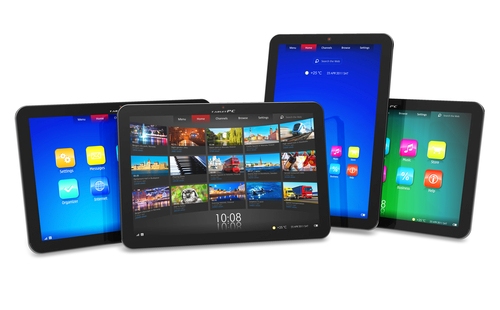
Chinese tech giant Huawei remains in the top spot with 37 percent market share and shipments of 2.6 million devices in the third quarter. Apple follows in second place with 2.59 million devices, while Lenovo and Microsoft occupy the other ranks with shipments of 320,000 and 170,000 devices, respectively. In terms of the market share of the operating system used, Apple’s iOS is slightly ahead of Android with 58.73 percent and 41.16 percent respectively, while Windows is far behind with only 0.08 percent.
Tablets are subject to CCC certification in China. CCC stands for China Compulsory Certificate. The CCC certificate was introduced in 2002 and applies to both imported and Chinese products. Products requiring certification may only be imported into China, sold in China and used in business activities in China after the product has undergone CCC certification.
For more information on how CCC certification, the CCC Self-Declaration and voluntary CCAP or CQC certification may affect your company, or for more information about CCC certification in general, the process, and the associated costs, please visit our website and our News Section where you will find current updates twice a week.
Please do not hesitate to contact us for further details and consultation. You can contact us via e-mail, or call us (UK: +44 2071931135, Rest of Europe: +49 69 2713769150, US: +1 773 654-2673).
Please don’t hesitate to also use our chat-window in the bottom right corner if you have any questions. (Please check your browser settings if you can’t see the window)
You can also check out our free CCC-Brochure, which can be downloaded right here as a PDF file or you consult our book (in English) “A Brief Guide to CCC: China Compulsory Certification”, which can be found directly here on Amazon.
Here you can download our brochure about the CCC Self-Declaration.
Here you can download our brochure about the voluntary CCAP or CQC certification.
Chinese industry giants record highest profit growth in nine years
China’s major industrial companies reported rising profits in October for the sixth consecutive month. Experts see this as a further recovery of the second largest economic power from the effects of the coronavirus pandemic. In October, the profits of Chinese industrial companies increased by 28.2 percent compared to the previous year and now amount to the equivalent of 97.8 billion US dollars. This percentage increase is three times the September value of 10.1 percent. Growth in October even surpassed the previous record figure of 30.5 percent set in December 2011. The figures were presented last Friday by the Chinese National Bureau of Statistics (NBS).
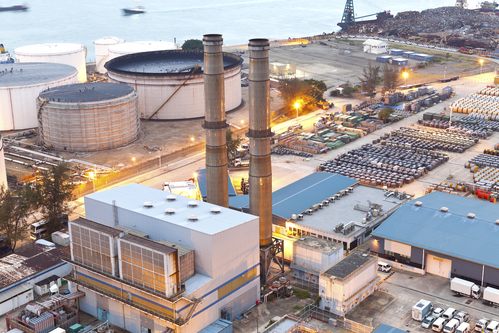
In March 2020, during the nationwide lockdown in the People’s Republic, the largest industrial companies recorded a historic low of minus 34.9 percent. Nevertheless, profits grew by 0.7 percent in the period from January to October. Zhu Hong, a senior statistician of the NBS, said the figures point to a further stabilization and consolidation of economic growth. At the same time, however, he noted that receivables from industrial companies have increased and the pressure on cash flow has increased, which is not conducive to a continuous recovery of corporate production and business operations.
On Thursday the Chinese Ministry of Finance presented the results of state-owned enterprises. Their profits rose by 52.5 percent in October compared to the previous year, but at the same time suffered a 10 percent drop from January to October. After a drastic setback of the Chinese economy in the first three months of 2020, a remarkable recovery from the effects of the pandemic and the lockdown is emerging. In the third quarter, gross domestic product grew by 4.9 percent compared with the previous year, but still fell short of analysts’ expectations. China is in a group of 20 countries that expect positive growth this year. The reason for this assessment is the massive state investment in infrastructure and a boom in the real estate sector. In the industrial sector, manufacturing profits rose by 4.2 percent, mining fell by 34.5 percent and utilities grew by 5.9 percent. The electronics industry maintained its double-digit growth of 12.6 percent after returning to positive territory from January to April. All figures refer to the period January to October compared to the previous year.
Certain product groups must be awarded a CCC certificate in order to export products to China. The CCC certificate was introduced in 2002 and applies to both imported and Chinese products.
For more information on how CCC certification, the CCC Self-Declaration and voluntary CCAP or CQC certification may affect your company, or for more information about CCC certification in general, the process, and the associated costs, please visit our website and our News Section where you will find current updates twice a week.
Please do not hesitate to contact us for further details and consultation. You can contact us via e-mail, or call us (UK: +44 2071931135, Rest of Europe: +49 69 2713769150, US: +1 773 654-2673).
Please don’t hesitate to also use our chat-window in the bottom right corner if you have any questions. (Please check your browser settings if you can’t see the window)
You can also check out our free CCC-Brochure, which can be downloaded right here as a PDF file or you consult our book (in English) “A Brief Guide to CCC: China Compulsory Certification”, which can be found directly here on Amazon.
Here you can download our brochure about the CCC Self-Declaration.
Here you can download our brochure about the voluntary CCAP or CQC certification.
New GB Standard GB 18384-2020 about Electric Vehicles Safety Requirements
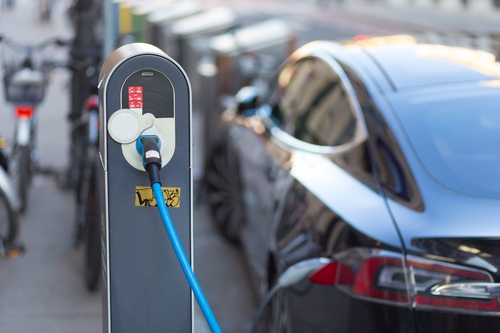
The Chinese authority SAC (Standardization Administration of the People’s Republic of China) has published a new Standard GB 18384-2020, which will be effective from January 1, 2021. The new Standard is replacing the former Standard GB/T 18384.1-2015 “Electrically propelled road vehicles – Safety specifications – Part 1: On-board rechargeable energy storage system (REESS)”, GB/T 18384.2-2015 2015 “Electrically propelled road vehicles – Safety specifications – Part 2:Vehicle operational safety means and protection against failures”, and GB/T 18384.3-2015 “Electrically propelled road vehicles – Safety specifications – Part 3: Protection of persons against electric shock“, and is the valid standard for Chinese Electric Vehicle certification. This standard has been updated in accordance to the latest international technology standard, specifically referring to the UN GTR No.20, and is modified in combination with the technical level, application scenarios and testing experience of domestic Chinese products. Electric Vehicles in China must obtain a mandatory CCC certification.
The main changes in GB 18384-2020 are:
- The high-voltage warning mark has been modified.
- Exemption requirements for top charging devices have been added.
- Monitoring of insulation resistance has changed from being an optional requirement to a mandatory requirement.
- Parts of capacitive coupling requirements have been modified.
- Waterproof requirements have been added to both whole vehicle and components.
- REESS thermal event alarm requirements were added.
- Measurement methods for insulation resistance were modified.
- A verification test has been added to the insulation monitoring function.
- A formula for the calculation of the electric quantity stored in the Y capacitor has been added.
Are you interested in getting more information regarding the new GB Standard GB 18384-2020 for electric vehicles? Do you have any questions about the application for certification modification? If so, please call or email us anytime. Write us an Email or call us: UK: +44 2071931135, Rest of Europe: +49 692713769150, US: +1 773 654-2673.
Also check our website if you want more information regarding CCC certification, the CCC certification process, CCC costs, and more information about our all-inclusive CCC certification package. You may want to look at our references page to see what some our clients have to say about us.
New car manufacturer for electric vehicles founded
The new company, Zhiji Motor, will be located in the Zhangjiang High-Tech Park in Pudong and raised more than $1.52 billion from investors in its first round of financing. Zhiji Motor focuses on technological innovation and its application and will also introduce a new business model. Plans include integrating and leveraging SAIC Motor’s resources in research and development, production and marketing. SAIC Motor and the local government of Pudong also signed a strategic agreement to support Zhiji Motor’s business operations and strengthen the production of electric vehicles in the Shanghai area.
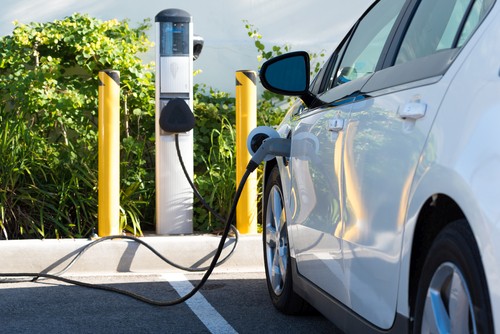
Zhiji Motor will enjoy the benefits of Zhangjiang’s high-tech park such as high-tech clusters, as well as artificial intelligence and computer chip companies and research institutes. Alibaba’s contribution will be their experience at Big Data, the use of the in-house Alibaba DAMO Academy and the provision of services from the Alibaba cloud. Zhiji Motor will present a range of luxury electric vehicles designed to meet the needs of customers and provide a completely new experience. Among other things, new human-machine interfaces (HMI) and assistance systems for autonomous driving will be incorporated into the new vehicles. In addition, SAIC Motor’s software will be used to make rapid progress in the development of the vehicles. Zhiji’s future vehicles will have an acceleration from 0 to 100 km/h in less than 4 seconds and will be contactless rechargeable. The company plans to present the first models at events in Shanghai, London and the USA in January. It also plans to establish a research institute for mobility.
Competition and rivalry in the Chinese automotive market is becoming increasingly fierce, and the major traditional car manufacturers have therefore created their own brands for vehicles with alternative drive systems. Dongfeng Motor has introduced Yoyah, a new premium brand for electric vehicles, BAIC has spun off the Arcfox brand, and Geely has founded its own brand for electric vehicles with Geometry. Sales figures in China of so-called “new energy” vehicles have increased by 105 percent year-on-year to 160,000 in October 2020, the fourth consecutive month of growth in this segment. Chinese requirements are particularly high in the area of CCC certification of automotive parts and vehicles. The certification of a complete vehicle is a complex project that requires professional support in all phases. For several years MPR China Certification GmbH has been entrusted with large CCC projects of the vehicle manufacturers Lotus, Tesla and Bugatti. We develop your CCC strategy for the approval of your vehicle models for the Chinese market.
For more information on how CCC certification, the CCC Self-Declaration and voluntary CCAP or CQC certification may affect your company, or for more information about CCC certification in general, the process, and the associated costs, please visit our website and our News Section where you will find current updates twice a week.
Please do not hesitate to contact us for further details and consultation. You can contact us via e-mail, or call us (UK: +44 2071931135, Rest of Europe: +49 69 2713769150, US: +1 773 654-2673).
Please don’t hesitate to also use our chat-window in the bottom right corner if you have any questions. (Please check your browser settings if you can’t see the window)
You can also check out our free CCC-Brochure, which can be downloaded right here as a PDF file or you consult our book (in English) “A Brief Guide to CCC: China Compulsory Certification”, which can be found directly here on Amazon.
Here you can download our brochure about the CCC Self-Declaration.
Here you can download our brochure about the voluntary CCAP or CQC certification.
Volkswagen invests 2.1 billion euros in China business with electric vehicles
The German car giant Volkswagen intends to invest around 2.1 billion euros in its China business with electric vehicles. The company describes this step as the next chapter for its business activities in China. The sum is divided into 1 billion euros to increase the shareholding in JAC Volkswagen, the VW joint venture in China for electric vehicles, and a further 1.1 billion euros for a stake in the US-based battery company Gotion.
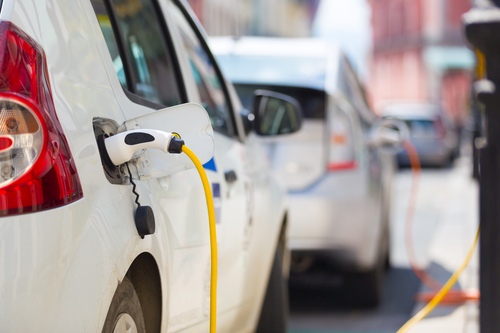
The €1 billion investment in the Chinese joint venture JAC Volkswagen includes a 50 percent stake in JAG, the parent company of JAC Automobile Group. As a result, Volkswagen’s stake in JAC Volkswagen will increase from 50 to 75 percent. By increasing its shareholding, Volkswagen also gains control and management of the company. There are plans to develop further electric vehicles and the corresponding infrastructure for the Chinese market. This should help Volkswagen’s business in China to break even and achieve sales of 1.5 million electric vehicles in 2025. Volkswagen JAC Volkswagen was founded in 2017 and develops, produces and sells exclusively electric vehicles or New Energy Vehicles (NEVs), as these vehicles are often called in China.
The other €1.1 billion will make Volkswagen the largest shareholder in Gotion, an American subsidiary of Gouxuan High-Tech, with a 26 percent stake. The investment is intended to ensure the supply of batteries for the production of electric vehicles in China. Dr. Stephan Wöllenstein, Chairman of the Board of Management of Volkswagen Group China, said the project will make the company a local and sustainable car manufacturer and will create new business opportunities in the field of electric vehicles in China. Volkswagen is the first international automaker to invest directly in a Chinese battery manufacturer. The transaction will be completed by the end of this year if the regulatory authorities approve the transaction.
Electric vehicles and components must be CCC certified in order to be exported to China or manufactured locally. The CCC certificate was introduced in 2002 and is comparable to the European CE marking. If you need CCC certification in the automotive sector, China Certification is an excellent partner for you. We have been advising leading automotive suppliers and vehicle manufacturers on their CCC certifications for years.
For more information on how CCC certification, the CCC Self-Declaration and voluntary CCAP or CQC certification may affect your company, or for more information about CCC certification in general, the process, and the associated costs, please visit our website and our News Section where you will find current updates twice a week.
Please do not hesitate to contact us for further details and consultation. You can contact us via e-mail, or call us (UK: +44 2071931135, Rest of Europe: +49 69 2713769150, US: +1 773 654-2673).
Please don’t hesitate to also use our chat-window in the bottom right corner if you have any questions. (Please check your browser settings if you can’t see the window)
You can also check out our free CCC-Brochure, which can be downloaded right here as a PDF file or you consult our book (in English) “A Brief Guide to CCC: China Compulsory Certification”, which can be found directly here on Amazon.
Here you can download our brochure about the CCC Self-Declaration.
Here you can download our brochure about the voluntary CCAP or CQC certification.
German Producers of Pork Depend on Exports to China
When the Coronavirus initially hit German slaughterhouse workers, many pork producers had to stop processing and were also no longer allowed to export to China (e.g. Tönnies). Now the situation seems to have improved somewhat and production and export are increasing again.
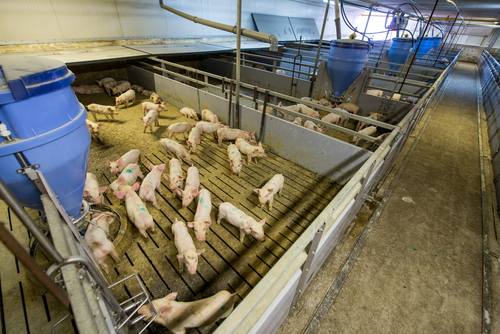
It seems that this trend will not change in the near future as renewed problems in China increase the pressure on pig farms there. Due to high prices for piglets, fewer farms are interested in running pig fattening farms. It is often only the smaller farms that still fatten pigs for slaughter. These farms, however, are not as well equipped to protect themselves against swine fever. Smaller farms work together, for example by sharing transport wagons and feed mills, both of which increase the chances for the spread of swine fever considerably. The destruction caused by current floods in China is adding even more pressure on top of the already existing problems.
The EU Commission is expecting a decline in Chinese pork production of 15 to 25 percent by the end of 2020. In order to compensate for this, China will continue to depend on increased imports. It is expected that 2020 will still exceed the record year 2019. As already reported in August, the price per kilo for pork in Europe has recently risen due to the increased demand. Imports to China were also made easier in January 2020 by reducing import duties on pork (and some other products) from 12 percent to 8 percent, with further reductions still possible.
Exporting companies must be approved in order to export pork to China. GACC certification for the meat products is necessary to enter the Chinese market. In the course of the approval detailed documents and in some cases even accreditation of the establishments by Chinese auditors are required. Mistakes can easily occur during the approval process, as, for example, an incorrect application can give a breeding company approval for trade but not for breeding.
It seems likely that demand for pork products will continue to grow. Exporters must comply with Chinese customs rules and apply for the mandatory China GACC certification.
Are you a producer of pork and interested in exporting to China? Contact us at any time for all questions regarding the approval process of GACC certification at +49 69 271 37 69 150 (for Europe) or +1 773 654 2673 (for USA) or by email.
Please don’t hesitate to also use our chat-window in the bottom right corner if you have any questions. (Please check your browser settings if you can’t see the window)
Shenzhen uses 5G technology for urban infrastructure
The city in Guangdong Province announced on August 17, 2020 that it will be the first metropolis in China with a fully developed 5G network and has to date built more than 46,000 cell towers. The technology of the fast 5G mobile network is leading to significant changes in the infrastructure sector in Shenzhen. It facilitates the work of employees and increases work performance and efficiency.

At the Pengcheng substation, robots monitor the technical equipment and send the data to a control center where employees analyze the status and values and intervene if necessary. The substation, which provides 20 percent of Shenzhen’s daily electricity consumption, was recently upgraded with a local 5G network. Xie Zhiyi, the manager of the substation, said that with the use of the 5G network, many tasks can be performed by the robots and we receive the relevant data and results directly at our headquarters. “Previously, workers needed about three days to complete a checklist of 1,300 points. With 5G and artificial intelligence, the inspection is completed in just one hour. This corresponds to an increase in efficiency of 270 percent,” added Xie. Following the upgrade of the substation, 1,036 IoT devices are currently installed there, including robots for inspections and high-resolution cameras.
The substation is just one of many examples of the application of 5G in the infrastructure sector in Shenzhen. The latest generation mobile network will also be used in the technical upgrade of the port. The “Mawan SmartPort” is the first port in China to use the new technology. A typical application there is the remote control of the container gantry cranes via the 5G network. Hu Zhijian, an employee at the port, said that in the past, workers had to climb into the elevated cabin under adverse conditions. Now they sit in a control room and control the cranes, supported by high-resolution cameras, via the fast 5G network. The 5G network has also greatly improved coverage of the port area with fast Internet. Previously, it was necessary to either lay fiber optic cables or rely on patchy WLAN, according to a port spokesman. China Merchants Port (CMP), the owner and operator of Mawan SmartPort, said 5G has increased operating performance by 30 percent, reduced the number of employees in the port area by 80 percent and halved the number of work-related accidents. CMP plans to modernize other ports in China based on the model of Mawan SmartPort.
CCC stands for China Compulsory Certificate. The CCC certificate was introduced in 2002 and applies to both imported and Chinese products. Products requiring certification may only be imported to China, sold in China and used in business activities in China after the product has undergone CCC certification. A good CCC certification consulting service reduces your certification efforts massively and saves you costs, time and unpleasant surprises when customs clearance of your products in China is required. We would be happy to advise you without obligation on the scope and requirements of a China CCC certification.
For more information on how CCC certification, the CCC Self-Declaration and voluntary CCAP or CQC certification may affect your company, or for more information about CCC certification in general, the process, and the associated costs, please visit our website and our News Section where you will find current updates twice a week.
Please do not hesitate to contact us for further details and consultation. You can contact us via e-mail, or call us (UK: +44 2071931135, Rest of Europe: +49 69 2713769150, US: +1 773 654-2673).
Please don’t hesitate to also use our chat-window in the bottom right corner if you have any questions. (Please check your browser settings if you can’t see the window)
You can also check out our free CCC-Brochure, which can be downloaded right here as a PDF file or you consult our book (in English) “A Brief Guide to CCC: China Compulsory Certification”, which can be found directly here on Amazon.
Here you can download our brochure about the CCC Self-Declaration.
Here you can download our brochure about the voluntary CCAP or CQC certification.
Rising sales of luxury vehicles despite pandemic
Dealers of luxury vehicles were able to sell 277,000 cars in April this year, an increase of 11 percent compared to last year. This is according to figures from the Chinese Automobile Dealers Association. Regular car dealers, on the other hand, suffered losses of 10.5 percent and sold 1.48 million vehicles in the same period. Luxury vehicles accounted for around 19 percent of total new car sales in April, an increase of 3.6 percent over the previous year. Despite the recovery in April, the market for luxury vehicles in China has shrunk by 16.4 percent so far this year, with 795,000 vehicles sold in the first four months. According to the Association, the sluggish business is caused by the effects of the pandemic.
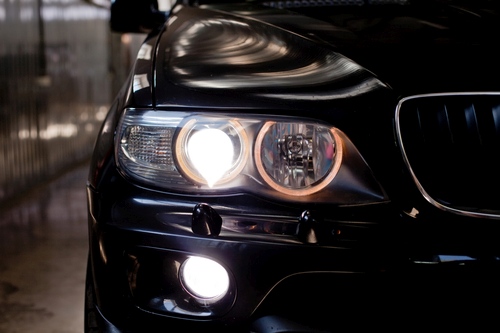
The automakers therefore offered dealers numerous support measures such as loans, bonuses and vehicles for the showroom, for which the dealers were granted a payment extension. Audi provided A6L and Q5L series models and paid a subsidy of 3,000 yuan (US$420) to sales staff. BMW pays dealers higher commissions for the sale of top models from March to May. In general, limousines were in greater demand than SUVs in April, with market shares of 52 and 46 percent respectively. A spokesman for the Chinese Automobile Dealers Association said that most manufacturers would maintain their support strategies until the end of May.
The association also provided details of sales figures of the individual manufacturers. Mercedes-Benz sold a total of 62,000 vehicles in April, an increase of 4.7 percent. BMW reported 67,000 and an increase of 9.4 percent, and Audi 61,500 and an increase of about 30 percent. Sports car manufacturer Porsche sold 8,767 cars in April, an increase of 24 percent. At the American electric vehicle manufacturer Tesla, 4,255 cars left the showrooms with a strong increase of 121 percent. The percentage figures all refer to the same month of the previous year compared to April 2020. China offers solid conditions for manufacturers of luxury vehicles. If you need CCC certification in the automotive sector, China Certification is an excellent partner for you. For several years MPR China Certification GmbH has been entrusted with large CCC projects of the vehicle manufacturers Lotus, Tesla and Bugatti. We develop your CCC strategy for the approval of your vehicle models for the Chinese market.
For more information on how CCC certification, the CCC Self-Declaration and voluntary CCAP or CQC certification may affect your company, or for more information about CCC certification in general, the process, and the associated costs, please visit our website and our News Section where you will find current updates twice a week.
Please do not hesitate to contact us for further details and consultation. You can contact us via e-mail, or call us (UK: +44 2071931135, Rest of Europe: +49 69 2713769150, US: +1 773 654-2673).
Please don’t hesitate to also use our chat-window in the bottom right corner if you have any questions. (Please check your browser settings if you can’t see the window)
You can also check out our free CCC-Brochure, which can be downloaded right here as a PDF file or you consult our book (in English) “A Brief Guide to CCC: China Compulsory Certification”, which can be found directly here on Amazon.
Here you can download our brochure about the CCC Self-Declaration.
Here you can download our brochure about the voluntary CCAP or CQC certification.
Smartphone manufacturer Vivo expands into the Kenyan market with new partner
Chinese smartphone manufacturer Vivo on Monday announced a partnership with African online retailer Jumia to expand its presence in the Kenyan market. In a press release, Arthur Xian, Managing Director of Vivo Kenya, said that the partnership with Jumia confirms Vivo’s commitment to offering customers a wide range of the best and highest quality cell phones at affordable prices.

“Through the new partnership with Jumia, we will be able to offer our customers in Kenya high quality smartphones with extensive features and we hope to meet the needs and requirements of our customers,” Xian continued. With this cooperation, both companies want to increase the market penetration of smartphones in Kenya and advance Jumia’s goal of a “digital Africa”.
Vivo has been on the Kenyan market since July 2019 and has so far sold mainly entry-level devices from its Y-series. In June 2020, Vivo announced that the V19 would be offered in Kenya as a flagship model with outstanding specifications. The technical specifications of the V19 include a 4500mAh battery and a 16 cm diagonal AMOLED display with 1080p resolution and 20:9 aspect ratio. Inside works a Helio P65 CPU as well as 8 GB RAM and 128 GB memory. The camera module on the back side consists of 4 lenses: a 48 MP main camera, 8 MP wide angle, 2 MP macro and a 2 MP depth sensor. The front camera module consists of a 32 MP main camera and an 8 MP ultra wide angle. The V19 model was introduced internationally at the beginning of April this year and will be the first Vivo device with a dual camera in Kenya. The V19 will be an addition to the V-series and a successor to the V17 Pro smartphone, which was introduced in Kenya last year. The market for mobile communication devices and infrastructure in Africa is developing strongly and offers many opportunities. Since 2005, MPR International GmbH has been supporting renowned companies worldwide with certifications for the international market. Our focus is on Africa, Japan, Korea, China and India.
For more information on how CCC certification, the CCC Self-Declaration and voluntary CCAP or CQC certification may affect smartphone products, or for more information about CCC certification in general, the process, and the associated costs, please visit our website and our News Section where you will find current updates twice a week.
Please do not hesitate to contact us for further details and consultation. You can contact us via e-mail, or call us (UK: +44 2071931135, Rest of Europe: +49 69 2713769150, US: +1 773 654-2673).
Please don’t hesitate to also use our chat-window in the bottom right corner if you have any questions. (Please check your browser settings if you can’t see the window)
You can also check out our free CCC-Brochure, which can be downloaded right here as a PDF file or you consult our book (in English) “A Brief Guide to CCC: China Compulsory Certification”, which can be found directly here on Amazon.
Here you can download our brochure about the CCC Self-Declaration.
Here you can download our brochure about the voluntary CCAP or CQC certification.
Chinese company wins contract for road construction in Zambia
The Zambian government has commissioned the China Geo-Engineering Corporation to build feeder roads in four of ten provinces of the country, which is located in the south of the African continent. The executive director of the government’s road agency RDA said that the contract is for the construction of around 1,000 km of road. He explained further details of the project to the Minister of Finance. The main roads in the four provinces North, Northwest, Central Region and Copperbelt will be upgraded to year-round driveable gravel roads.
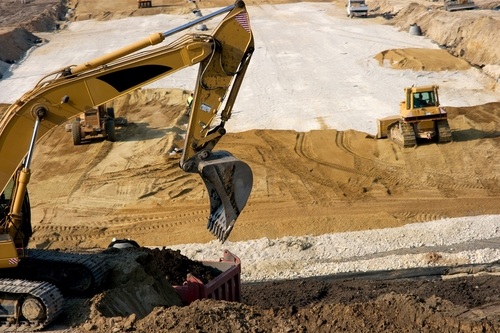
All construction work under the contract is subject to a results-oriented concept, which gives the company two years to complete a large part of the work. Details of the exact amount of the contract were not disclosed. This is not the first road construction contract in Zambia that has been awarded to a Chinese company. In 2017, CJIC was awarded the contract to build a 320 km highway across Zambia. The project costs amount to 1.2 billion US dollars. The highway-like road connects Zambia with its neighbors, the DR Congo and South Africa, and runs through the Copperbelt mining region where the copper that gives the province its name is mined.
Zambia is Africa’s second largest copper producer and Ndola is the capital of the Copperbelt province. In addition to road construction, China has already invested in Zambia’s other infrastructure. Concrete projects include a 750 megawatt hydroelectric power plant and various activities in the agricultural and mining sectors. The access to the African continent is a special challenge. The numerous markets in Africa are developing strongly and offer many opportunities. Since 2005, MPR International GmbH has been supporting renowned companies worldwide with certifications for the international market. Our focus is on Africa, Japan, Korea, China and India.
For more information on how CCC certification, the CCC Self-Declaration and voluntary CCAP or CQC certification may affect your company, or for more information about CCC certification in general, the process, and the associated costs, please visit our website and our News Section where you will find current updates twice a week.
Please do not hesitate to contact us for further details and consultation. You can contact us via e-mail, or call us (UK: +44 2071931135, Rest of Europe: +49 69 2713769150, US: +1 773 654-2673).
Please don’t hesitate to also use our chat-window in the bottom right corner if you have any questions. (Please check your browser settings if you can’t see the window)
You can also check out our free CCC-Brochure, which can be downloaded right here as a PDF file or you consult our book (in English) “A Brief Guide to CCC: China Compulsory Certification”, which can be found directly here on Amazon.
Here you can download our brochure about the CCC Self-Declaration.
Here you can download our brochure about the voluntary CCAP or CQC certification.
 We are part of the CERTANIA-Group.