


Schließen


Successful participation in the virtual Symposium on International Automotive Technology (SIAT) in India
From September 29 to October 01, 2021, the Symposium on International Automotive Technology (SIAT) took place in India with a variety of informative expert presentations around the topic “Redefining Mobility for the Future”.
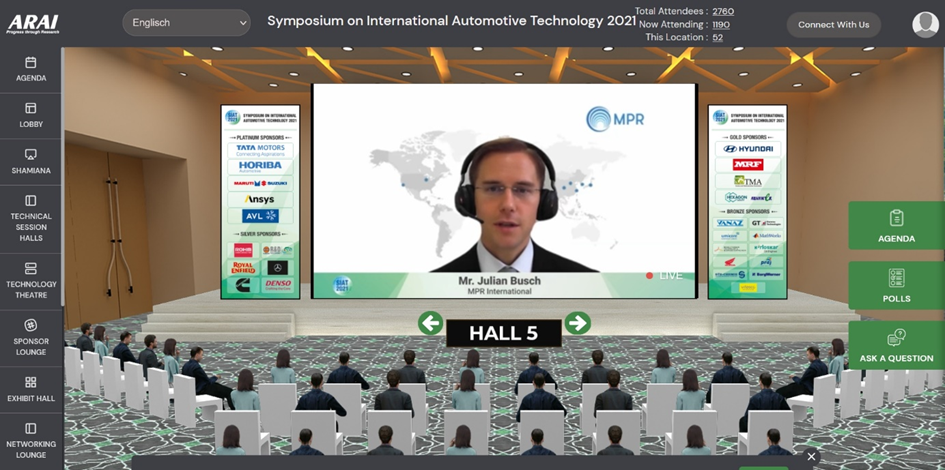
After the official opening, plenary sessions discussed a variety of topics for the future. Topics ranged from alternative energies, e-mobility, emission control, to the general challenges in the international certification market.
Julian Busch, Managing Director of MPR International from Frankfurt, gave an overview of the current challenges in the international certification market. He explained the various types of certifications, how they are applied worldwide in a comparable form and how they differ greatly nationally. In this context, the increasingly complex test requirements represent a major challenge for the manufacturers of vehicles and components.
Currently, the most important certifications for the Indian automotive market are AIS (Automotive Industry Standards) certification or a certification from the BIS (Bureau of Indian Standards). The product scope for BIS certification alone was expanded by 242 product groups last year. The Indian authorities plan to continue this trend.
Automotive manufacturers and Indian test centres alike benefited from the information provided at the seminars. The information is valuable since the India market is booming with projected growth into the foreseeable future making product certifications more relevant. Due to the ever-increasing complexity of regulations, it is also important for the local test infrastructure to stay up to date.
To obtain certification in India, domestic and foreign automotive manufacturers must meet the same requirements. For example, in most cases, a factory audit and product testing are required as part of the certification process for both domestic and foreign manufacturers. Some products even require more than one certification. Good preparation and knowledge of the current regulations are crucial for smooth and trouble-free trading.
We will be happy to advise you on certification in India like AIS, BIS, WPC, TEC or PESO and are always available to answer your questions.
Please do not hesitate to contact us for further details and consultation. You can contact us via e-mail, or call us (UK: +44 2071931135, Rest of Europe: +49 69 2713769261, US: +1 773 654-2673).
If you have any questions you can also use our chat-window in the bottom right. (Please check your browser settings if you can’t see the window)
You can also check out our free AIS-Brochure and BIS-Brochure which can be downloaded for free in PDF format.
Visit Us Online at the SIAT 2021 Automotive Trade Fair
The SIAT international trade fair, organised by the Indian Automobile Regulatory Authority (ARAI), will take place virtually online for the first time. Since 1985, SIAT (Symposium on International Automotive Technology) has been an important forum for the automotive market in India. From September 29 to October 1, 2021 renowned representatives of the automotive industry worldwide will come together with this year’s focus theme “Redefining Mobility” to advance the development of the industry through brainstorming and discussions.
In addition to the numerous digital exhibition stalls, a multifaceted programme invites visitors to exchange ideas. Exciting discussion panels on mobility and a wide variety of interesting online lectures form the supporting programme for numerous exhibitions by international manufacturers. The focus of the fair will be on automotive products such as lights, tyres, rims and safety glass. Other topics will include electric power trains and alternative fuels.
The keynote speech by our Managing Director Julian Busch is a special highlight. He will give a comprehensive overview of the relevant certifications for automotive products, Indian quality standard requirements and challenges that manufacturers face during the current global situation. Mr. Busch will then make himself available for further questions on these topics.
State-of-the-art trade fair technology makes it possible for discussion forums and one-on-one meetings to be held in parallel. MPR International and its team will also be present with its own virtual exhibition booth and will be happy to address your individual questions.
Regardless of whether you already have your sights set on the Indian market or simply want to find out about the possibilities – at the trade fair we will advise you personally via video chat. You can benefit from our comprehensive consulting services from the comfort of your desk. If you would like detailed advice, please feel free to schedule an appointment with us.
We look forward to your visit – Stall number EO202
Further information on trade fair topics and registration can be found here: SIAT 2021 [link out-of-date]
New GB standard for vehicle safety glass GB9656-2021 release set
The new GB Standard GB9656-2021 replaces GB9656-2003 and will be implemented on the 1st Jan 2023.
This standard specifies the terms and definitions, classification and technical requirements as well as testing methods and determination rules related to the safety characteristics of motor vehicle glass. The specific testing requirements can be found in the related GB standard: GB/T 5137.
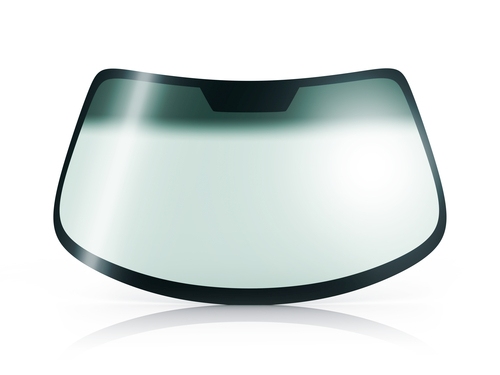
This standard is applicable for glass of motor vehicles, including M, N, O, L, cabs, agricultural and Forestry specific vehicles.
It does NOT apply to lighting and signaling devices of such vehicles.
The changes can be classified in two categories: 1) newly added terms and definitions and 2) revisions.
The most important changes are as follows:
- Newly added Terms and definitions
- addition of rigid plastic glass
- added requirements for heads-up display glass
- added requirements for the test method of the abrasion resistance of thick laminated safety glass
- film glazing, added content
- Revisions
- Modified sample requirements after impact resistance of laminated glass for the windshield
- Deleted classification of main technical requirements and general technical requirements as well as color requirements
- Deleted references to regional tempered safety glass
- Deleted laminated safety glass and plastic glass composites other than the front windshield with a test piece as a specimen of the human head model impact test
- Deleted general technical requirements and inspection rules
- Deleted requirements for packaging, marking, transportation, storage
For more information on how CCC certification, the CCC Self-Declaration and voluntary CCAP or CQC certification may affect your company, or for more information about CCC certification in general, the process, and the associated costs, please visit our website and our News Section where you will find current updates twice a week.
Please do not hesitate to contact us for further details and consultation. You can contact us via e-mail, or call us (UK: +44 2071931135, Rest of Europe: +49 69 2713769150, US: +1 773 654-2673).
Please don’t hesitate to also use our chat-window in the bottom right corner if you have any questions. (Please check your browser settings if you can’t see the window)
You can also check out our free CCC-Brochure, which can be downloaded right here as a PDF file or you consult our book (in English) “A Brief Guide to CCC: China Compulsory Certification”, which can be found directly here on Amazon.
Here you can download our brochure about the CCC Self-Declaration.
Here you can download our brochure about the voluntary CCAP or CQC certification.
Quality control of import and export for certain goods changed
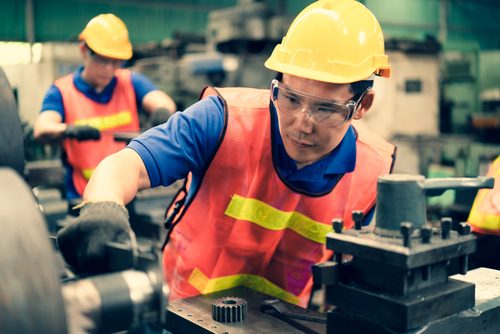
For a total of 266 goods, the control regulations for import and export between Germany and China will change from June 10, 2021. Some quality controls will be dropped, for some groups of goods new ones will be added.
In detail, the following changes:
For 243 products or goods from the mechanical engineering and electrical engineering sectors, as well as for various metal goods, quality controls on imports to China will be eliminated.
New additions are imports of scrap iron, copper and aluminum. These are now subject to quality control as of the June 10 deadline.
When exported from China, 24 raw and semi-finished ferrous products are now subject to quality control inspections by Chinese customs as of June 10.
More details are available in a table (in Chinese only) attached to a publication from the General Directorate of Customs. Among other things, traders must add customs tariff numbers according to the Chinese system. Customs tariff numbers are used uniformly worldwide up to the 6th digit (HS subheading). From the 7th digit on, there are national differences.
We gladly advise you without obligation about the scope and requirements of quality control and a China CCC certification. Goods and products must be marked with a CCC certificate in order to be exported to China or to be manufactured locally. CCC certification is a complex project that requires professional supervision at all stages. For several years, MPR China Certification GmbH has been entrusted with large CCC projects for the vehicle manufacturers Lotus, Tesla and Bugatti.
For more information on how CCC certification, the CCC Self-Declaration and voluntary CCAP or CQC certification may affect your company, or for more information about CCC certification in general, the process, and the associated costs, please visit our website and our News Section where you will find current updates twice a week.
Please do not hesitate to contact us for further details and consultation. You can contact us via e-mail, or call us (UK: +44 2071931135, Rest of Europe: +49 69 2713769150, US: +1 773 654-2673).
Please don’t hesitate to also use our chat-window in the bottom right corner if you have any questions. (Please check your browser settings if you can’t see the window)
You can also check out our free CCC-Brochure, which can be downloaded right here as a PDF file or you consult our book (in English) “A Brief Guide to CCC: China Compulsory Certification”, which can be found directly here on Amazon.
Here you can download our brochure about the CCC Self-Declaration.
Here you can download our brochure about the voluntary CCAP or CQC certification.
Car sales in China up 36 percent in January-May period
Sales of vehicles increased again in China. In the January-May 2021 period, car sales increased 36.6 percent year-on-year, with a total of 10.88 million units sold. Sales of passenger cars including sedans, SUVs, vans and MPVs rose to a total of 8.44 million units, registering a year-on-year increase of 38.1 percent. In May alone, 2.13 million vehicles were sold, with a slight year-on-year decline of 3.1 percent. The figures were compiled and published by the Chinese Association of Vehicle Manufacturers. The increased demand also means positive growth forecasts for vehicle production. As part of this, many parts and components manufactured for the Chinese market require CCC certification in order to be approved for import, use and sale in China.

The number of passenger cars sold in May was 1.58 million. This represents a decrease of 2.6 percent year-on-year and 4.8 percent compared to the April figure. The data was provided by the China Passenger Car Manufacturers Association (CPCA). However, analysts do not attribute the decline to economic reasons. Rather, there was a backward shift in car purchases due to the Shanghai Auto Show, which took place in April, and holidays in May. In addition, the month of May had fewer working days than the previous month, there were isolated new outbreaks of Covid-19 in some provinces, and supply problems with computer chips for the automotive industry.
By manufacturer, FAW Volkswagen, SAIC General Motors and SAIC Volkswagen ranked the top three in May. FAW Volkswagen sold 168,000 vehicles in one month, down 7.7 percent from the same month last year. Among wholly Chinese-owned companies, Geely, Changan Auto and SAIC-GM-Wuling made the top 10, with Geely selling 86,000 vehicles in the month of May, down 18.9 percent year-on-year and 6.5 percent compared to April’s figures. Japanese joint ventures also appeared in the top 10. Dongfeng-Nissan sold 88,000 vehicles in May, compared to 66,000 for Dongfeng-Honda, with sales down both year-on-year and month-on-month. Declines of 16.1 percent and 13.7 percent were recorded, respectively. Dongfeng-Honda reported a slight year-on-year increase of 1.2 percent, but suffered a steep drop of 22.4 percent compared to the previous month of April, when the company sold 85,000 vehicles. This is also the steepest decline of any automaker in the top 10.
Although the Covid 19 pandemic and supply problems with chips continue to affect the automotive market in the first half of the year, analysts say demand is only lagging, not falling. Electric cars and intelligent driver assistance systems have sparked customer interest, and these trends will positively support demand for new cars.
Vehicles and components must be awarded a CCC certificate in order for products to be exported to China or manufactured locally. CCC certification is a complex project that requires professional support at all stages. For several years MPR China Certification GmbH has been entrusted with large CCC projects for the vehicle manufacturers Lotus, Tesla and Bugatti. We will be pleased to provide you with non-binding advice on the scope and requirements of a China CCC certification.
For more information on how CCC certification, the CCC Self-Declaration and voluntary CCAP or CQC certification may affect your company, or for more information about CCC certification in general, the process, and the associated costs, please visit our website and our News Section where you will find current updates twice a week.
Please do not hesitate to contact us for further details and consultation. You can contact us via e-mail, or call us (UK: +44 2071931135, Rest of Europe: +49 69 2713769150, US: +1 773 654-2673).
Please don’t hesitate to also use our chat-window in the bottom right corner if you have any questions. (Please check your browser settings if you can’t see the window)
You can also check out our free CCC-Brochure, which can be downloaded right here as a PDF file or you consult our book (in English) “A Brief Guide to CCC: China Compulsory Certification”, which can be found directly here on Amazon.
Here you can download our brochure about the CCC Self-Declaration.
Here you can download our brochure about the voluntary CCAP or CQC certification.
China expects rapid growth of smart e-cars from 2023 onwards
A senior executive at Chinese e-car startup Xpeng Motors predicts rapid growth of smart electric cars, especially in cities. When most autonomous driving functions become available from 2023, it will lead to a transformation of the car market. Xpeng Motors Chairman He Xiaopeng predicts that from 2025, around 60 percent of all new cars in major Chinese cities will be electric cars, and half of them will be able to drive autonomously. Vehicles and components must be awarded a CCC certificate in order for products to be exported to China or manufactured locally. The certificate proofs conformity with the Chinese GB Standards.

In the first quarter of 2021, electric cars accounted for 20 percent of all new cars sold in major cities such as Beijing and Shanghai. This represents a doubling of this category compared to the fourth quarter of 2020. Less than half of electric cars still have autonomous driving functions on board. However, company CEO He believes this share will increase rapidly. He estimates that by 2028, about 90 percent of new car sales in major cities will be smart electric cars, and for the rest of the country, he predicts 60 percent.
Xpeng is one of the leading startups in China for electric cars with autonomous driving functions. The company is certain that in the future, electric vehicle manufacturers without assistance systems for autonomous driving will have difficulty competing in the market. Xpeng founder He compares the situation to smartphones and cell phones. Nowadays, the main function of a smartphone is not making phone calls, but other functions. He expects that in 15 years, vehicle usage will also change and customers will spend more time in their cars than at present.
CCC certification, which is needed to import this product category into China, is a complex project that requires professional support at all stages. For several years MPR China Certification GmbH has been entrusted with large CCC projects for the vehicle manufacturers Lotus, Tesla and Bugatti. We will be pleased to provide you with non-binding advice on the scope and requirements of a China CCC certification.
For more information on how CCC certification, the CCC Self-Declaration and voluntary CCAP or CQC certification may affect your company, or for more information about CCC certification in general, the process, and the associated costs, please visit our website and our News Section where you will find current updates twice a week.
Please do not hesitate to contact us for further details and consultation. You can contact us via e-mail, or call us (UK: +44 2071931135, Rest of Europe: +49 69 2713769150, US: +1 773 654-2673).
Please don’t hesitate to also use our chat-window in the bottom right corner if you have any questions. (Please check your browser settings if you can’t see the window)
You can also check out our free CCC-Brochure, which can be downloaded right here as a PDF file or you consult our book (in English) “A Brief Guide to CCC: China Compulsory Certification”, which can be found directly here on Amazon.
Here you can download our brochure about the CCC Self-Declaration.
Here you can download our brochure about the voluntary CCAP or CQC certification.
MPR Team Special Company Event
MPR China Certification GmbH is proud to report not a single COVID-19 infection in our team since the beginning of the pandemic thanks to protective measures and home office arrangements. We will continue to monitor and enact the best safety protocols to keep our team members safe.
The MPR China Certification GmbH team took full advantage of the low Germany COVID-19 incidence numbers in July 2021 to celebrate their first joint company event since 2019.
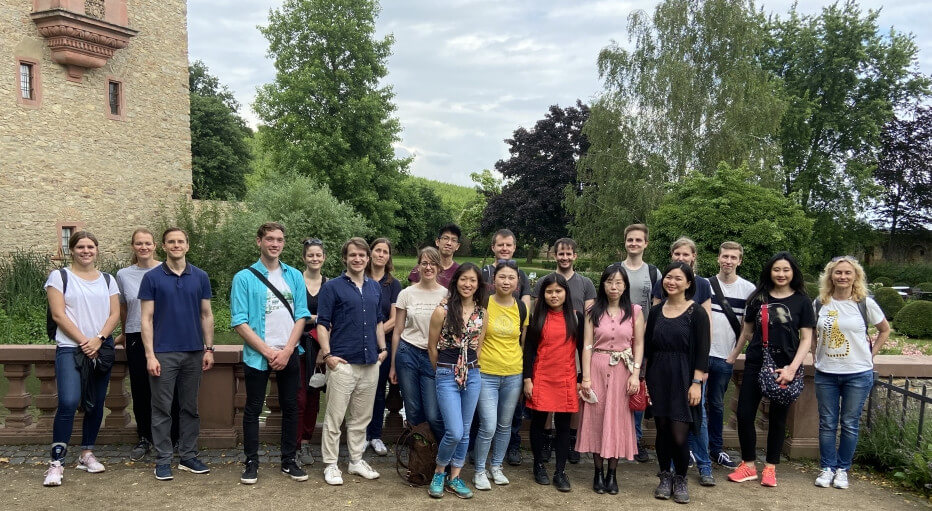
The entire Frankfurt team took the train together to Oestrich-Winkel in the Rheingau region, world-famous for its Riesling wine. Thanks to vaccinations, tests and spending time outdoors, all participants were able to enjoy the trip safely.
After a picnic lunch in the open air on the Rhine, everyone visited Vollrads Castle and the surrounding vineyards together. Vollrads Castle impressed with its long and interesting history and great condition.
The walk through the vineyards was accompanied by a wine specialist who presented interesting facts about the Rheingau and especially about Riesling.
In the evening the MPR team stopped at an excellent restaurant serving regional cuisine. Coordinated with the menu, the winemaker personally provided a nuanced wine accompaniment with detailed information about his local wines.
To conclude our successful outing, the team wrapped up the evening after our return trip to Frankfurt. The outing was a great team building experience and allowed for each of us to personally re-connect again after more than a year of limited contact.
MPR China Certification GmbH would like to thank its customers for their great trust in us during the pandemic.
In addition, we sincerely thank each employee for their excellent work and discipline during this challenging time.
CSEI research department conducts tests at high altitude for hot water boilers
The Energy Conservation Technology Research Department of China’s CSEI Institute conducted tests of hot water boilers at the high altitude of the Tibetan Plateau in Qinghai Province on behalf of the market regulator SAMR. The CSEI (China Special Equipment Inspection and Research Institute) collaborated on this with numerous research institutions in Qinghai Province, which had previously set up a research laboratory there. This facility made it possible to conduct tests on the energy efficiency and emissions output of hot water boilers. Such tests are essential for a SELO license, also known as China Manufacture License, which is mandatory for pressure vessels in China. The license is issued by the Chinese authority SELO – China Special Equipment Licensing Office. Like the CSEI, this authority is subordinate to the state market regulator SAMR.
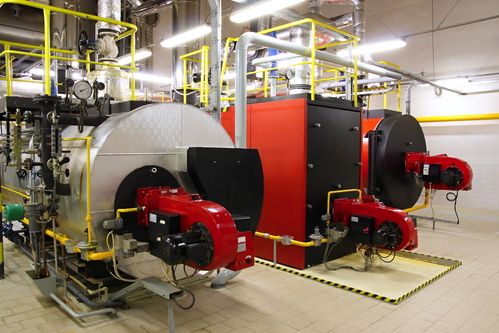
Boilers with different energy sources were studied and the series of tests was completed at the end of March. The energy sources were 20 boilers heated with coal, 67 were operated with gas and 2 with electricity. The parameters studied included flue gas temperatures, concentration of carbon monoxide in the flue gas, and the energy or amount of fuel required. Deficiencies in burner design and supply air were revealed, and maintenance problems were encountered. The test engineers present attempted to correct the problems by making adjustments to the boilers and subsequent measurements. In addition, operators and their personnel were trained on how to operate the boilers efficiently and in an environmentally friendly manner. In the end, both the amount of fuel required and nitrogen oxide emissions were reduced. According to the CSEI, both the operators and the local population benefited from the tests and improvements made. Local authorities and operating companies thanked the CSEI for their efforts and said that other provinces located at high altitude could also benefit from the results.
A so-called SELO license is required in China to import and manufacture equipment and machinery that operates at high pressure, like hot water boilers. The license is issued by the Chinese authority that gives it its name, SELO – China Special Equipment Licensing Office. Like the CSEI, this authority is subordinate to the state market regulator SAMR. Other names for the SELO license are Chinese Manufacture License (CML) and China Pressure Vessel License. The regulation came into effect in 2014, and foreign and domestic manufacturers need the SELO license to sell their products in China. Are you interested in SELO licensing for the Chinese market? MPR China Certification GmbH can offer you to carry out SELO licensing.
Please do not hesitate to contact us for further details and consultation. You can contact us via e-mail, or call us (UK: +44 2071931135, Rest of Europe: +49 69 2713769150, US: +1 773 654-2673).
Please also use our chat-window in the bottom right corner if you have any questions. (Please check your browser settings if you can’t see the window)
China CCIC Pre-Shipment Inspections Remain Relevant for the Export of Used Machinery To China
Imports to China continue to rise steadily. According to CNBC, China’s imports in March 2021 exceeded last year’s expectations by almost 15%. These imports also include used machinery and equipment, which must undergo a CCIC Pre-Shipment Inspection (PSI) before shipment.

Chinese customs, represented in Germany by the China Certification & Inspection Centre (CCIC), requires that used machinery conform to Chinese safety standards. This conformity must be evidenced by a pre-shipment inspection report. During the inspection, the machines to be shipped are checked for their safety, hygiene and environmental compatibility – in compliance with China’s legal requirements.
Both used machines and products that have not yet been used but have been stored for too long must undergo the inspection. A list of machines that require the PSI inspection report can be found in the overview about the China CCIC Pre-Shipment Inspection (PSI).
Although the process of the China Pre-Shipment Inspection has been simplified in recent years, problems still often occur, mainly due to incorrect documentation or insufficient preparation.
To avoid these mistakes and the resulting costs and time, we can organize and manage the inspection for you. Please do not hesitate to contact us if you have any questions about this.
Please do not hesitate to contact us for further details and consultation. You can contact us via e-mail, or call us (UK: +44 2071931135, Rest of Europe: +49 69 2713769150, US: +1 773 654-2673).
Please don’t hesitate to also use our chat-window in the bottom right corner if you have any questions. (Please check your browser settings if you can’t see the window)
China set to dominate global 5G development
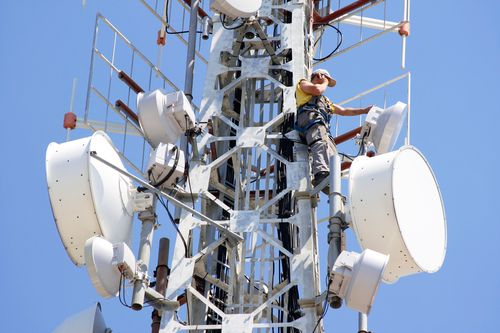
The report shows that China has taken the lead in 5G adoption over the past year. More than 200 million new 5G connections were registered in China, representing 87 percent of all connections worldwide. By 2025, up to 822 million connections are expected, according to the report. The rapid development of the 5G network in China is driven by a continuous expansion of the network infrastructure as well as the increasing number of capable handsets. Despite the Covid 19 pandemic, Chinese network operators deployed about 600,000 5G radio towers last year, according to the Ministry of Industry and Information Technology. The total now stands at 718,000, putting China first in the world. The report estimates that network operators will spend $210 billion between 2020 and 2025, 90 percent of which will be used to roll out 5G.
Although 4G currently remains the leading technology in China, its peak has already been passed and is being steadily replaced by 5G. It is expected that by 2025, 53 percent of all mobile connections in China will be made using 4G technology and 5G will have caught up to 47 percent. According to customer surveys by GSMA, Chinese users want to move to 5G earlier than the global average. Last year, 163 million 5G-enabled smartphones were shipped in China, accounting for 53 percent of the total market. According to the GSMA study data, about 1.22 billion residents in China had mobile subscriptions by the end of 2020, accounting for 83 percent of the total population. This figure puts China among the most developed mobile markets in the world while the global average is 66 percent. Of the total 1.22 billion mobile users in China, 990 million use a cell phone with Internet access. This number is expected to increase by another 200 million by 2025.
Cell phones and certain accessories require a CCC certificate, where CCC stands for China Compulsory Certificate. Products requiring certification, the list of which is frequently expanded or amended, may only be imported into China, sold in China and used in business activities in China after the product has undergone CCC certification.
In addition to that, a SRRC Type Approval is required for radio transmission equipment, in order to obtain a Network Access License (NAL).
For more information on how CCC certification, the CCC Self-Declaration, voluntary CCAP or CQC certification or SRRC Type Approval may affect your company, or for more information about CCC certification in general, the process, and the associated costs, please visit our website and our News Section where you will find current updates twice a week.
Please do not hesitate to contact us for further details and consultation. You can contact us via e-mail, or call us (UK: +44 2071931135, Rest of Europe: +49 69 2713769150, US: +1 773 654-2673).
Please don’t hesitate to also use our chat-window in the bottom right corner if you have any questions. (Please check your browser settings if you can’t see the window)
You can also check out our free CCC-Brochure, which can be downloaded right here as a PDF file or you consult our book (in English) “A Brief Guide to CCC: China Compulsory Certification”, which can be found directly here on Amazon.
Here you can download our brochure about the CCC Self-Declaration.
Here you can download our brochure about the voluntary CCAP or CQC certification.
 We are part of the CERTANIA-Group.