


Schließen


Another car brand from China is coming to Germany
After Nio and their first model ET7, the next Chinese car brand is in the starting blocks for the German market. This time it is the Ora brand of the automotive group Great Wall Motor (GWM). In addition to the unusual name “Funky Cat”, the company is also focusing on an EV in Golf format and not another SUV like other manufacturers. The Funky Cat impresses with a retro design that could remind one of a Porsche, especially from the front. The technology and interior, on the other hand, are state of the art and exude high quality standards.
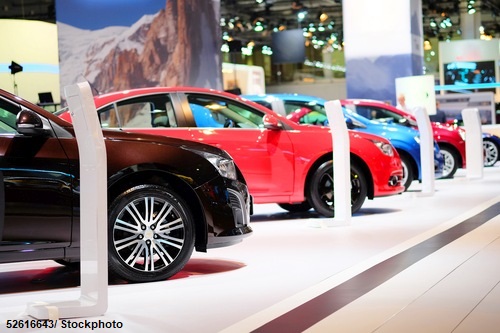
Even the basic version of the Ora Funky Cat comes with a full range of safety features and achieved five out of five stars in the EuroNACP crash test. The highlight of the extensive range of functions is a voice assistant that performed spoken tasks practically flawlessly in initial tests by German car magazines, thus reaching the level of premium brands. The Ora is powered by an e-motor with 126 kW (171 hp) and accelerates to 100 km/h in 8.2 seconds, with a top speed of 160 km/h. The basic version has a 48 kWh battery on board, which is said to be sufficient for a range of around 300 kilometers; with the more powerful 63 kWh battery, around 400 kilometers should then be possible. The entry-level price (before deduction of the EV subsidy) is likely to be just under 40,000 euros, with around 10,000 euros added for the top GT version. In total, the Funky Cat will probably appear in five variants on the German market from January. The newly founded Emil Frey Import Services, which also includes Mitsubishi’s German distribution, will be responsible for imports.
Vehicles and components must be awarded a CCC certificate so that the products can be exported to China or manufactured locally. Regarding e-mobility and battery system registration for both China and other markets, there are also many factors to consider.
For more information on how various product certifications might affect your business, or information on certification processes and requirements in general, please feel free to contact us directly.
Please do not hesitate to contact us for more details and advice. You can contact us via email, Chat, or call us (UK: +44 2071931135, Europe: +49 69 2713769150, US: +1 773 654-2673).
First impressions of the latest GWM model Wey Coffee 01
Strictly speaking, Wey, like Ora, is a sub-brand of the Chinese group Great Wall Motor (GWM). The debut in Germany is with the SUV called “Coffee 01”, which is intended to compete with established luxury class models in terms of dimensions, equipment and performance. The 4.87-metre-long, 2.3-tonne plug-in hybrid has a system output of 476 hp. This results from a two-litre turbo petrol engine with 204 hp and one electric motor per axle, which delivers 135 or 184 hp depending on the version. A relatively large battery for plug-in hybrids with 39.7 kWh capacity enables a purely electric range of up to 146 kilometres. Fast charging via direct current with CCS is possible, albeit only with a meagre 50 kW. The power of the total of three motors is transmitted to the wheels via a nine-speed dual-clutch transmission developed by GWM itself. Vehicles and components must be awarded a CCC certificate in order for the products to be exported to China or manufactured locally.

Thanks to the electric motor support, acceleration from zero to 100 km/h in around five seconds is more than adequate for an SUV; the top speed is 235 km/h. After first test drives with pre-production models, the press reported an adequate power delivery and comfortable chassis tuning. Points of criticism were the indirect steering as well as a sometimes awkward operation via the 14.6-inch touchscreen. GWM announced that these problems should be eliminated by the time the first models are ready for series production respectively delivery. The interior workmanship is of high quality and makes a good impression. The space on the back seat is comparatively large, but the boot, which can be expanded to a maximum of 1250 litres, has a capacity of only 371 litres. The preliminary features are appropriate for the base price of 55,900 euros and consist of LED matrix lights, head-up display, sound system from Infinity as well as common driving assistants. In terms of safety, the Coffee 01 impresses with five stars in the NCAP crash test. In the second quarter, Wey plans to launch the Coffee 02, a compact plug-in hybrid SUV.
CCC certification is a complex project that requires professional support at all stages. For several years, MPR China Certification GmbH has been entrusted with large CCC projects for the vehicle manufacturers Lotus, Tesla and Bugatti. We will be pleased to provide you with non-binding advice on the scope and requirements of a China CCC certification.
For more information on how CCC certification, the CCC Self-Declaration and voluntary CCAP or CQC certification may affect your company, or for more information about CCC certification in general, please visit our News Section where you will find current updates twice a week.
Please do not hesitate to contact us for further details and consultation. You can contact us via e-mail, Chat, or call us (UK: +44 2071931135, Europe: +49 69 2713769150, US: +1 773 654-2673).
You can also check out our free CCC-Brochure, which can be downloaded as a PDF file. The brochure also contains information on the CCC Self-Declaration and the voluntary CQC- and CCAP-Certification).
New GB Standard GB/T 31486 for E-Automotive Batteries in China
The NCTAS (National Technical Committee of Auto Standardization) has released the new GB/T Standard GB/T 31486 “Electrical performance requirements and test methods for power supply for electric vehicles” for the consultation phase. The standards GB/T 31486 is a mandatory standard for the traction battery testing. Parts and components from the field of electromobility partly require CCC certification.
Published on April 26, 2023, the standard is in the consultation phase until June 25, 2023. As part of this, the authority is asking that the public and all relevant bodies and experts, provide the responsible body with valuable information comments and insights regarding the revised standard. In this way, the Electric Vehicle Department, which is subordinate to the Automotive Standardization Technical Committee and aims to ensure safety of electronic vehicles and improve the standard.
It is highly recommended for manufacturers of cells, modules, packs and battery system to observe the standard before its final implementation since in many cases the authorities are requesting that already approved vehicles and their components need to undergo re-tested according to the newly implemented standard.
The electric vehicle market in China is one of the most important and fastest growing in the world. As the topic of electric mobility in China continues to grow in importance, it is therefore crucial that good regulations are established. Many parts and components in the field of electric mobility require CCC certification.
As soon as we know which changes will be adopted for the new standard version, we will provide the information on our website.
For more information on how CCC certification, the CCC Self-Declaration and voluntary CCAP or CQC certification may affect your company, or for more information about CCC certification in general, please visit our News Section where you will find current updates twice a week.
Please do not hesitate to contact us for further details and consultation. You can contact us via e-mail, Chat, or call us (UK: +44 2071931135, Europe: +49 69 2713769150, US: +1 773 654-2673).
You can also check out our free CCC-Brochure, which can be downloaded as a PDF file. The brochure also contains information on the CCC Self-Declaration and the voluntary CQC- and CCAP-Certification).
SAMR Announces CCC Certification of Lithium-ion Batteries and Packs
In accordance with the requirements of the General Office of the State Council on the Reform of the Management System of the Electronics and Electrical Industry, SAMR State Administration for Market Regulation has decided to introduce compulsory product certification (CCC certification) for lithium-ion batteries and battery packs, mobile power supplies and power adapters/chargers for telecommunication terminals used in electronic and electrical products (hereinafter summarized as “newly included products”).
The following, relevant requirements have been announced:
1. starting from August 1, 2023, certification bodies shall start accepting CCC certification orders for the newly included products and conduct certification work in accordance with the standards listed in the “Implementing Rules for Mandatory Product Certification of Information Technology Equipment” and the annexes.
From August 1, 2024, products that have not received CCC certification may not be shipped, sold, imported, or used in China. The list of mandated certification bodies and laboratories for the newly included products will be announced separately.
2. For details on the scope of CCC certification for newly included products, please refer to the Appendix. CCC certification for lithium-ion batteries and battery packs used in electronic and electrical products will be conducted in the initial phase. For lithium-ion batteries and battery packs used in other electronic and electric products, CCC certification shall be carried out in time when sufficient conditions exist.
3. Considering that GB Standard GB31241-2022 “Safety Specifications for Lithium-ion Batteries and Battery Packs for Portable Electronic Products” will be compulsory on January 1, 2024, the appointed certification bodies shall carry out CCC certification of the relevant products according to this GB Standard to reduce the certification cost for enterprises.
4. the designated certification bodies and laboratories shall ensure certification quality, actively accept existing conformity assessment results, reduce burden on enterprises and facilitate their certification.
Newly included in the scope of CCC certification:
| Product type and code | Description of the product category | Scope of application | Description or enumeration of the scope of application of the product | Remark |
| 0807 0907 Power Supply | Directly connected to the power supply of the grid, the output can be matched with telecommunication terminal equipment products, equipment with voltage conversion function, including power supply properties and electrical parameter conversion. | Power adapter/charger for telecommunication terminal equipment | Power adapters, chargers, power converters, etc. supporting telecommunication terminal equipment. | Applicable Standards: GB4943.1, GB/T9254.1, GB17625.1 |
| 0914 Power Bank | Mass does not exceed 18kg, including lithium-ion battery and/or battery pack, power bank supplied with AC and DC input/output. | Power bank | Power bank, portable energy storage power supply, camping power bank, etc. | Applicable Standards: GB4943.1, GB31241 |
| 0915 Lithium-ion Batteries and Battery Packs | A device that relies on lithium electrons to move between the positive electrode and the negative electrode to realize the mutual conversion of chemical energy and electrical energy and is designed to be rechargeable; Any number of lithium-ion batteries containing protection circuitry are combined to form a ready-to-use assembly. | Lithium-ion batteries and battery packs for portable electronics | Lithium-ion batteries and battery packs for portable electronic products such as portable office products, mobile communication products, and portable audio/video products. | 1. Applicable standards: GB31241 2. Excluding lithium-ion batteries and battery packs for e-cigarettes |
For more information on how CCC certification, the CCC Self-Declaration and voluntary CCAP or CQC certification may affect your company, or for more information about CCC certification in general, please visit our News Section where you will find current updates twice a week.
Please do not hesitate to contact us for further details and consultation. You can contact us via e-mail, Chat, or call us (UK: +44 2071931135, Europe: +49 69 2713769150, US: +1 773 654-2673). You can also check out our free CCC-Brochure, which can be downloaded as a PDF file. The brochure also contains information on the CCC Self-Declaration and the voluntary CQC- and CCAP-Certification).
Registration of Automotive Sandbox Projects in China
With an announcement from December 26, 2022, the Chinese State Administration for Market Regulation (SAMR) started a pilot project for the governmental registration of sandbox projects in the automotive industry. Participation is in the initial stage is exclusively voluntary for interested companies and may be initiated through the submission of a formal application. Many products in the automotive industry, such as complete vehicles as well as numerous components, require CCC Certification or voluntary CQC Certification or CCAP Certification in China.

The project announcement was preceded by a publication of a trial plan for the implementation of safety sandbox control in the automotive sector, issued as early as February 2022 by SAMR together with the General Administration of Customs (GACC) and several Chinese ministries. Technologies to be supervised were summarized in a two-page overview. They are divided into different categories, for example, intelligent communication technologies, data security, and new energy sources.
Sandbox projects which companies may wish to register for the pilot project may involve the development of a new technology or the integration thereof. Despite its voluntary nature SAMR urges companies to participate in the pilot project as a way to play a leading role in the fields of security and innovation coordination.
The People’s Republic of China recognized the relevance of sandboxes in the automotive industry for whose “healthy” development it now demands appropriate control through state regulations. At the same time, the Chinese government says it is committed to the market-driven and company-specific character of sandboxes and insists on state neutrality toward all types of innovations and technologies.
For more information on how CCC certification, the CCC Self-Declaration and voluntary CCAP or CQC certification may affect your company, or for more information about CCC certification in general, please visit our News Section where you will find current updates twice a week.
Please do not hesitate to contact us for further details and consultation. You can contact us via e-mail, Chat, or call us (UK: +44 2071931135, Europe: +49 69 2713769150, US: +1 773 654-2673).
You can also check out our free CCC-Brochure, which can be downloaded as a PDF file. The brochure also contains information on the CCC Self-Declaration and the voluntary CQC- and CCAP-Certification).
New Standard for Motorcycle Helmets GB 811-2022
On December 1, 2022 the State Administration for Market Regulation (SAMR, Standardization Administration of the People’s Republic of China) approved two mandatory national standards. Among the GB standards announced is GB 811-2022 for “motorcycle and electric bicycle passenger helmets.” This new standard is scheduled to be implemented from July 1, 2023 and will replace GB 811-2010. Helmets and similar protective equipment require a CCC certification.
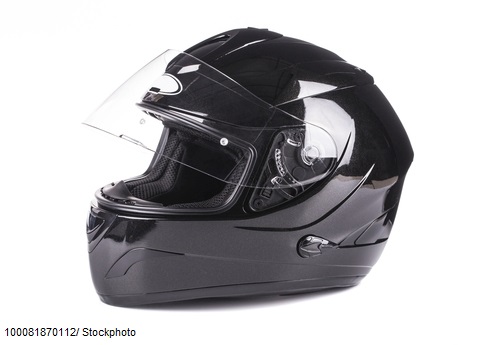
The National Standard GB 811 determines the basic structure, category, specifications, technical requirements, test methods, test rules and markings for motorcycle helmets for riders, as well as passengers. The requirements also apply to helmets for electric bicycles.
The GB standards are the most important group of standards underlying product conformity in China. They apply to both locally manufactured and imported products.
For more information on how CCC certification, the CCC Self-Declaration and voluntary CCAP or CQC certification may affect your company, or for more information about CCC certification in general, please visit our News Section where you will find current updates twice a week.
Please do not hesitate to contact us for further details and consultation. You can contact us via e-mail, Chat, or call us (UK: +44 2071931135, Europe: +49 69 2713769150, US: +1 773 654-2673).
You can also check out our free CCC-Brochure, which can be downloaded as a PDF file. The brochure also contains information on the CCC Self-Declaration and the voluntary CQC- and CCAP-Certification).
New CQC Implementation Rules for Indirect Vision Devices in the Automotive Sector
Automotive indirect vision devices intended for import and use in China usually require a CQC certification. For these product groups, the China Quality Certification Centre (CQC) published new implementation rules on December 30, 2022. As a result, the implementation rule CQC16-491201-2022 came into force on January 1, 2023, replacing the previous version CQC16-491201-2020.
Some of the changes for indirect vision devices in the automotive sector include:
- The GB Standards are now listed with year version number. For example: GB 15084 to GB 15084-2013, GB 17352 to GB 17352-2010.
- The CQC marking has been removed from the implementation rules. The CCC marking is still relevant as indirect vision devices are still subject to the mandatory CCC requirement.
- GB standards distinguish between motor vehicles and motorcycles/mopeds.
- If, in special circumstances, it is not possible to carry out an on-site inspection at the factory, the inspection will be carried out in accordance with the guidelines for remote inspections set out in the CQC Product Certification Requirements.
- It is possible to have an electronic certificate issued. However, the original certificate remains the official document.
- If a manufacturer is already certified and opens a new plant within its group of companies or relocates its existing plant, it may be able to obtain the CQC certificate. In this case, product tests must be passed, and a factory visit must be carried out. However, the visit must take place within three months of receiving the certificate and it is at the CQC’s discretion whether to allow this in individual cases.
For more information on how CCC certification, the CCC Self-Declaration and voluntary CCAP or CQC certification may affect your company, or for more information about CCC certification in general, please visit our News Section where you will find current updates twice a week.
Please do not hesitate to contact us for further details and consultation. You can contact us via e-mail, Chat, or call us (UK: +44 2071931135, Europe: +49 69 2713769150, US: +1 773 654-2673).
You can also check out our free CCC-Brochure, which can be downloaded as a PDF file. The brochure also contains information on the CCC Self-Declaration and the voluntary CQC- and CCAP-Certification).
Updated GB Standard GB/T 2099.3-2022 for plugs and sockets
The Standardization Administration of the People’s Republic of China (SAC) has published announcement number 13, 2022 on October 12, 2022, announcing that an updated version of the GB standard GB/T 2099.3-2015: Plugs and sockets for household and similar purposes – Part 2-5: Special requirements for converters will take effect on May 1, 2023. The new version of the standard is designated GB/T 2099.3-2022. Plugs and sockets are subject to CCC certification in China.
Additional details about the changes in the new version of the GB/T 2099.3-2022 standard will be posted on our website as they become available. It is expected that the new version of the standard will have higher requirements for the safety and reliability of plugs and sockets in order to ensure the safety of consumers.
The GB standards are one of the most important groups of standards in China that regulate product compliance. They apply to both locally made and imported products and are a prerequisite for production facilities to obtain a CCC certificate for their products.
The CCC certificate is a mandatory certification in China that was introduced in 2002. It is similar to the European CE system and regulates that products that are subject to CCC certification can only be imported, sold and used in China after they have obtained CCC certification.
For more information on how CCC certification, the CCC Self-Declaration and voluntary CCAP or CQC certification may affect your company, or for more information about CCC certification in general, please visit our News Section where you will find current updates twice a week.
Please do not hesitate to contact us for further details and consultation. You can contact us via e-mail, Chat, or call us (UK: +44 2071931135, Europe: +49 69 2713769150, US: +1 773 654-2673).
You can also check out our free CCC-Brochure, which can be downloaded as a PDF file. The brochure also contains information on the CCC Self-Declaration and the voluntary CQC- and CCAP-Certification).
New CQC Implementation Rules CQC16-491284-2022 for Automotive Brake Hoses
On Dec. 30, 2022 the CQC updated the Implementation Rules for brake hoses in China, following the related GB standard GB16897-2022 published a few months earlier. The new Implementation Rule CQC16-491284-2022 officially replaced the previous version as of January 1, 2023. Automotive brake hoses fall under the voluntary CQC certification or voluntary CCAP certification in China. In contrast, numerous other automotive products still require a mandatory CCC certification.
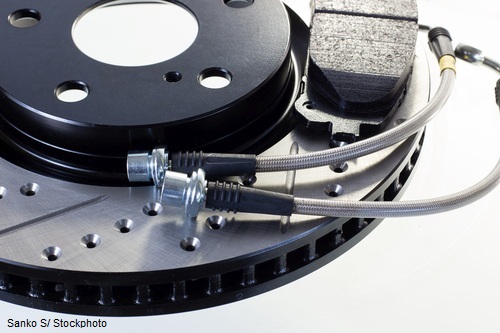
The content modifications of CQC16-491284-2022 compared to former CQC16-491284-2018 include:
- The number of required test samples, which has been increased to 44 (or 52 in special cases) for hydraulic brake hoses, 20 for rubber brake hoses and 68 for plastic air brake hoses, or 10 for vacuum brake hose assemblies respectively
- A remote option for factory inspections if on-site audits cannot take place due to specific circumstances.
- The issuance of e-certificates before printing of the actual certificate. These do not replace the printed versions.
- The possibility of receiving the certificate before the initial audit is completed. This option is only available, however, if the new plant to be certified is part of an already certified company group, if the product tests have been successfully completed, and if the inspection takes place within three months after certificate issuance.
- A new template for the CoP implementation report.
All updates are relevant for certified brake hose manufacturers as well as their customers and involved suppliers.
The Chinese GB Standards and Implementation Rules are regularly revised by the authorities, often having considerable implications for the corresponding product manufacturers. Updates are usually not announced and must be independently tracked and implemented by certified factories. Failure to do so may result in severe consequences, including withdrawal of certification.
For more information on how CCC certification, the CCC Self-Declaration and voluntary CCAP or CQC certification may affect your company, or for more information about CCC certification in general, please visit our News Section where you will find current updates twice a week.
Please do not hesitate to contact us for further details and consultation. You can contact us via e-mail, Chat, or call us (UK: +44 2071931135, Europe: +49 69 2713769150, US: +1 773 654-2673). You can also check out our free CCC-Brochure, which can be downloaded as a PDF file. The brochure also contains information on the CCC Self-Declaration and the voluntary CQC- and CCAP-Certification).
New CQC Implementation Rules for Automotive Seats and Headrests
As part of the new implementation rules published by the CQC (China Quality Certification Centre) on December 30, 2022, new implementation rules for CQC certification of automotive seats and headrests have also been announced. The new implementation rules CQC16-491261-2022 replace the old version CQC16-491261-2018 and came into effect on January 1, 2023. The CQC certification is relevant for automotive seats and headrests to be imported and used in China.
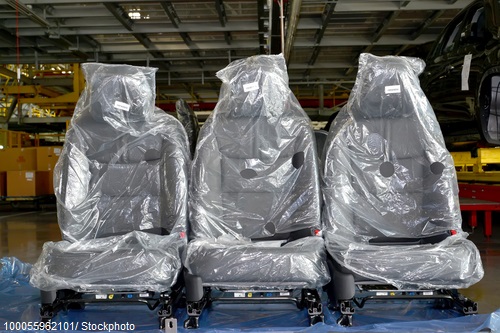
Changes for automotive seats and headrests include:
- Specifications and quantity requirements for test samples now explicitly mention the associated vehicle body-in-white, which is required to perform dynamic product testing as a rack for the seats under test
- GB Standards are now listed with the specific year version number; i.e. “GB8410” is now “GB8410-2006”, “GB15083” is now “GB15083-2019”, etc.
- Audits may be conducted in the form of a remote audit under certain conditions; however, there are also certain restrictions, e.g., a factory may not conduct 2 remote audits in consecutive years.
- The issuance of an e-certificate is made possible. However, this does not replace the original certificate.
- In case of a plant relocation or opening of a new site of an already certified manufacturer within the same group of companies, the plant may be allowed to receive the CQC certificate in advance after passing product tests, before the plant audit is performed. The factory audit must then take place within 3 months of the certificate being issued. The CQC decides for each case individually whether this possibility may be used.
- The CQC marking has been removed from the implementation rules. The CCC marking is still relevant for this product group, as seats and headrests are still subject to the mandatory requirement CCC Self-Declaration
For more information on how CCC certification, the CCC Self-Declaration and voluntary CCAP or CQC certification may affect your company, or for more information about CCC certification in general, please visit our News Section where you will find current updates twice a week.
Please do not hesitate to contact us for further details and consultation. You can contact us via e-mail, Chat, or call us (UK: +44 2071931135, Europe: +49 69 2713769150, US: +1 773 654-2673).
You can also check out our free CCC-Brochure, which can be downloaded as a PDF file. The brochure also contains information on the CCC Self-Declaration and the voluntary CQC- and CCAP-Certification).
 We are part of the CERTANIA-Group.