


Schließen


New CNCA Implementation Rule for CCC certification of automobile vehicles
To further improve the CCC certification system, simplify the application requirements, optimize the implementation procedures and improve the convenience of implementation for CCC certification of motor vehicles a new implementation rule No. CNCA-C11-01:2020 for complete vehicles has been announced.
The old version of the implementation rules (No. CNCA-C11-01:2014) will be replaced.

CCC Certificates which have been issued before the implementation of the new version can still be used and shall be renewed by the designated certification body according to the new version of rules as soon as they expire.
Starting from the implementation date the certification authorities should certify products according to the new version of rules. A 1-year transition period will be granted for new certification applications.
To ensure the implementation of mandatory product certification for motor vehicles during current Pandemic Period the requirements of automobile product type test will be further simplified. For new certification applications where the applicant cannot provide a valid type test report due to the pandemic situation, the applicant should submit a self-Declaration of the standard conformance and relevant technical data. The certification authorities will issue the CCC certificate after examination of the submitted documents. After the pandemic, the applicant has to provide a type test report, or finish an on-site random sample test by the certification authorities.
Are you interested in getting more information regarding the new Implementation Rule for Complete Vehicle Certification? Do you have any questions about the application for certification modification? If so, please call or email us anytime. You can contact us via e-mail, or call us (UK: +44 2071931135, Rest of Europe: +49 69 2713769150, US: +1 773 654-2673).
Also check our website if you want more information regarding CCC certification, the CCC Self-Declaration and voluntary CCAP or CQC certification, or for more information about CCC certification in general, the process, and the associated costs, please visit our website and our News Section where you will find current updates twice a week.
You can also check out our free CCC-Brochure, which can be downloaded right here as a PDF file or you consult our book (in English) “A Brief Guide to CCC: China Compulsory Certification”, which can be found directly hier on Amazon.
Here you can download our brochure about the CCC Self-Declaration.
Here you can download our brochure about the voluntary CCAP or CQC certification.
CCC conversion deadline for brake pads on 1 June 2021
As we have already informed you in a previous news item, brake pads will require mandatory CCC certification from June 1, 2021 in order to be sold on the Chinese market. This means that after June 1, 2021, the Chinese product licenses still valid will expire.
Since June of this year, applications for CCC certification can already be submitted to the certification authorities CQC and CCAP. The corresponding applicable standard GB 5763-2018 came into force on October 1, 2019, and together with the implementing regulation CNCA-C11-20:2020 forms the basis for the CCC certification of brake pads.
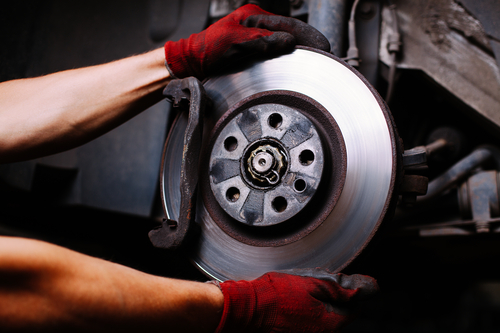
Since CCC certification through product testing and factory audit is very extensive and time-consuming and a high volume of applications for CCC certification for brake pads is to be expected, we recommend that brake pad manufacturers start the application process as soon as possible.
Under certain circumstances, already existing test reports, inspection reports or similar documents may be accepted by the authorities. We would be pleased to check this possibility for you during the CCC certification.
For more information on how CCC certification, the CCC Self-Declaration and voluntary CCAP or CQC certification may affect your company, or for more information about CCC certification in general, the process, and the associated costs, please visit our website and our News Section where you will find current updates twice a week.
Please do not hesitate to contact us for further details and consultation. You can contact us via e-mail, or call us (UK: +44 2071931135, Rest of Europe: +49 69 2713769150, US: +1 773 654-2673).
You can also check out our free CCC-Brochure, which can be downloaded right here as a PDF file or you consult our book (in English) “A Brief Guide to CCC: China Compulsory Certification”, which can be found directly hier on Amazon.
Here you can download our brochure about the CCC Self-Declaration.
Here you can download our brochure about the voluntary CCAP or CQC certification.
China’s industry recovers in April from the low level of the effects of coronavirus
According to official figures, Chinese industry recovered from its record low in April, but the full recovery of the economy remains uncertain after US President Trump tightened the tone towards China and the two countries’ relations deteriorated. According to figures released Friday by the National Bureau of Statistics, industrial production rose 3.9 percent year-on-year in April after a rapid loss of 13.5 percent in January and February during the coronavirus outbreak.
Investment in fixed assets and retail sales were down, but at a slower pace. Fixed capital formation fell 10.3 per cent in the first four months of the year compared with a 16 per cent decline in the first quarter of 2020, while retail sales fell to 7.5 per cent year-on-year. The figures were released shortly after US President Trump threatened to sever all ties with China in response to poor management during the early stages of the coronavirus pandemic.

Zhao Lijian, a spokesman for the Chinese foreign ministry, said the US should reconsider its “cold war” stance. A stable development of Sino-American relations is in the fundamental interest of both countries, the spokesman added. “The two countries should cooperate in the fight against the epidemic and deepen their economic cooperation. But this requires that the USA approach China,” Lijian announced.
Earlier this week, after pressure from officials, the US government’s pension fund announced that it would not invest in Chinese stocks in the future. Meanwhile, the People’s Congress, which meets next week, is expected to pass a comprehensive stimulus package to boost the economy. Despite signs of economic recovery, low domestic demand, rising unemployment, a global recession and tensions between the U.S. and China are endangering the country’s economy, said Bo Zhuang, an economist with the consulting firm TS Lombard. Certain product groups must be awarded a CCC certificate in order for products to be exported to China. The CCC certificate was introduced in 2002 and applies to both imported and Chinese products. The Chinese CCC is comparable to other certifications for standardizing product quality, such as the European CE system, but there are important differences. We would be pleased to advise you without obligation about the scope and requirements of a China CCC certification.
For more information on how CCC certification, the CCC Self-Declaration and voluntary CCAP or CQC certification may affect your company, or for more information about CCC certification in general, the process, and the associated costs, please visit our website and our News Section where you will find current updates twice a week.
Please do not hesitate to contact us for further details and consultation. You can contact us via e-mail, or call us (UK: +44 2071931135, Rest of Europe: +49 69 2713769150, US: +1 773 654-2673).
You can also check out our free CCC-Brochure, which can be downloaded right here as a PDF file or you consult our book (in English) “A Brief Guide to CCC: China Compulsory Certification”, which can be found directly hier on Amazon.
Here you can download our brochure about the CCC Self-Declaration.
Here you can download our brochure about the voluntary CCAP or CQC certification.
Chinese Interest in used machines and thus Pre-Shipment Inspections (PSI) is rising
Chinese media and global trade data agree that imports in China this summer are rising against expectations despite the global coronavirus crisis. According to CNBC, there were 6.2% more imports in June 2020 than in the same month in 2019, which contradicts the annual trend since 2018 and could theoretically points to a sharp jump in China’s global imports in the near future. This trend is also confirmed by the increasing demand for Pre-Shipment Inspection (PSI China) this month.

This trend is also reflected in Germany after the very difficult months of April and May, in which exports were up to 31 % lower than in the same month last year. Already in May, we were able to record a month-to-month increase and this is expected to continue into June and July.
As the crisis comes to an end, it can be assumed that most companies will control their spending somewhat more closely. Instead of buying expensive new machines, it may be more cost-effective to buy cheaper used machines, especially since these machines have usually only been in use for a few years and are still in good condition. In most cases, these machines are also completely serviced to prepare them for export and therefore differ only slightly from a new machine.
Many companies do not realize that used machines which shall be exported to China still require a quality control inspection by Chinese customs before they can be shipped. The authorized Chinese customs inspection in Germany is handled by the China Certification & Inspection Centre (CCIC). They will check that the used machines meet Chinese safety standards and this compliance must be confirmed by a pre-shipment inspection report. We can manage this report as well as the pre-shipment inspection itself for you, please do not hesitate to contact us if you have any questions.
Here you can find information about CCIC Pre-Shipment Inspection (PSI). Please do not hesitate to contact us for further details. You can contact us by email or call us at +49692713769150 (for Europe) or + 1 773 654 2673 (for USA).
Shenzhen plans to install 30,000 new 5G base stations in 2020
According to press releases, the local government of the Chinese city of Shenzhen plans to install 30,000 new 5G base stations in 2020. This will enable the use of 5G technology by customers of all Chinese providers in Shenzhen, according to the city government. As of the end of last year, Shenzhen had about 15,000 5G base stations in key areas of the city to test the new technology, according to the Shenzhen City Industry and IT Office.
Shenzhen is a technology hub in the southern Chinese province of Guangdong and one of the first cities in China to test the 5G network. The city with more than 12.5 million residents is home to telecommunication giants like Huawei, ZTE and other technology companies such as Tencent Holdings. The number of 5G users in the capital Beijing recently exceeded 2 million after network operators launched 5G service five months ago. By the end of March, Beijing had around 17,750 5G base stations and towers installed.

The Beijing Municipality estimates that the number of 5G base stations in the capital could reach 30,000 by the end of the year. In order to improve coverage and reception a further 5,000 antennas will be installed inside buildings throughout the city. According to a report, China Unicom has the largest market share in the Beijing metropolitan area with more than 1 million users of 5G, followed by China Mobile with 728,000 customers and China Telecom with 253,000 active users.
The Chinese Academy of Information and Communication Technology expects the introduction of 5G technology to create more than 8 million new jobs in China by 2030. By 2025, about 28 percent of mobile communication data connections in China are expected to be over the 5G network. This would correspond to one third of all 5G connections worldwide. The production, operation and importation of wireless devices in China are subject to the State Radio Regulation of China (SRRC) regulations issued by the Ministry of Industry and Information Technology (MIIT). We will check for you without obligation whether your product requires an SRRC test and will prepare a non-binding offer to give you an idea of the costs and effort involved.
For more information on how CCC certification, the CCC Self-Declaration and voluntary CCAP or CQC certification may affect your company, or for more information about CCC certification in general, the process, and the associated costs, please visit our website and our News Section where you will find current updates twice a week.
Please do not hesitate to contact us for further details and consultation. You can contact us via e-mail, or call us (UK: +44 2071931135, Rest of Europe: +49 69 2713769150, US: +1 773 654-2673).
You can also check out our free CCC-Brochure, which can be downloaded right here as a PDF file or you consult our book (in English) “A Brief Guide to CCC: China Compulsory Certification”, which can be found directly hier on Amazon.
Here you can download our brochure about the CCC Self-Declaration.
Here you can download our brochure about the voluntary CCAP or CQC certification.
New Implementation Rules for Voluntary CCAP Certification of Interior Trim Components
In the course of adapting the CNCA implementation rule CNCA-C11-01:2020 for the complete vehicle homologation, CNCA introduced new test requirements for interior trim components. To ensure consistency between the CNCA implementation rule and the detailed CCAP implementation rule, a new version of the CCAP implementation rule for interior trim components has been active since July 1, 2020: CCAP-GZ-5101:2020.
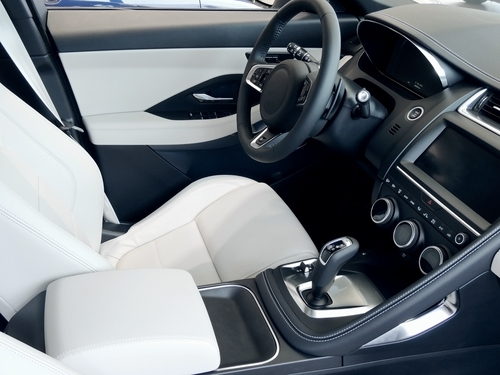
We have listed the most important changes for you below:
- The implementation rule now also includes the standards GB38262-2019 “Flammability of interior trimming materials of buses” and GB24407-2012 “Safety and technical conditions of school buses”.
- Revised rules for the classification of certification units and the addition of new standards and material classifications of interior trimming components of buses.
- The Description Forms have been extended by technical parameters for buses.
Starting from July 1, 2020, CCAP will carry out the certification of interior trim components in accordance with the new implementation rule CCAP-GZ-5101:2020. Existing valid CCAP certificates can still be used for interior trim components of passenger cars. CCAP is striving for a “natural” adjustment of the certificates in during certificate changes.
For components for buses or school buses, a corresponding GB standard update should be carried out for already existing certificates which includes product tests.
Are you interested in getting more information regarding the new Implementation Rule for Voluntary CCAP Certification of Interior Trimming Parts? Do you have any questions about the application for certification modification? If so, please call or email us anytime. You can contact us via e-mail, or call us (UK: +44 2071931135, Rest of Europe: +49 69 2713769150, US: +1 773 654-2673).
Also check our website if you want more information regarding CCC certification, the CCC Self-Declaration and voluntary CCAP or CQC certification, or for more information about CCC certification in general, the process, and the associated costs, please visit our website and our News Section where you will find current updates twice a week.
You can also check out our free CCC-Brochure, which can be downloaded right here as a PDF file or you consult our book (in English) “A Brief Guide to CCC: China Compulsory Certification”, which can be found directly hier on Amazon.
Here you can download our brochure about the CCC Self-Declaration.
Here you can download our brochure about the voluntary CCAP or CQC certification.
Nokia becomes supplier for the 5G network of China Unicom
China Unicom, a telecommunications services provider and operator in China, recently announced that it is collaborating with Nokia to expand its core 5G network in China. The contract includes the delivery of telecom infrastructure for approximately 10 percent of the core network. The definition of the core area or core network in mobile communications includes services such as call set-up, bandwidth management, scaling and securing the network as well as new software services in the 5G network such as network slicing.
Nokia issued a press release to provide more details on the services selected by China Unicom. Unified data management, session and user administration are complemented by Nokia’s own “Data Refinery” and “NetAct” systems from the CloudBand solution. The products offered by Nokia combine China Unicom’s existing 4G network with the new 5G gateway and packet management capabilities.

In addition, Nokia currently holds a 17 percent stake in China Unicom’s VoLTE, which has recently been greatly expanded and uses Nokia’s cloud-based vIMS platform. A Nokia spokesperson said the new agreement will further deepen the partnership with China Unicom. “We will continue to support the development of China Unicom’s 5G network”. Wireless devices in China are covered by the State Radio Regulation of China (SRRC) regulations from the Ministry of Industry and Information Technology (MIIT). This means that manufacturers and importers of wireless devices must have their products tested and certified according to the SRRC regulations. We will check for you without obligation whether your product requires an SRRC test and will prepare a non-binding offer to give you an idea of the costs and effort involved.
For more information on how CCC certification, the CCC Self-Declaration and voluntary CCAP or CQC certification may affect your company, or for more information about CCC certification in general, the process, and the associated costs, please visit our website and our News Section where you will find current updates twice a week.
Please do not hesitate to contact us for further details and consultation. You can contact us via e-mail, or call us (UK: +44 2071931135, Rest of Europe: +49 69 2713769150, US: +1 773 654-2673).
You can also check out our free CCC-Brochure, which can be downloaded right here as a PDF file or you consult our book (in English) “A Brief Guide to CCC: China Compulsory Certification”, which can be found directly hier on Amazon.
Here you can download our brochure about the CCC Self-Declaration.
Here you can download our brochure about the voluntary CCAP or CQC certification.
China begins to consolidate oil and gas pipeline companies
China’s government has asked the three largest state-owned oil companies to hand over half of their liquefied natural gas (LNG) terminals to a newly established state-controlled company. The handover of ten LNG terminals currently owned by China National Petroleum Corporation (CNPC), Sinopec and China National Offshore Oil Corporation (CNOOC) is the first step in China’s planned consolidation of oil and gas pipeline companies into a single large state-owned company.
As early as the end of last year, China began the long-disputed process of merging the infrastructure of state-owned oil and gas pipeline companies into a new group of companies, which analysts estimate to be worth the equivalent of 80 to 105 billion US dollars. The new company is part of China’s efforts to develop the exploration of new oil and gas fields and increase production with the state-owned energy companies. The consolidation of the pipeline infrastructure into one company would make the company more attractive for domestic and foreign producers. In addition, the oil and gas companies would then be able to concentrate better on the exploration of new oil fields and increase China’s domestic production.

Last year, CNOOC agreed to transfer the operation and management of its pipelines to the new state-owned company. Of the ten LNG terminals that are also scheduled to be handed over soon, seven are currently owned by CNOOC, two by CNPC and one by Sinopec. The new pipeline company will be called China Oil & Gas Piping and will initially manage the ownership and assets while the original companies will remain owners. Following the transfer of the LNG terminals, 11 more LNG facilities will remain in the hands of China’s three largest oil and gas companies. Safety is particularly important in the oil and gas industry. According to an announcement by the Chinese market regulation authority SAMR (State Administration for Market Regulation), CCC certification will be mandatory for explosion protection products in the future. For example, a CCC certificate can be applied in China for explosion protection products since 01.10.2019. From 01.10.2020, a China CCC certification will be mandatory for the products concerned. We would be pleased to advise you on the requirements and the procedure of a CCC certification.
For more information on how CCC certification, the CCC Self-Declaration and voluntary CCAP or CQC certification may affect your company, or for more information about CCC certification in general, the process, and the associated costs, please visit our website and our News Section where you will find current updates twice a week.
Please do not hesitate to contact us for further details and consultation. You can contact us via e-mail, or call us (UK: +44 2071931135, Rest of Europe: +49 69 2713769150, US: +1 773 654-2673).
You can also check out our free CCC-Brochure, which can be downloaded right here as a PDF file or you consult our book (in English) “A Brief Guide to CCC: China Compulsory Certification”, which can be found directly hier on Amazon.
Here you can download our brochure about the CCC Self-Declaration.
Here you can download our brochure about the voluntary CCAP or CQC certification.
Voluntary CQC certification for heat pumps (dehumidifiers)
Since April 2018, the China Quality Certification Center (CQC) launched a safety and energy-saving certification business for air source heat pump hot air drying (dehumidifier) units.
The CQC has two different certifications for heat pumps (dehumidifiers) in terms of safety and energy efficiency. The main test of safety certification is the electrical strength and grounding resistance of the product. The standard used is GB4706.1. Energy-saving certification is required to test the heat, dehumidification, input power and energy-saving evaluation values according to the CQC6402-2018. The heat pump (dehumidifiers) energy and safety certification is similar to the CCC certification, both of which require product testing, initial factory inspection and annual on-site follow up inspections after the initial certification.

The use of the heat pumps (dehumidifiers) in daily life is relatively common. It is used for crop drying, fruit nut drying, seafood drying, and herb drying. If you have any questions about the energy and safety certification of heat pumps (dehumidifiers), we would be happy to assist you.
For more information on how CCC certification, the CCC Self-Declaration and voluntary CCAP or CQC certification may affect your company, or for more information about CCC certification in general, the process, and the associated costs, please visit our website and our News Section where you will find current updates twice a week.
Please do not hesitate to contact us for further details and consultation. You can contact us via e-mail, or call us (UK: +44 2071931135, Rest of Europe: +49 69 2713769150, US: +1 773 654-2673).
You can also check out our free CCC-Brochure, which can be downloaded right here as a PDF file or you consult our book (in English) “A Brief Guide to CCC: China Compulsory Certification”, which can be found directly hier on Amazon.
Here you can download our brochure about the CCC Self-Declaration.
Here you can download our brochure about the voluntary CCAP or CQC certification.
Chinese electric carmaker NIO plans to build a Chinese headquarters in Hefei
NIO said that talks have already been held with the local government of Hefei. The city in Anhui province is a center for car. The talks also set out detailed terms of a new round of investment that could raise more than 10 billion yuan (1.4 billion US dollars). NIO also plans to build a Chinese headquarter in Hefei to complement the existing plant and a research and development center. The automaker plans to announce further details as soon as they are available. The planned investment is a welcome cash injection for the struggling and loss-making company, which is one of a dozen other Chinese electric vehicle manufacturers competing with industry leader Tesla.
The market for electric cars in China has grown rapidly in recent years but has been heavily dependent on government subsidies. After a gradual withdrawal of subsidies, sales of vehicles with alternative drive systems fell by around 54 percent in January 2020. According to the Chinese Association of Automobile Manufacturers, the decline is partly due to the effects of the coronavirus, but the figures still fell for the seventh consecutive month.

Discussions on fresh funding for NIO are seen as a positive signal by the Chinese economy and could boost confidence after an extended plant shutdown during the Chinese New Year. NIO was one of eight companies that signed agreements with the Hefei government to strengthen the local economy after the end of the coronavirus crisis. In Shanghai, less affected by the virus, Tesla already reopened its factory on February 10. The Model 3 is manufactured there for the Chinese market and has been delivered to customers since January. Components and vehicles in China require a CCC certificate. The mandatory CCC (China Compulsory Certificate) seal of approval must be visibly affixed to the products. We would be happy to advise you on how to obtain a CCC (China Compulsory Certificate) for your products.
For more information on how CCC certification, the CCC Self-Declaration and voluntary CCAP or CQC certification may affect your company, or for more information about CCC certification in general, the process, and the associated costs, please visit our website and our News Section where you will find current updates twice a week.
Please do not hesitate to contact us for further details and consultation. You can contact us via e-mail, or call us (UK: +44 2071931135, Rest of Europe: +49 69 2713769150, US: +1 773 654-2673).
You can also check out our free CCC-Brochure, which can be downloaded right here as a PDF file or you consult our book (in English) “A Brief Guide to CCC: China Compulsory Certification”, which can be found directly hier on Amazon.
Here you can download our brochure about the CCC Self-Declaration.
Here you can download our brochure about the voluntary CCAP or CQC certification.
 We are part of the CERTANIA-Group.