

Schließen

China launches new hydrogen research and development program
The featured national research and development program, “Key Technologies for Machinery and Safety Research in Liquid Hydrogen Production, Storage, Transportation and Filling,” was presented by Jin Hongguan, director of China’s Ministry of Science and Technology, in Beijing on Jan. 29. Guests in attendance included representatives from Beijing Sino-Science FULLCRYO Co. Ltd, Technical Institute of Physics and Chemistry of Chinese Academy of Science (CAS), Beijing Special Engineering Design and Research Institute, Tongji University and China Special Equipment and Research Institute (CSEI). During the conference, the project leaders and their associates introduced the goal and content of the research program and corresponding timelines.
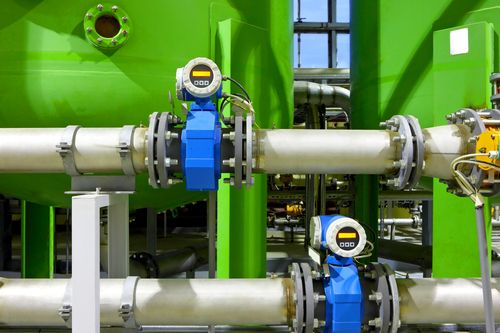
Beijing Sino-Science FULLCRYO Co. Ltd. is to take the lead in the project. They will be supported by a total of 10 research groups from CAS and CSEI. The CSEI, as the inspection body for research on safety-related machinery and equipment such as boilers, pressure vessels and pressure piping, is working on the project “Research on Key Technologies for Safety Risk Assessment and Accident Prevention in the Production, Storage and Filling of Liquid Hydrogen.” Among other things, hydrogen liquefaction plants and hydrogen filling stations will be examined for their safety under real operating conditions. In addition, the safety and monitoring equipment will be tested for suitability and improved with new technology.
This special research project is intended to eliminate the current bottleneck of appropriate safety technology in the field of production, storage and filling of liquid hydrogen and to promote the expansion of this technology. The Chinese government hopes that this will lead to a growth of the industry in the field of hydrogen transport and refueling stations and is promoting corresponding projects. A so-called SELO license is required in China for the import and manufacture of equipment and machines that use gases such as hydrogen. The license is issued by the Chinese authority SELO – China Special Equipment Licensing Office. Like the CSEI, this authority is subordinate to the state market regulator SAMR. Other names for the SELO license are Chinese Manufacture License (CML), China Stamp or Pressure Vessel License. The regulation came into effect in 2014, and foreign and domestic manufacturers need the SELO license to sell their products in China. Are you interested in SELO licensing for the Chinese market? MPR China Certification GmbH offer you to conduct SELO licensing.
If your company operates in China and manufactures or sells products such as steam boilers, pressure vessels, boilers, safety parts, gas cylinders, tanks and pressure lines or pipelines in China, then you need a so-called SELO license. This regulation on the safety of special equipment came into effect in 2014 and requires domestic and foreign manufacturers to obtain a SELO license in order to sell their products in China. The SELO license is also called China Manufacture License (CML), China Stamp or pressure vessel license. It is a licensing procedure by the Chinese authority SELO – China Special Equipment Licensing Office. This authority is under the State Administration for Market Regulations (SAMR). Are you interested in SELO licensing for the Chinese market? We will check for you, without obligation, whether your product requires SELO licensing and prepare a quotation for SELO licensing to give you an idea of the costs and effort involved.
Please do not hesitate to contact us for further details and consultation. You can contact us via e-mail, or call us (UK: +44 2071931135, Rest of Europe: +49 69 2713769150, US: +1 773 654-2673).
Please also use our chat-window in the bottom right corner if you have any questions. (Please check your browser settings if you can’t see the window)
High-pressure cleaner companies to showcase their cleaning equipment at CIIE
As a full-range supplier of cleaning equipment and accessories, Kärcher and other companies hope the show, as well as increased demand due to the Covid 19 pandemic, will provide good business opportunities for growth. CIIE is a good platform for expanding international trade, the company said, adding that as a corporation with a global presence, it has already been able to secure numerous orders according to various participating companies. An executive of the Kärcher said the CIEE held in Shanghai has helped them establish strategic cooperation with new partners as well as increase its brand presence during the past three years.
As customers pay attention to cleanliness and hygiene, they want to buy the latest technology when purchasing products. This has generated higher demand for efficient and environmentally friendly concepts.
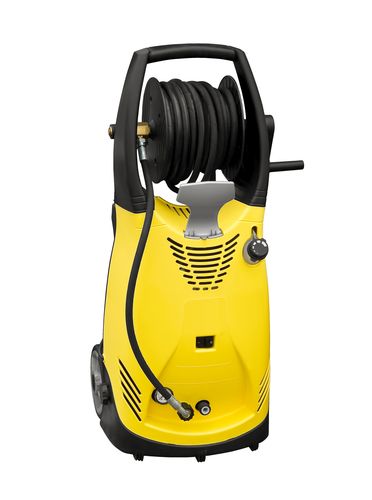
China is considered one of the most strategically important markets for high-pressure cleaners, with the CIEE exhibition used to trade, exchange experiences and cooperate with other companies.
At past events, the various showcases introduced customized products for a wide range of cleaning purposes. Among others, automatic washing devices for vehicles as well as for cleaning streets and alleys were presented to the public, as well as a fully automated washing robot with camera sensors and radar.
Products sold to China and used in business activities in China require CCC certification. The list of product groups is constantly expanding and, depending on the category, a mandatory certification China Compulsory Certificate or, since 2019, a CCC Self-Declaration or a voluntary certification must be obtained. The CCC certificate was introduced in 2002 and applies to both imported and Chinese products. CCC stands for China Compulsory Certificate. The Chinese CCC is comparable to other certifications for standardizing product quality, such as the European CE system, but there are important differences.
For more information on how CCC certification, the CCC Self-Declaration and voluntary CCAP or CQC certification may affect your company, or for more information about CCC certification in general, the process, and the associated costs, please visit our website and our News Section where you will find current updates twice a week.
Please do not hesitate to contact us for further details and consultation. You can contact us via e-mail, or call us (UK: +44 2071931135, Rest of Europe: +49 69 2713769150, US: +1 773 654-2673).
Please don’t hesitate to also use our chat-window in the bottom right corner if you have any questions. (Please check your browser settings if you can’t see the window)
You can also check out our free CCC-Brochure, which can be downloaded right here as a PDF file or you consult our book (in English) “A Brief Guide to CCC: China Compulsory Certification”, which can be found directly here on Amazon.
Here you can download our brochure about the CCC Self-Declaration.
Here you can download our brochure about the voluntary CCAP or CQC certification.
China establishes working committee for inspection of pressure lines and pipelines
On December 5, 2020, the new working committee for the inspection of pressure lines and pipelines was launched at the founding conference in Chengdu, Szechuan Province. The head of the commission is Liu Sanjiang, president of CSEI and also chairman of the Chinese Association for the Inspection of Special Equipment. The word “special” here stands for safety-related products such as steam boilers, pressure vessels, boilers, safety parts, gas cylinders, tanks and pressure lines or pipelines. In addition to another 100 members from industry and research, the directors of the authorities SESA (Special Equipment Safety Administration Bureau), SAMR (State Administration for Market Regulation) and the market regulation authority of Szechuan Province were also present.
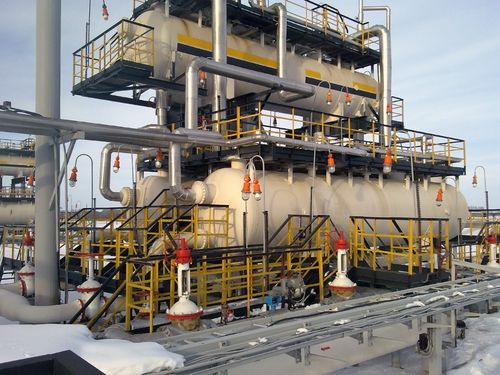
Liu Sanjiang made it clear that the monitoring and inspection of pressure pipelines plays an important role. Through institutional reforms, scientific and technical progress, and the introduction of industry standards, he said, it would be possible to ensure the safety of pipelines in China in the future. To carry out the inspections, he called for the establishment of a group of experts who, with the help of research results, operating procedures, specialized literature and technical instructions, would be able to carry out the inspections in accordance with international standards. The new working group should act as a link between industry and research and provide services at the same time, he said.
If your company operates in China and manufactures or sells products such as steam boilers, pressure vessels, boilers, safety parts, gas cylinders, tanks and pressure lines or pipelines in China, then you need a so-called SELO license. This regulation on the safety of special equipment came into effect in 2014 and requires domestic and foreign manufacturers to obtain a SELO license in order to sell their products in China. The SELO license is also called China Manufacture License (CML), China Stamp or pressure vessel license. It is a licensing procedure by the Chinese authority SELO – China Special Equipment Licensing Office. This authority is under the State Administration for Market Regulations (SAMR). Are you interested in SELO licensing for the Chinese market? We will check for you, without obligation, whether your product requires SELO licensing and prepare a quotation for SELO licensing to give you an idea of the costs and effort involved.
Please do not hesitate to contact us for further details and consultation. You can contact us via e-mail, or call us (UK: +44 2071931135, Rest of Europe: +49 69 2713769150, US: +1 773 654-2673).
Please also use our chat-window in the bottom right corner if you have any questions. (Please check your browser settings if you can’t see the window)
Geely invests around US$5 billion in new electric vehicle battery plant
Zhejiang automaker Geely Holding Group Co. is doubling its spending on e-mobility, investing about $5 billion in a new battery plant in southern China. The Geely Technology Group Co. unit announced in early March that it had signed a contract to that effect with the local government. The company is building a new plant in the city of Ganzhou, Jiangxi Province, for US$4.6 billion. The production facility is to have an annual capacity of 42 GWh.
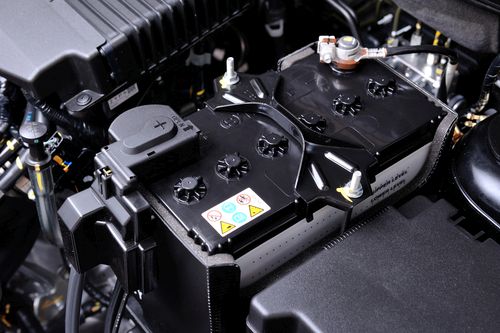
In addition to Geely Group, other car and battery manufacturers are also expanding their investments in vehicle batteries. These account for about 30 percent of the cost of an electric car. With a fourfold increase and more than an estimated 6 million electric cars on China’s roads by 2025, the demand for batteries will also increase dramatically. As a result, Geely has intensified its electric vehicle activities in recent months. The company entered into collaborations with numerous technology leaders. Well-known collaborations include those with search engine Baidu, Foxconn Technology Group and Tencent Holdings. The vehicles of Geely Group brands rank first in China in terms of sales by domestic manufacturers. Of these, about 5 percent, or 68,142 vehicles, were electric or hybrid vehicles.
Electric vehicles and components such as their batteries must be awarded a CCC certificate in order for the products to be exported to China or manufactured locally. The CCC certificate was introduced in 2002 and is comparable to the European CE marking. If you need CCC certification in the automotive sector, China Certification is an excellent partner for you. We have been advising leading automotive suppliers and vehicle manufacturers on their CCC certifications for years.
For more information on how CCC certification, the CCC Self-Declaration and voluntary CCAP or CQC certification may affect your company, or for more information about CCC certification in general, the process, and the associated costs, please visit our website and our News Section where you will find current updates twice a week.
Please do not hesitate to contact us for further details and consultation. You can contact us via e-mail, or call us (UK: +44 2071931135, Rest of Europe: +49 69 2713769150, US: +1 773 654-2673).
Please don’t hesitate to also use our chat-window in the bottom right corner if you have any questions. (Please check your browser settings if you can’t see the window)
You can also check out our free CCC-Brochure, which can be downloaded right here as a PDF file or you consult our book (in English) “A Brief Guide to CCC: China Compulsory Certification”, which can be found directly here on Amazon.
Here you can download our brochure about the CCC Self-Declaration.
Here you can download our brochure about the voluntary CCAP or CQC certification.
China records increase in mobile phone shipments in February
The number of mobile phones shipped in China in February grew by a huge 240.9 percent to a total of 21.76 million devices. Among them, cell phones with 5G function accounted for about 15 million, or 69.3 percent. This is according to published data from the Chinese Academy of Information and Communications Technology. The institution, with the acronym CAICT, is a research and development institution under the Ministry of Industry and Information Technology.
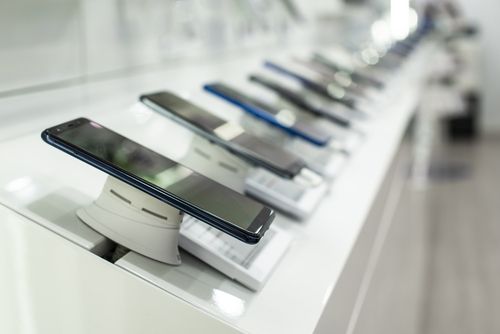
According to CAICT, 28 new models were launched in February, 33 percent more than in the same month last year. Domestic brands continue to dominate the Chinese market with 89.9 percent or 19.57 million devices. Huawei has long been the market leader in this regard, with 38.3 percent market share last year. Vivo and Oppo follow with around 17 percent each. Xiaomi is in fourth place with 12 percent, while iPhone manufacturer Apple is only in fifth place. The total smartphones shipped in February amounted to 21.34 million devices, compared to a year earlier, this corresponds to an increase of 236.6 percent.
Mobile phones and certain accessories require SRRC type approval and NAL type approval. Only after obtaining these approvals, in the course of which the core parameters of telecommunications products are determined in the course of tests, are radio products allowed to be sold in China, and CCC certification for safety tests is also mandatory.
For more information on how SRRC- and NAL type approval, CCC certification, the CCC Self-Declaration and voluntary CCAP or CQC certification may affect your company, or for more information about CCC certification in general, the process, and the associated costs, please visit our website and our News Section where you will find current updates twice a week.
Please do not hesitate to contact us for further details and consultation. You can contact us via e-mail, or call us (UK: +44 2071931135, Rest of Europe: +49 69 2713769150, US: +1 773 654-2673).
Please don’t hesitate to also use our chat-window in the bottom right corner if you have any questions. (Please check your browser settings if you can’t see the window)
You can also check out our free CCC-Brochure, which can be downloaded right here as a PDF file or you consult our book (in English) “A Brief Guide to CCC: China Compulsory Certification”, which can be found directly here on Amazon.
Here you can download our brochure about the CCC Self-Declaration.
Here you can download our brochure about the SRRC- and NAL type approval.
Supplier Delta betting on growth with electric cars
Supplier Delta Electronics predicts rapid growth for its electric car components business this year and next. Earlier, other well-known manufacturers from Taiwan such as Foxconn, one of Apple’s main suppliers, announced their entry into the automotive business. According to Delta CEO Yancey Hai, the electric car component business will show double-digit growth in the coming years. To achieve this, Delta will integrate existing drive components into modules for e-cars, making it easier for electric car manufacturers to develop and produce them.
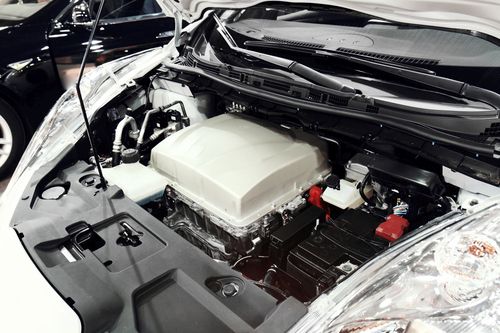
Although automotive customers are currently responsible for only a fraction of Delta’s revenue last year, they will be a key growth factor in the future. Delta and competitors such as Foxconn Technology Group are increasingly looking to electric cars as a future source of revenue as demand for computers and smartphones, previously the Taiwanese supplier’s main business, stagnates. As a long-time electrical parts supplier to Apple, Dell and other global technology companies, Delta began building an electric car components division a decade ago.
Today, Delta supplies electric parts and powertrains to well-known automakers such as Tesla, General Motors and Stellantis. A Delta management official said that by 2030, the company aims to have at least 10 percent market share in the e-car components business. According to analysts, Delta’s electric car division is currently making a loss, but it is expected to break even by 2023 at the latest as sales will increase next year. Delta also plans to invest locally in existing electric car software and mechanical component businesses to offer customers a complete solution.
In order to import products into Taiwan, it must be ensured that they meet Taiwanese safety and quality standards. This is ensured by specific, product-dependent certifications, which certify that the products comply with the relevant regulations in Taiwan. The Vehicle Safety and Certification Center (VSCC) is responsible for vehicles and products in the automotive industry in Taiwan. The authority was established in 2009 by the Ministry of Transport and Communications in the Taiwanese city of Lugang. In its scope, the certifications for Taiwan are similar to the Chinese CCC and CEL certifications.
MPR China Certification GmbH has many years of experience in Taiwan certification and competent local partners. We will be pleased to advise you without obligation about the scope and procedure of a Taiwan certification.
Please do not hesitate to contact us for further details and consultation. You can contact us via e-mail, or call us (UK: +44 2071931135, Rest of Europe: +49 69 2713769150, US: +1 773 654-2673).
You can also check out our free Taiwan-Brochure, which can be downloaded right here.
Please don’t hesitate to also use our chat-window in the bottom right corner if you have any questions. (Please check your browser settings if you can’t see the window)
Chinese inspection body CSEI surveys first foreign company remotely
The China Special Equipment and Research Institute (CSEI) is a government-affiliated inspection body that operates under the state market regulator SAMR. The CSEI monitors, inspects and conducts research on machinery and equipment of particular safety significance, such as boilers, pressure vessels, pressure pipelines, cranes, elevators and escalators, amusement park rides, passenger ropeways, and lifting and transport vehicles. In its mission to monitor a manufacturer of pipeline components being imported into China, CSEI conducted the inspection remotely for the first time without on-site personnel.
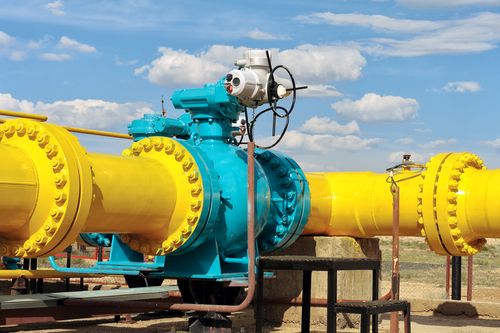
Due to the global Covid 19 pandemic, CSEI’s overseas surveillance activities are severely limited, if not impossible. In order to continue importing safety-related components for pressure piping, CSEI, with the support of the appropriate authorities, developed and successfully executed a detailed remote inspection plan. In this first case, a manufacturer of metal valves for pipelines was inspected. Based on the good experience and practical feasibility of remote inspection, CSEI plans to offer this option to other foreign companies.
In addition to the CSEI, other certification companies may also commission the so-called SELO license for safety-relevant machinery and equipment. The license is issued by the Chinese authority SELO – China Special Equipment Licensing Office. Like the CSEI, this authority is subordinate to the state market regulator SAMR. Other names for the SELO license are Chinese Manufacture License (CML), China Stamp or Pressure Vessel License. The regulation came into effect in 2014, and foreign and domestic manufacturers need the SELO license to sell their products in China. Are you interested in SELO licensing for the Chinese market? MPR China Certification GmbH offers to carry out SELO licensing for you.
For more information on how SELO license, CCC certification, the CCC Self-Declaration and voluntary CCAP or CQC certification may affect your company, or for more information about CCC certification in general, the process, and the associated costs, please visit our website and our News Section where you will find current updates twice a week.
Please do not hesitate to contact us for further details and consultation. You can contact us via e-mail, or call us (UK: +44 2071931135, Rest of Europe: +49 69 2713769150, US: +1 773 654-2673).
Please don’t hesitate to also use our chat-window in the bottom right corner if you have any questions. (Please check your browser settings if you can’t see the window)
You can also check out our free CCC-Brochure, which can be downloaded right here as a PDF file or you consult our book (in English) “A Brief Guide to CCC: China Compulsory Certification”, which can be found directly here on Amazon.
Here you can download our brochure about the CCC Self-Declaration.
Here you can download our brochure about the voluntary CCAP or CQC certification.
China introduces new measures to boost car sales
A meeting of government officials chaired by Premier Li Keqiang in November 2020 laid out numerous new measures to boost car sales. Specifically, the council agreed to stabilize and increase the number of car sales, allow local authorities more leeway in restrictions on new car purchases, and increase the current quota for new car registrations. In addition, sales promotion measures for new vehicle purchases in rural areas and a scrappage premium are planned. Where circumstances permit, buyers are to be encouraged to opt for commercial vehicles with a gross weight of less than 3.5 tons and passenger cars with an engine displacement of less than 1.6 liters.
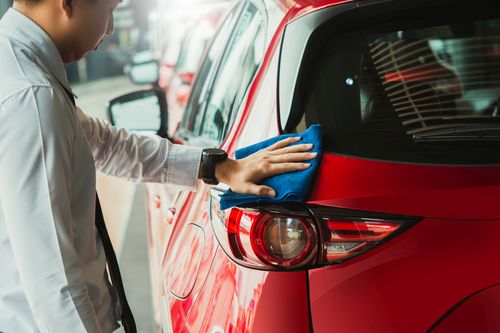
In addition, the government encourages the purchase of new vehicles if the previous one only meets Chinese emission standard 3 or below. In this way, the government wants to phase out older and polluting vehicles more quickly. To improve the environmental record, more parking lots with charging stations for electric vehicles and plug-in hybrid vehicles are to be built. As early as the beginning of 2020, the Chinese central government as well as local authorities decided on numerous support measures to stimulate the automotive market.
According to the China Automobile Manufacturers Association (CAAM), approximately 2.55 million vehicles were produced in China in October 2020, 11 percent more than the previous year. Sales in the identical period totaled 2.57 million, up 12.5 percent. As of October 2020, the amount of cars produced and sold has been growing steadily for 7 months. According to estimates by Jiang Xueping, an analyst at Orient Securities, passenger car sales in China will reach double-digit growth in 2021. Jiang observes that demand has stabilized recently and companies in the vehicle manufacturing, parts and components sectors can benefit. Therefore, China can be expected to continue to provide solid conditions for the automotive industry in the future. If you need CCC certification in the automotive sector, China Certification is an excellent partner for you. We have been advising leading automotive suppliers and vehicle manufacturers on their CCC certifications for years.
For more information on how CCC certification, the CCC Self-Declaration and voluntary CCAP or CQC certification may affect your company, or for more information about CCC certification in general, the process, and the associated costs, please visit our website and our News Section where you will find current updates twice a week.
Please do not hesitate to contact us for further details and consultation. You can contact us via e-mail, or call us (UK: +44 2071931135, Rest of Europe: +49 69 2713769150, US: +1 773 654-2673).
Please don’t hesitate to also use our chat-window in the bottom right corner if you have any questions. (Please check your browser settings if you can’t see the window)
You can also check out our free CCC-Brochure, which can be downloaded right here as a PDF file or you consult our book (in English) “A Brief Guide to CCC: China Compulsory Certification”, which can be found directly here on Amazon.
Here you can download our brochure about the CCC Self-Declaration.
Here you can download our brochure about the voluntary CCAP or CQC certification.
Three Chinese companies join forces for new high-end car brand
Contemporary Amperex Technology Co Ltd (CATL), a Chinese battery manufacturer, is teaming up with Huawei Technologies Co, a technology giant, and Changan Automobile, a major automaker, to develop a new high-end car brand. This move is an attempt to take advantage of the current unprecedented opportunities for electric vehicle development and manufacturing in China. Changan Automobile Chairman Zhu Huarong said during a television interview that the planned collaboration will include a model platform for autonomous electric vehicles, a range of accessories, and items for daily use. Zhu did not disclose the amount invested in the new project by the companies involved. However, he clarified that the development phase of the first product has been completed and they will soon start mass production.
Earlier this month, the Chinese government unveiled the current development plan for electric cars and vehicles with alternative drives. The plan covers the period from 2021 to 2035 and paves the way for China to become one of the most important countries in the field of alternative drives. Zhu said they will support the supply chain for vehicle batteries within the next 15 years and also ensure the availability of raw materials. Industry experts assume that future investments within the electric vehicle industry will focus on suppliers of raw materials such as lithium, nickel and cobalt.
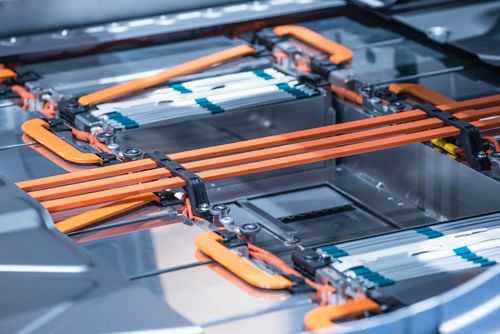
The Chinese development plan calls on companies to increase their potential for technological innovation to achieve breakthroughs in manufacturing equipment and optimize the production process. The management of Contemporary Amperex Technology (CATL) told the China Daily newspaper that it has developed a new type of vehicle battery that can provide a total range of 2 million kilometers during its 16-year lifespan. Current battery types, on the other hand, have a lifespan of only 8 years, or 250,000 kilometers. CATL’s customers include leading automakers such as Tesla, BMW and Daimler. Certification of batteries for electric vehicles is a complex project that requires professional support at all stages. For several years, MPR China Certification GmbH has been entrusted with large CCC projects for the vehicle manufacturers Lotus, Tesla and Bugatti. We will be pleased to advise you without obligation about the scope and requirements of a China CCC certification.
For more information on how CCC certification, the CCC Self-Declaration and voluntary CCAP or CQC certification may affect your company, or for more information about CCC certification in general, the process, and the associated costs, please visit our website and our News Section where you will find current updates twice a week.
Please do not hesitate to contact us for further details and consultation. You can contact us via e-mail, or call us (UK: +44 2071931135, Rest of Europe: +49 69 2713769150, US: +1 773 654-2673).
Please don’t hesitate to also use our chat-window in the bottom right corner if you have any questions. (Please check your browser settings if you can’t see the window)
You can also check out our free CCC-Brochure, which can be downloaded right here as a PDF file or you consult our book (in English) “A Brief Guide to CCC: China Compulsory Certification”, which can be found directly here on Amazon.
Here you can download our brochure about the CCC Self-Declaration.
Here you can download our brochure about the voluntary CCAP or CQC certification.
Tesla plans to produce charging stations in China
Tesla plans to produce charging stations for electric vehicles in China within this year. This is according to a document that the U.S. company has submitted to the Chinese authorities in Shanghai. With this plan, Tesla hopes to increase its sales in China, the world’s largest market for new cars. Currently, Tesla offers its Model 3 in China and plans to sell the Model Y SUV there this year as well. As a result, the company is investing $6.4 million in a new plant in the Shanghai area to produce charging stations.
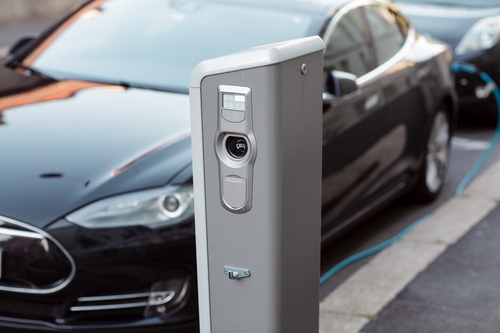
Through generous subsidies for electric vehicles, China is trying to reduce air pollution from vehicles with internal combustion engines. One of the biggest challenges is the development of a nationwide coverage with charging stations to increase the acceptance for the purchase and driving of an electric vehicle. Tesla’s factory, which will be completed in February, has a production capacity of 10,000 charging stations per year. Currently, Tesla imports the charging stations, which are usually installed at parking lots or gas stations, from the United States. Tesla’s current vehicle factory in Shanghai, one of the central pillars of Tesla’s global growth strategy, will produce about 150,000 Model 3 vehicles this year, and it has begun exporting them to Europe as well.
Electric vehicles and components such as charging stations must be awarded a CCC certificate in order for the products to be exported to China or manufactured locally.
For more information on how CCC certification, the CCC Self-Declaration and voluntary CCAP or CQC certification may affect your company, or for more information about CCC certification in general, the process, and the associated costs, please visit our website and our News Section where you will find current updates twice a week.
Please do not hesitate to contact us for further details and consultation. You can contact us via e-mail, or call us (UK: +44 2071931135, Rest of Europe: +49 69 2713769150, US: +1 773 654-2673).
Please don’t hesitate to also use our chat-window in the bottom right corner if you have any questions. (Please check your browser settings if you can’t see the window)
You can also check out our free CCC-Brochure, which can be downloaded right here as a PDF file or you consult our book (in English) “A Brief Guide to CCC: China Compulsory Certification”, which can be found directly here on Amazon.
Here you can download our brochure about the CCC Self-Declaration.
Here you can download our brochure about the voluntary CCAP or CQC certification.
 We are part of the CERTANIA-Group.