


Schließen


China Updates Circuit Breakers for Equipment Standard to GB/T 17701-2023
China has updated the standard for circuit breakers for equipment (CBE) from GB/T 17701-2008 to GB/T 17701-2023. The new standard, published on September 7, 2023, will take effect on April 1, 2024. As a result, all circuit breakers certified under the previous GB/T 17701-2008 standard must now comply with the updated GB/T 17701-2023 standard. The new certification process will involve testing procedures and product samples as outlined in Appendix C of the updated standard. Circuit breakers for equipment usually require CCC certification in order to be approved for import and sale in China.
Key differences between the GB/T 17701-2023 and the previous GB/T 17701-2008 standards include changes in test items, sample requirements, and specific conditions for validation under different circuit breaker categories. Manufacturers will need to review these updates carefully to ensure their products meet the new requirements. Additionally, existing CB test reports can be used for conversion recognition under certain conditions, with some reports requiring supplementary testing depending on the version of the IEC standard used.
For more information on how CCC certification, the CCC Self-Declaration and voluntary CCAP or CQC certification may affect your company, or for more information about CCC certification in general, please visit our News Section where you will find current updates twice a week.
Please do not hesitate to contact us for further details and consultation. You can contact us via email, Chat, or call us (UK: +44 2071931135, Europe: +49 69 2713769150, US: +1 773 654-2673).
You can also check our free CCC-Brochure, which can be downloaded as a PDF file. The brochure also contains information on the CCC Self-Declaration and the voluntary CQC- and CCAP-Certification).
CNCA announces Updated Mandatory Product Certification Rules for 2024
The China National Certification and Accreditation Administration (CNCA) has released updated implementation rules for mandatory product certification. According to the General Administration of Market Supervision’s announcement on managing mandatory product certification for commercial gas-burning appliances and other products (Announcement No. 9 of 2024), the mandatory product certification directory and implementation program have been adjusted. The revised implementation rules cover various categories, including low-voltage appliances and components, motorcycle and electric bicycle helmets, and explosion-proof electrical equipment. These updates will take effect on May 1, 2024, for some categories, and July 1, 2024, for others, replacing the old versions of the rules simultaneously. Low-voltage components, motorcycle and electric bicycle helmets, and other products usually require CCC certification in order to be approved for import and sale in China.

Certification bodies must develop corresponding certification and implementation rules based on the revised version and the general implementation rules for mandatory product certification, and submit these to the national commission for the record before the new rules are enforced. Existing certificates issued under the old rules will remain valid and can transition naturally upon expiration, product changes, or standard updates.
Overview of the new implementation rules:
| Implementation rules | Produkte |
| CNCA-C01-01: 2024 | Wire and cable |
| CNCA-C03-02: 2024 | Low-voltage appliances Low-voltage components |
| CNCA-C07-01:2024 | Household and similar equipment |
| CNCA-C11-15:2024 | Motorcycle, electric bicycle helmets |
| CNCA-C18-01:2024 | Fire alarm products |
| CNCA-C21-01:2024 | Decorative products |
| CNCA-C23-01: 2024 | Explosion-proof electrical components |
| CNCA-C24-01: 2024 | Gas-burning appliances |
For more information on how CCC certification, the CCC Self-Declaration and voluntary CCAP or CQC certification may affect your company, or for more information about CCC certification in general, please visit our News Section where you will find current updates twice a week.
Please do not hesitate to contact us for further details and consultation. You can contact us via email, Chat, or call us (UK: +44 2071931135, Europe: +49 69 2713769150, US: +1 773 654-2673).
You can also check our free CCC-Brochure, which can be downloaded as a PDF file. The brochure also contains information on the CCC Self-Declaration and the voluntary CQC- and CCAP-Certification).
Implementation Rules CNCA-C11-21:2024 and CNCA-C11-22:2024 for Lithium-ion Batteries for Electric Bicycles and Electric Bicycle Chargers
The CNCA (Certification and Accreditation Administration of the People’s Republic of China) published the new implementation regulations CNCA-C11-21:2024 and CNCA-C11-22:2024 on July 30, 2024. The new standard has added the product areas of lithium-ion batteries for electric bicycles and chargers for electric bicycles. ccording to the implementation rules, CCC certification can be applied for from October 15, 2024.
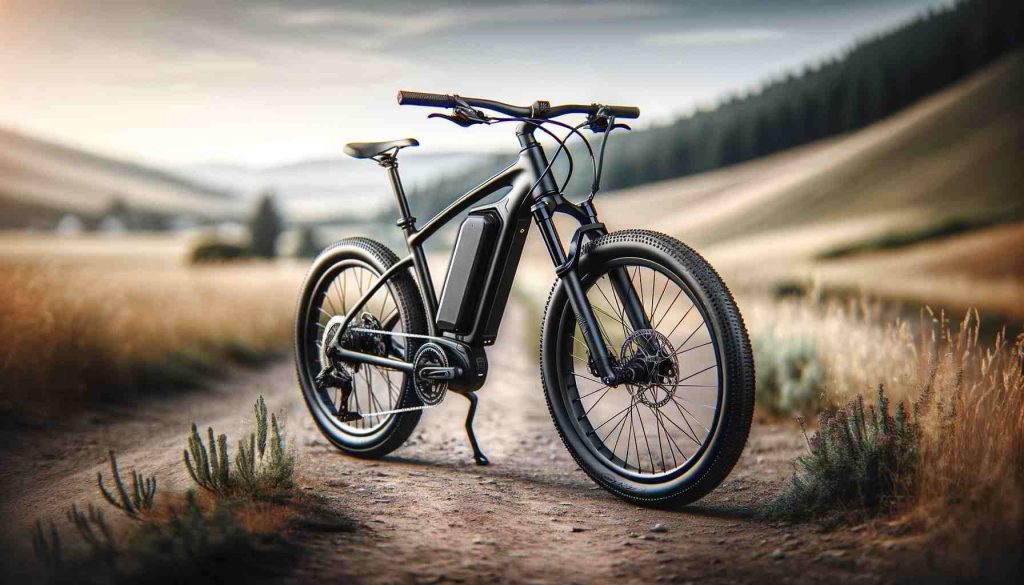
Currently, certification authorities can register for accreditation in this new product area according to Announcement No. 17, 2024. As soon as the relevant certification authorities are accredited, the corresponding CCC certification can be applied for.
The CCC certificate is a mandatory certification in China that was introduced in 2002. It is comparable to the European CE system and regulates that products that require CCC certification may only be imported, sold and used in China after they have received CCC certification.
Please note that products that fall under the new CNCA-C11-21:2024 and CNCA-C11-22:2024 have not yet been published on a date by which the CCC certification must be completed. We will be happy to inform you as soon as a corresponding date is announced by the CNCA.
For more information on how CCC certification, the CCC Self-Declaration and voluntary CCAP or CQC certification may affect your company, or for more information about CCC certification in general, please visit our News Section where you will find current updates twice a week.
Please do not hesitate to contact us for further details and consultation. You can contact us via email, Chat, or call us (UK: +44 2071931135, Europe: +49 69 2713769150, US: +1 773 654-2673).
You can also check our free CCC-Brochure, which can be downloaded as a PDF file. The brochure also contains information on the CCC Self-Declaration and the voluntary CQC- and CCAP-Certification).
VSCC updates Vehicle Safety Testing Standards to align with International Regulations
The VSCC (Vehicle Safety Certification Center) has updated its Vehicle Safety Testing Directions (VSTDs) for automotive products. Four new VSTDs have been implemented, covering Light Signaling Devices, Road Illumination Devices, Retro-Reflective Devices, and Blind Spot Information Systems. These correspond to VSTD 91 to 94 and are equivalent to UNR 148 to UNR 151. Additionally, VSTD 56-3 concerning Electromagnetic Compatibility has been amended to 56-4, and VSTD 80 regarding Quiet Road Transport Vehicles has been updated to 80-1. Automotive products usually require VSCC Certification in order to be approved for import and sale in Taiwan.

These changes reflect the VSCC’s commitment to aligning with international standards and ensuring the safety and compatibility of automotive products in Taiwan. The amendments aim to enhance vehicle safety features and bring Taiwan’s regulations in line with United Nations Regulations (UNR).
The Vehicle Safety and Certification Center (VSCC) is responsible for vehicles and products in the automotive industry in Taiwan. The authority was established in 2009 by the Ministry of Transport and Communications in the Taiwanese city of Lugang. In its scope, the certifications for Taiwan are similar to the Chinese CCC and CEL certifications.
MPR China Certification GmbH has many years of experience in Taiwan certification and competent local partners. We will be pleased to advise you without obligation about the scope and procedure of a Taiwan certification.
Please do not hesitate to contact us for further details and consultation. You can contact us via e-mail, or call us (UK: +44 2071931135, Rest of Europe: +49 69 2713769150, US: +1 773 654-2673).
You can also check out our free Taiwan-Brochure, which can be downloaded right here.
MPR expands Testing Capacities through Partnership with Certania Group
Since April 2024, MPR China Certification GmbH & MPR International GmbH have been members of Certania Group, which specializes in testing, inspection and certification services . Through this strategic partnership, we can offer our customers an even broader range of testing capacities.

Our cooperation with Certania allows us to offer comprehensive testing services in various areas. This includes, among other things, the testing of batteries, which is particularly important for manufacturers in the electronics and automotive industries. We can now also offer other material testing such as flammability tests directly for our customers. In addition, our partners cover a wide range of environmental issues, including food and water hygiene, as well as measures to reduce the carbon footprint.
The addition of these important test criteria to our services underlines our commitment to quality and sustainability. Our customers benefit from the expanded capacities and expertise that we gain through the partnership with Certania.
The Certania Group is known for its innovative solutions and comprehensive services in the field of material and environmental testing. With a strong focus on sustainability and environmental protection, Certania sets standards in the industry and supports companies in achieving their ecological goals.
Through this cooperation, we are able to offer our customers even more efficient and comprehensive testing services.
Please do not hesitate to contact us for further details and consultation. You can contact us via email, Chat, or call us (UK: +44 2071931135, Europe: +49 69 2713769150, US: +1 773 654-2673).
New CAV Implementation Rules for the Certification of Automotive Safety Glass
The Certification Alliance for Vehicle (CAV) has published new implementing regulations on 28 June, 2024. The “Certification Rules for Glazing Materials of Power-driven Vehicles” define the requirements and procedures for the certification of safety glass in motor vehicles. Glazing materials in the automotive sector usually require CCAP/CQC certification in order to be approved for import and distribution in China.
Regulatory changes in recent weeks have brought about a change, according to which CCAP and CQC certifications are now resulting in CAV certificates.
The content contains important information on how to carry out the certification of safety glass, including the certification process, application, type testing, performance of tests in accordance with GB 9656-2021, initial audit of the production facility, etc.
These rules ensure that the glazing materials in motor vehicles are safe, reliable and continuously meet the high standards required for road transport.
For more information on how CCC certification, the CCC Self-Declaration and voluntary CCAP or CQC certification may affect your company, or for more information about CCC certification in general, please visit our News Section where you will find current updates twice a week.
Please do not hesitate to contact us for further details and consultation. You can contact us via email, Chat, or call us (UK: +44 2071931135, Europe: +49 69 2713769150, US: +1 773 654-2673).
You can also check our free CCC-Brochure, which can be downloaded as a PDF file. The brochure also contains information on the CCC Self-Declaration and the voluntary CQC- and CCAP-Certification).
New Standard GB/T 44156-2024 for Reversing Warning Systems
Announcement No. 14 of 2024 by the Chinese State Administration for Market Regulation (National Standardization Administration Committee) approves 109 new recommended GB standards. Among these, a new standard for Performance requirements and test methods for reversing warning systems for passenger cars, designated as GB/T 44156-2024, has been adopted. Many automotive systems require CCC certification for import and distribution within China.

China mandates CCC certification for many product categories, similar to the European CE system’s role in standardizing product quality.
For more information on how CCC certification, the CCC Self-Declaration and voluntary CCAP or CQC certification may affect your company, or for more information about CCC certification in general, please visit our News Section where you will find current updates twice a week.
Please do not hesitate to contact us for further details and consultation. You can contact us via email, Chat, or call us (UK: +44 2071931135, Europe: +49 69 2713769150, US: +1 773 654-2673).
You can also check our free CCC-Brochure, which can be downloaded as a PDF file. The brochure also contains information on the CCC Self-Declaration and the voluntary CQC- and CCAP-Certification).
New GB Standards for Battery- and Energy Storage Systems
Late last year, China’s Standardization Administration of the People’s Republic of China (Standardization Administration of China) released its Announcement No. 20 of 2023, announcing the approval of 423 new recommended GB standards. These include a number of new GB standards that set certification requirements for various battery and energy storage systems. CCC certification is required for many battery systems in order to be allowed to import them into China and sell them there. In addition, special regulations regarding battery system registration in China must be observed.

The new GB standards are:
| GB Standard Number | GB Standard Name | Replaces | Implementation Date |
| GB/T 36276-2023 | Lithium-ion batteries for power storage | GB/T 36276-2018 | 2024-07-01 |
| GB/T 36280-2023 | Lead-carbon batteries for power storage | GB/T 36280-2018 | 2024-07-01 |
| GB/T 36545-2023 | Technical Specifications for Mobile Electrochemical Energy Storage Systems | GB/T 36545-2018 | 2024-07-01 |
| GB/T 36558-2023 | General technical requirements for electrochemical energy storage systems in power systems | GB/T 36558-2018 | 2024-07-01 |
For more information on how CCC certification, the CCC Self-Declaration and voluntary CCAP or CQC certification may affect your company, or for more information about CCC certification in general, please visit our News Section where you will find current updates twice a week.
Please do not hesitate to contact us for further details and consultation. You can contact us via email, Chat, or call us (UK: +44 2071931135, Europe: +49 69 2713769150, US: +1 773 654-2673).
You can also check our free CCC-Brochure, which can be downloaded as a PDF file. The brochure also contains information on the CCC Self-Declaration and the voluntary CQC- and CCAP-Certification).
Updated Implementation of CAV Certificates after 1st July 2024
On 24th of June 2024, CAV released an update to the existing regulations for CAV certification. For all products in the CAV catalogue a CAV certificate will be issued for all applications filed after 1st of July 2024. There is no longer the possibility to receive a CQC or CCAP certificate. Instead, CCAP and CQC will handle the application as usual, and a CAV certificate will be issued.
The CAV (Certification Alliance for Vehicle) is an association of Chinese certification authorities which shall ensure greater mutual acceptance of certificates between the authorities in China. The direction of the alliance as well as the implementation of the first set of harmonized implementation rules for product certification of automotive components were already discussed at the end of last year.
For existing certificates of CCAP and CQC the authorities plan with a natural transition towards the CAV format. In the process of change applications or certificate renewals the respective certificates shall be updated to the CAV format.
Currently the following products are listed in the CAV catalogue:
| CAV number | Products |
| CAV-01-2023 | Seat Belts |
| CAV-02-2023 | External Lighting and Light Signaling Devices |
| CAV-03-2023 | Indirect Vision Devices for Motor Vehicles |
| CAV-04-2023 | Car Seats and Seat Headrests |
| CAV-05-2023 | Interior Materials |
| CAV-06-2023 | Fuel Tanks |
| CAV-07-2023 | Door Locks and Hinges |
| CAV-08-2023 | Brake Hoses |
| CAV-09-2023 | Horns |
Here you can find a Video Summary of the new CAV Regulations:
Please enable cookies to enable embedded YouTube videos. For privacy-related details on data exchange through use of the videos as well as changeable cookie settings, please see the privacy policy page.
For more information on how CAV certification, CCC certification, the CCC Self-Declaration and voluntary CCAP or CQC certification may affect your company, or for more information about CCC certification in general, please visit our News Section where you will find current updates twice a week.
Please do not hesitate to contact us for further details and consultation. You can contact us via email, Chat, or call us (UK: +44 2071931135, Europe: +49 69 2713769150, US: +1 773 654-2673).
You can also check our free CCC-Brochure, which can be downloaded as a PDF file. The brochure also contains information on the CCC Self-Declaration and the voluntary CQC- and CCAP-Certification).
New Regulation for RFID Equipment in China
On April 29, the Ministry of Industry and Information Technology (MIIT) released Regulation No. (2024) 76, addressing RFID equipment usage in the 900MHz band. RFID devices usually require SRRC certification in order to be approved for import and sales on the Chinese market.

Highlights of the new regulations include:
Changes in Management Policies:
- The 840-845MHz band is discontinued; RFID devices must now operate in the 920-925MHz range.
- RFID devices must have an SRRC certificate, but a radio station license is unnecessary.
- Approval from relevant railway authorities is required for installations near railways.
Updates in Technical Requirements:
- Revised stray emission limits for specific frequency bands.
- New receiver blocking limits introduced to improve anti-interference capabilities.
These new regulations will be effective from November 1, 2024. Existing regulations will be repealed, and current compliant equipment can seek type approval or extensions until that date. After November 1, only RFID equipment that meets the new standards will be approved, although already certified devices can continue in use until decommissioned.
Mobile phones and certain accessories require SRRC type approval and NAL type approval. Only after obtaining these approvals, in the course of which the core parameters of telecommunications products are determined in the course of tests, are radio products allowed to be sold in China, and CCC certification for safety tests is also mandatory.
For more information on how SRRC- and NAL type approval, CCC certification, the CCC Self-Declaration and voluntary CCAP or CQC certification may affect your company, or for more information about CCC certification in general, the process, and the associated costs, please visit our website and our News Section where you will find current updates twice a week.
Please do not hesitate to contact us for further details and consultation. You can contact us via e-mail, or call us (UK: +44 2071931135, Rest of Europe: +49 69 2713769150, US: +1 773 654-2673).
Please don’t hesitate to also use our chat-window in the bottom right corner if you have any questions.
 We are part of the CERTANIA-Group.