


Schließen


Updated Electromobility Standards in China
Starting January 1, 2025, and throughout the year, China will implement updated versions of key GB standards for electromobility products. These standards cover energy and power metering for electric vehicle charging infrastructure, safety requirements for nickel-metal hydride batteries, and technical specifications for repair, maintenance, and autonomous driving functions. The goal of these updates is to harmonize requirements, improve the accuracy of measurement methods, and ensure consistency in technical specifications. Products of the electromobility category, such as hydrogen batteries, usually require CCC certification to be approved for import and sale in China.

The revised standards include: GB/T 28569-2024 for electric vehicle AC charging pile energy metering, GB/T 29318-2024 for electric vehicle off-board charger power metering, GB/T 44510-2024 for technical requirements for repair and maintenance of new energy vehicles, GB/T 44649-2024 for safety requirements for nickel-metal hydride batteries and modules for electric road vehicles, and GB/T 44719-2024 for road test methods and requirements for autonomous driving functions of intelligent connected vehicles. Additional standards such as GB/T 44723-2024 outline general technical requirements for hydrogen fuel internal combustion engines, and GB/T 44532-2024 specifies safety requirements for internal combustion engine hybrid powertrains.
For more information on how CCC certification, the CCC Self-Declaration and voluntary CCAP or CQC certification may affect your company, or for more information about CCC certification in general, please visit our News Section where you will find current updates twice a week.
Please do not hesitate to contact us for further details and consultation. You can contact us via email, Chat, or call us (UK: +44 2071931135, Europe: +49 69 2713769150, US: +1 773 654-2673).
You can also check our free CCC-Brochure, which can be downloaded as a PDF file. The brochure also contains information on the CCC Self-Declaration and the voluntary CQC- and CCAP-Certification).
Revised Standards for CCC Certification of Welding Machines in China
The newly revised welding machine standard, GB/T 15579.1-2024, now includes expanded provisions for certification under the China Compulsory Certification (CCC) system. Notable updates to the scope incorporate battery-powered arc welding machines, with specific requirements detailed in Appendix O. Terminological adjustments reflect advanced technologies, such as battery systems and energy efficiency, while environmental and insulation parameters now support operation at altitudes of up to 2000 meters. Adjustments to clearance and creepage distances ensure compliance with updated insulation configurations. Welding machines typically require CCC certification to be approved for import and sale in China.

The revised standard emphasizes stricter testing protocols and safety measures. It includes specific temperature ranges for heat tests, tighter tolerances for measurement devices, and revised criteria for continuity and load assessments. New safety provisions address insulation resistance, dielectric strength, and fault current measurements, allowing for linear interpolation to determine creepage distances and insulation voltage based on effective long-term values. Additional guidelines enhance the testing of contact currents and the safety of plasma cutting systems. Appendices M and N provide detailed procedures for efficiency and leakage current measurements, while Appendices K and O introduce configurations and safety protocols for battery-powered models. These revisions align Chinese standards with international norms, such as IEC, to ensure reliability and operational safety.
For more information on how CCC certification, the CCC Self-Declaration and voluntary CCAP or CQC certification may affect your company, or for more information about CCC certification in general, please visit our News Section where you will find current updates twice a week.
Please do not hesitate to contact us for further details and consultation. You can contact us via email, Chat, or call us (UK: +44 2071931135, Europe: +49 69 2713769150, US: +1 773 654-2673).
You can also check our free CCC-Brochure, which can be downloaded as a PDF file. The brochure also contains information on the CCC Self-Declaration and the voluntary CQC- and CCAP-Certification).
Revised GB Standards for Tires and Rims to take Effect in April 2025
On April 1, 2025, the revised versions of four key GB standards for tires and rims will come into effect, replacing their previous iterations. The updated standards include specifications for truck and passenger car tires, as well as the dimensions and series for wheel rims. These updates aim to harmonize specifications, improve clarity, and ensure consistency in key measurements for tire and rim products. Automotive tires generally require CCC certification in order to be imported and sold in China.
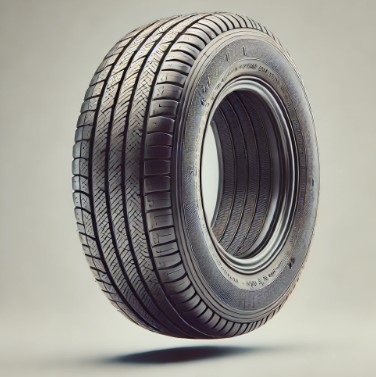
The new standards are as follows:
- GB/T 2977-2024: Truck tire specifications, dimensions, pressure, and load
- GB/T 2978-2024: Passenger car tire specifications, dimensions, pressure, and load
- GB/T 3487-2024: Passenger car wheel rim specification series
- GB/T 31961-2024: Truck and passenger car rim specification series
These standards will replace their earlier versions:
- GB/T 2977-2016
- GB/T 2978-2014
- GB/T 3487-2015
- GB/T 31961-2015
For more information on how CCC certification, the CCC Self-Declaration and voluntary CCAP or CQC certification may affect your company, or for more information about CCC certification in general, please visit our News Section where you will find current updates twice a week.
Please do not hesitate to contact us for further details and consultation. You can contact us via email, Chat, or call us (UK: +44 2071931135, Europe: +49 69 2713769150, US: +1 773 654-2673).
You can also check our free CCC-Brochure, which can be downloaded as a PDF file. The brochure also contains information on the CCC Self-Declaration and the voluntary CQC- and CCAP-Certification).
MPR China Certification – Product Certification Experts
MPR China Certification GmbH is a trusted partner for product certifications in China, India, Korea, and Japan. Founded in 2005, MPR simplifies market entry offering services for certifications such as CCC certification for China, BIS certification for India, and KC certification for Korea, PSE certification for Japan, vehicle homologation, product tests and factory inspections. The headquarters of MPR International is in the global financial hub Frankfurt, Germany where more than 20 highly skilled experts support clients worldwide. In 2012 MPR also founded its subsidiary in the USA and supports clients from North America, Central America and South America. From 2024, MPR International is part of the CERTANIA Group – a leader in Testing, Inspection and Certification with over 1,600 employees and extensive testing capacities.

MPR China Certification GmbH provides comprehensive support to facilitate product certifications through personalized consultation with our experienced advisors. MPR assess certification requirements of products, guides through certification processes and assists with document preparation. With long-term relationships with the relevant authorities and test labs, MPR handles all communications on behalf of their clients.
MPR also manages all necessary product testing and provides expert guidance on proper product labeling to meet regulatory standards, as well as organize and oversee follow-up certifications. MPR also informs their clients regularly about product-specific regulatory changes. MPR helps to achieve significant time and cost savings by streamlining these processes and minimizing potential delays or complications. MPR’s goal is to make the certification process as seamless and efficient as possible, ensuring successful and timely market entry in China, India, Korea and Japan.
New CCC Standards introduced for E-Bike Batteries and Chargers
China has introduced new mandatory product certification (CCC certification) requirements for lithium-ion batteries (1121) and chargers (1122) used in electric bicycles. Based on the 2024 No. 26 Announcement by the State Administration for Market Regulation, the China Quality Certification Center (CQC) and the China Certification Centre for Automotive Products (CCAP) have issued updated implementation rules, effective October 15, 2024. The revised regulations include the Implementation Rules for Mandatory Product Certification of Lithium-Ion Batteries (CQC-C1121-2024) and the Implementation Rules for Chargers (CQC-C1122-2024). Lithium-ion batteries generally require CCC certification to be approved for import and sale in China.
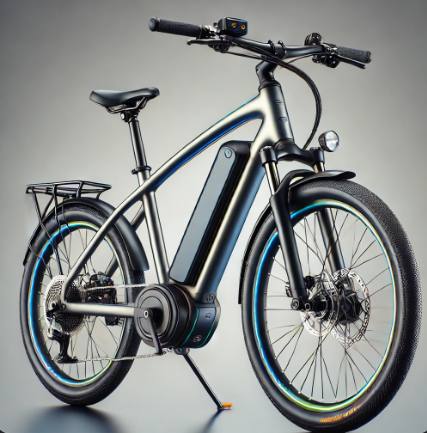
From October 15, 2024, manufacturers can apply for certification via the CQC or CCAP platforms. Furthermore, from November 1, 2025, all products in this category must be certified and marked with the CCC logo to be legally manufactured, sold, imported, or used in commercial activities. Additional updates in the 2024 version of the rules include modified testing standards, added sodium-ion battery categories, stricter post-certification supervision, and requirements for traceability and data management systems for critical components like batteries and chargers.
For more information on how CCC certification, the CCC Self-Declaration and voluntary CCAP or CQC certification may affect your company, or for more information about CCC certification in general, please visit our News Section where you will find current updates twice a week.
Please do not hesitate to contact us for further details and consultation. You can contact us via email, Chat, or call us (UK: +44 2071931135, Europe: +49 69 2713769150, US: +1 773 654-2673).
You can also check our free CCC-Brochure, which can be downloaded as a PDF file. The brochure also contains information on the CCC Self-Declaration and the voluntary CQC- and CCAP-Certification).
New GB Standards issued for Low-Voltage Switchgear and Controlgear in China
In an update to product certification standards, the low-voltage switchgear and controlgear industry in China will now adhere to the newly established GB/T14048.09-2024 and GB/T 14048.11-2024 standards. These replace the earlier GB/T14048.09-2008 and GB/T 14048.11-2016 standards respectively, per the recent resolution aimed at enhancing the quality and safety of multifunctional and transfer switching devices. Low-voltage switchgear requires CCC certification in order to be approved for import and sale in China.

The new standards introduce stricter requirements and advanced specifications to ensure heightened performance, reliability, and safety for low-voltage switchgear equipment. Manufacturers and suppliers will be required to ensure their products meet these updated standards to maintain compliance and certification.
For more information on how CCC certification, the CCC Self-Declaration and voluntary CCAP or CQC certification may affect your company, or for more information about CCC certification in general, please visit our News Section where you will find current updates twice a week.
Please do not hesitate to contact us for further details and consultation. You can contact us via email, Chat, or call us (UK: +44 2071931135, Europe: +49 69 2713769150, US: +1 773 654-2673).
You can also check our free CCC-Brochure, which can be downloaded as a PDF file. The brochure also contains information on the CCC Self-Declaration and the voluntary CQC- and CCAP-Certification).
Standardization of Rolling Resistance Measurement for Tires
On July 11 and 12, 2024, Technical Guideline No. TC14-2024-02 was adopted in Hefei and published on September 9, 2024, which establishes instructions for the standardization of rolling resistance measurement data for tires. The main purpose of the directive is to ensure the consistency of the rolling resistance values required for CCC (China Compulsory Certification) certification. Tires require CCC certification to be approved for import and sale in China. Also addressed were the inclusion of rolling resistance and wet grip of tires in the CCC certification requirements and explanation of the certification process, the reports to be prepared and the monitoring requirements for manufacturers to ensure that tires comply with the new regulations. The process for updating existing certificates was also described.
Revision of the implementation rules for tires follows the release of Standards GB9743-2024 und GB9744-2024 (passenger tyres and truck tyres). Main focus was put on inclusion of rolling resistance and wet grip, as well as the clarification of tire definitions and size standards and the consistency of rolling resistance test data.
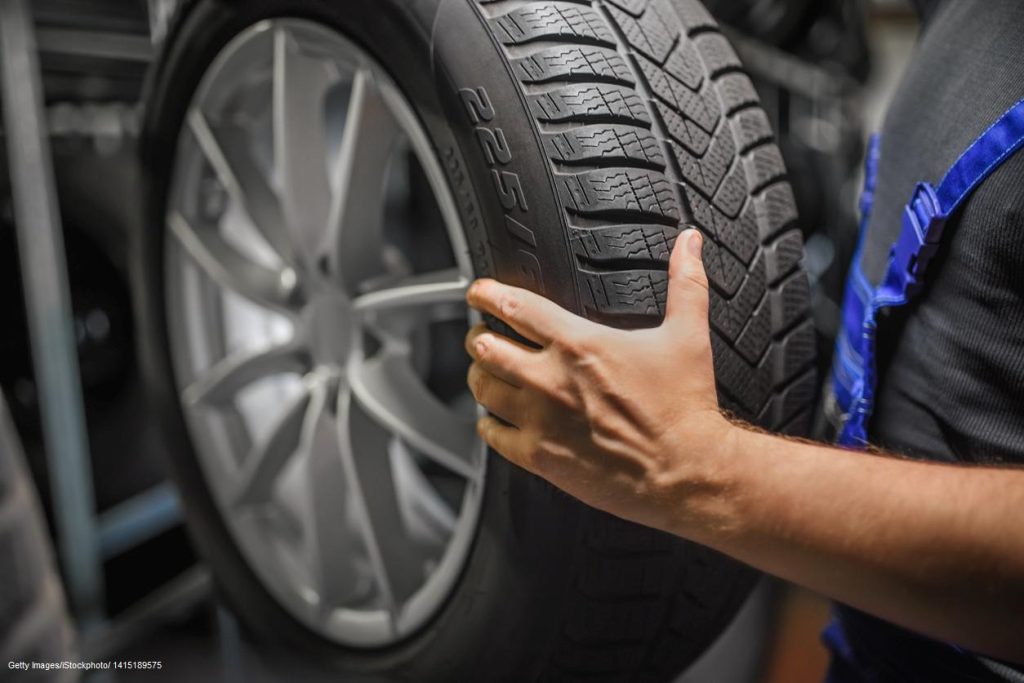
The decision introduces a transmission scheme to approximate the baseline values for rolling resistance and defines four selected laboratories as reference laboratories. Other laboratories and in-house testing facilities can have their results calibrated in cooperation with these reference laboratories and, if the test is successful, receive a certificate of recognition of the measurements for CCC certification. In addition, the decision specifies detailed requirements for calibration tires, measurement procedures and the regular inspection and validation of the measuring instruments. These measures are intended to ensure uniform comparability of the measurements.
For more information on how CCC certification, the CCC Self-Declaration and voluntary CCAP or CQC certification may affect your company, or for more information about CCC certification in general, please visit our News Section where you will find current updates twice a week.
Please do not hesitate to contact us for further details and consultation. You can contact us via email, Chat, or call us (UK: +44 2071931135, Europe: +49 69 2713769150, US: +1 773 654-2673).
You can also check our free CCC-Brochure, which can be downloaded as a PDF file. The brochure also contains information on the CCC Self-Declaration and the voluntary CQC- and CCAP-Certification).
New GB Standards for Anti-Theft Devices for Cars, Motorcycles and Mopeds
On September 29, 2024, the State Administration for Market Regulation (SAMR) approved a total of 20 new or revised national GB standards in its Announcement No. 23. These include changes in the categories of anti-theft devices for motor vehicles, motorcycles and mopeds. The relevant standards are GB 15740-2024 Anti-theft devices for motor vehicles and GB 17353-2024 Anti-theft devices for motorcycles and mopeds. These new standards replace previous regulations and generally require CCC certification in order for the relevant products to be imported and sold in China.
The implementation date for these standards is January 1, 2026.
For more information on how CCC certification, the CCC Self-Declaration and voluntary CCAP or CQC certification may affect your company, or for more information about CCC certification in general, please visit our News Section where you will find current updates twice a week.
Please do not hesitate to contact us for further details and consultation. You can contact us via email, Chat, or call us (UK: +44 2071931135, Europe: +49 69 2713769150, US: +1 773 654-2673).
You can also check our free CCC-Brochure, which can be downloaded as a PDF file. The brochure also contains information on the CCC Self-Declaration and the voluntary CQC- and CCAP-Certification).
New Standards for Seat Belts, Restraint Systems and Automotive Child Seats
On September 29, 2024, the State Administration for Market Regulation (SAMR) approved 20 new or revised national GB standards in their announcement No. 23 of 2024, introducing changes to categories like seat belts, restraint systems and child seats. Key updates include GB 14166-2024 for seat belts and restraint systems for motor vehicle occupants, GB 14167-2024 for anchorage points for seat belts and restraint systems for motor vehicle occupants, and GB 27887-2024 for restraint systems for child occupants of motor vehicles. These standards replace earlier regulations governing these product categories. Seat belts and restraint systems usually require CCC certification in order to be approved for import and sale in China.
The implementation date for these new standards is July 1, 2025.
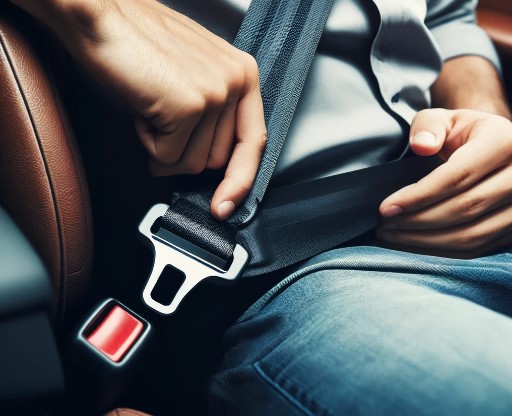
Here you can find an overview of which standards have been incorperated or replaced by the new standards:
| Standard No. | Standard Name | Replaces Standard Number | Implementation Date |
| GB 14166-2024 | Safety belts and restraint systems for motor vehicle occupants | GB14166-2013 | 2025-07-01 |
| GB 14167-2024 | Anchorage points for seat belts and restraint systems for motor vehicle occupants | GB 14167-2013 | 2025-07-01 |
| GB 27887-2024 | Restraint systems for child occupants of motor vehicles | GB 11564-2008 | 2025-07-01 |
For more information on how CCC certification, the CCC Self-Declaration and voluntary CCAP or CQC certification may affect your company, or for more information about CCC certification in general, please visit our News Section where you will find current updates twice a week.
Please do not hesitate to contact us for further details and consultation. You can contact us via email, Chat, or call us (UK: +44 2071931135, Europe: +49 69 2713769150, US: +1 773 654-2673).
You can also check our free CCC-Brochure, which can be downloaded as a PDF file. The brochure also contains information on the CCC Self-Declaration and the voluntary CQC- and CCAP-Certification).
New Standards for Automotive Lighting and Reflective Devices
On September 29, 2024, the State Administration for Market Regulation (SAMR) approved 20 new or updated national GB standards. These updates include significant revisions to the categories automotive lights, reflectors and warning triangles, addressing multiple product categories within this field. The newly released standards include the updated GB 4599-2024, which covers “Automobile road lighting devices and systems”; GB 5920-2024, detailing “Vehicle and trailer light signal devices and systems” and GB 11564-2024 on “Retro-reflective devices for motor vehicles”. Each of these standards incorporates and replaces previous regulations that governed various aspects of these product categories. Automotive lighting and reflective devices usually require CCC certification in order to be approved for import and sale in China.
The implementation date for these new standards is July 1, 2025.

Here you can find an overview of which standards have been incorperated or replaced by the new standards:
| Standard No. | Standard Name | Replaces Standard Number | Implementation Date |
| GB 4599-2024 | Automobile road lighting devices and systems | GB 4599-2007 | 2025-07-01 |
| GB 21259-2007 | |||
| GB 25991-2010 | |||
| GB/T 30036-2013 | |||
| GB/T 30511-2014 | |||
| GB 4660-2016 | |||
| GB 5920-2024 | Vehicle and trailer light signal devices and systems | GB 5920-2019 | 2025-07-01 |
| GB 15235-2007 | |||
| GB 11554-2008 | |||
| GB 17509-2008 | |||
| GB 18408-2015 | |||
| GB 18409-2013 | |||
| GB 18099-2013 | |||
| GB 23255-2019 | |||
| GB 11564-2024 | Retro-reflective device for motor vehicle | GB 11564-2008 | 2025-07-01 |
| GB 19151-2003 | |||
| GB 23254-2009 | |||
| GB 25990-2010 |
For more information on how CCC certification, the CCC Self-Declaration and voluntary CCAP or CQC certification may affect your company, or for more information about CCC certification in general, please visit our News Section where you will find current updates twice a week.
Please do not hesitate to contact us for further details and consultation. You can contact us via email, Chat, or call us (UK: +44 2071931135, Europe: +49 69 2713769150, US: +1 773 654-2673).
You can also check our free CCC-Brochure, which can be downloaded as a PDF file. The brochure also contains information on the CCC Self-Declaration and the voluntary CQC- and CCAP-Certification).
 We are part of the CERTANIA-Group.