


Schließen


Webinar: Regulatory Changes for Automotive Batteries in China – Alternative Date
In cooperation with Shanghai Motor Vehicle Inspection Center (SMVIC) MPR is hosting a webinar on September 22, 2025, from 4:00–5:30 pm CEST (US time: 10:00–11:30 am ET / 7:00–8:30 am PT) to address the regulatory changes for automotive batteries in China.
With the latest regulatory changes published by CNCA there is a major shift from a “range competition” to a “safety trust-driven” direction for the new energy vehicle sector.
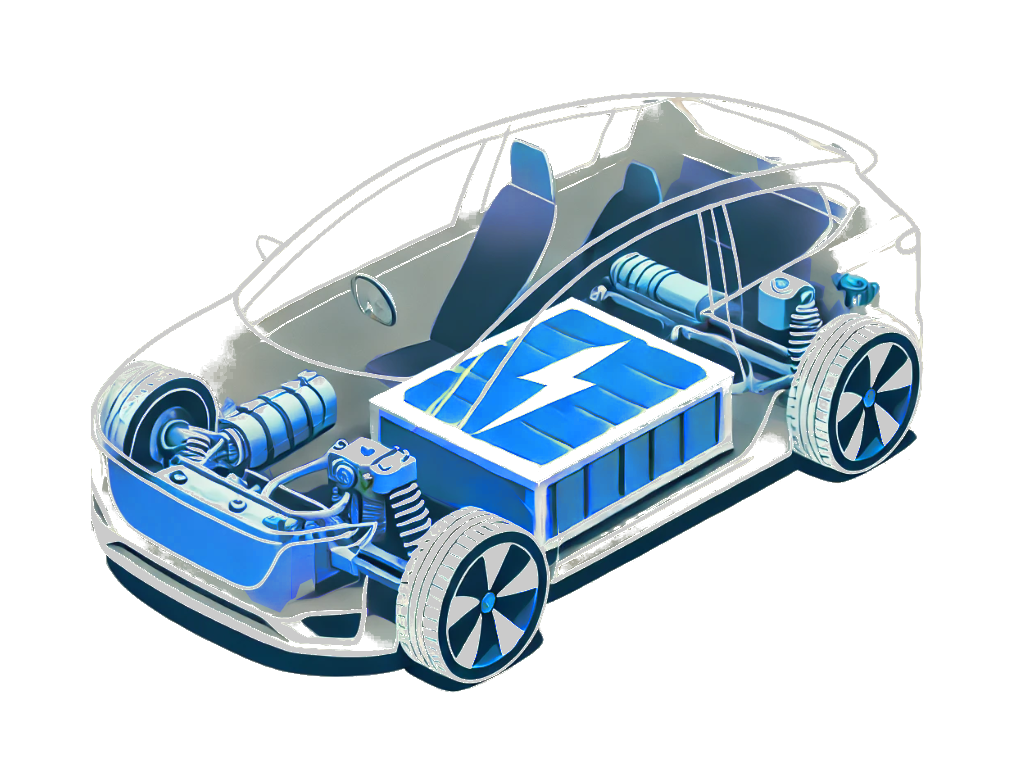
The latest regulatory changes include:
- GB/T31484-2015 (Cycle life requirements and test methods for power batteries for electric vehicles (No. 1 Amendment Order 2025)
- GB/T31486-2024
- GB38031-2025 (implementation 01.07.2026)
This webinar will focus on the regulatory changes published in GB38031-2025. The requirements for “no fire and no explosion” have been elevated to a mandatory standard for the first time. The “safety requirements” include 7 cell and 17 battery pack or system test items. Apart from “overcharge,” “external short circuit,” and “temperature cycling,” all other items have been revised or added, with 3 of them being new or significantly revised.
The webinar will be held by representatives of SMVIC via Teams in English and is free of charge.
For participation, please submit your registration via info@mpr-international.com prior to June 30, 2025.
Webinar-Code: SMVIC-Battery-2025-2
Information needed for registration are:
Email: ____________________________
Name: ____________________________
Company Name: ___________________
You are welcome to submit questions before or after the webinar via email to christoph.graffius@mpr-international.com. Questions to be addressed during the webinar can be submitted until August 30, 2025. There is the possibility to submit questions prior or after the webinar via email to christoph.graffius@mpr-international.com. The questions will be addressed in the webinar if the relevant information to answer the questions is already available and decided by the relevant authorities in China.
MPR supports with all questions regarding the testing, certification and homologation for China. If you have any questions, please do not hesitate to contact your customer representative at MPR. Alternatively, you can contact us under +49 69 271 37 69 150 or info@china-certification.com.
China updates CCC Certification Requirements for Electrical Toys
The Chinese authorities have introduced new requirements for the CCC certification of children’s electrical toys, aligned with the recently published GB 19865-2024 standard, which replaces GB 19865-2005. The updated standard came into effect on July 24, 2024, and will be officially enforced starting July 1, 2026. According to the technical resolution TC21-2025-01, toys that fall under the scope of GB 19865—including electrical ride-on toys, functional electrical toys, and toys with embedded LED sources or computer-like functions—must comply with the revised certification procedures during the transition period. Children’s products usually require CCC certification in order to be approved for import and sale in China.

Manufacturers and certification bodies may choose to apply for certification based on either the old or the new standard before July 1, 2026. From that date onward, all new CCC certifications for affected products must comply with GB 19865-2024. Certified products already in circulation must complete the standard transition by July 1, 2027. Additional requirements such as electromagnetic compatibility, enhanced battery safety, and high-temperature warnings have been added, particularly for toys using lithium or coin-type batteries. Certain products—such as remote-controlled ride-on toys, toys connected to USB ports, and liquid-filled or water-immersible toys—must also meet new supplementary testing and labeling standards.
For more information on how CCC certification, the CCC Self-Declaration and voluntary CCAP or CQC certification may affect your company, or for more information about CCC certification in general, please visit our News Section where you will find current updates twice a week.
Please do not hesitate to contact us for further details and consultation. You can contact us via email, Chat, or call us (UK: +44 2071931135, Europe: +49 69 2713769150, US: +1 773 654-2673).
You can also check our free CCC-Brochure, which can be downloaded as a PDF file. The brochure also contains information on the CCC Self-Declaration and the voluntary CQC- and CCAP-Certification).
China adopts 2025 Certification Standards for E-Bikes
On April 25, 2025, the China National Certification and Accreditation Administration (CNCA) officially issued updated implementation rules for the compulsory product certification of electric bicycles. The new rules, labeled CNCA-C11-16:2025, replace the previous 2023 version and introduce updated procedures for certification and testing. In response, the China Automotive Certification Center Co., Ltd. (CCAP) has also released its corresponding version (CCAP-C11-16:2025), superseding the 2024 guidelines. Effective immediately, certification applicants must comply with these new requirements. Electric bicycles usually require CCC certification in order to be approved for import and sale in China.
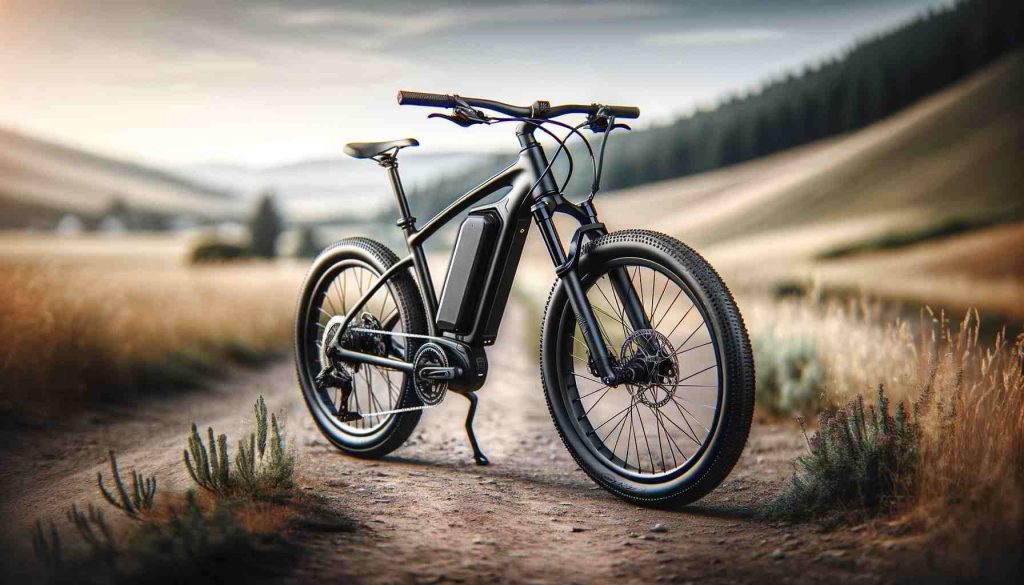
According to the implementation notice, certifications issued under the old rules remain valid and will be converted naturally through events such as product updates or certificate renewals. Until September 1, 2025, manufacturers may choose to certify their products under either GB 17761-2018 or GB 17761-2024, but after this date, compliance with the 2024 standard becomes mandatory. In addition, designated laboratories must promptly report their testing capabilities under the GB 17761-2024 standard to CNCA and CCAP, while updating relevant accreditations and fee schedules.
For more information on how CCC certification, the CCC Self-Declaration and voluntary CCAP or CQC certification may affect your company, or for more information about CCC certification in general, please visit our News Section where you will find current updates twice a week.
Please do not hesitate to contact us for further details and consultation. You can contact us via email, Chat, or call us (UK: +44 2071931135, Europe: +49 69 2713769150, US: +1 773 654-2673).
You can also check our free CCC-Brochure, which can be downloaded as a PDF file. The brochure also contains information on the CCC Self-Declaration and the voluntary CQC- and CCAP-Certification).
Mandatory Certification List for EV Supply Equipment Components released in China
In accordance with Announcement No. 50 of 2024 issued by the State Administration for Market Regulation (SAMR), China began enforcing compulsory product certification for electric vehicle (EV) power supply equipment on March 1, 2025. Certification bodies designated by the authorities have begun accepting applications for these certifications from that date onward. Following internal discussions, the TC31 technical expert group finalized a comprehensive list of critical components and materials that are subject to mandatory certification for equipment types 2501 and 2502. Batteries in general usually require battery registration in order to be approved for import and sale in China.
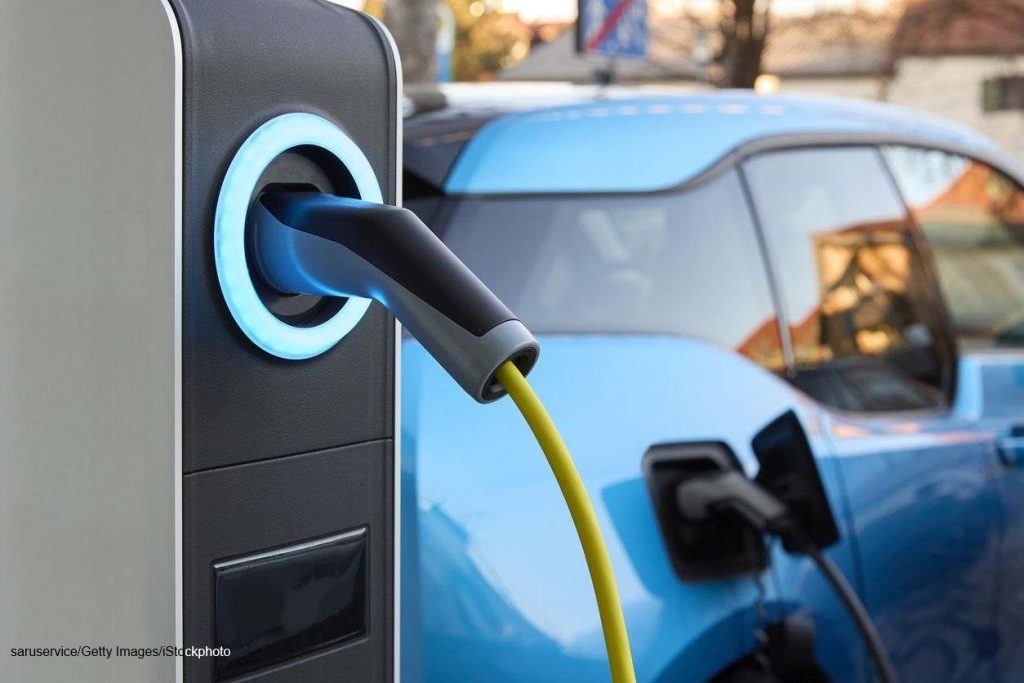
This key component list outlines 28 major items, including vehicle plugs and power sockets, DC fuses, contactors, circuit breakers, charging cables, printed circuit boards, power modules, and various protective and monitoring devices. Each component is associated with specific control parameters, applicable testing standards—such as GB/T 20234, GB/T 33594, GB 39752, and GB/T 14048 series—and sample quantity requirements depending on the product type.
Here you can find an overview of the relevant components:
| Serial Number | Name of Component | Control Parameters | Standard | Sample Quantity | Class |
| 1 | Vehicle plug / power supply socket | Model, specification, manufacturer, production enterprise | GB/T 20234.1 和 GB/T 20234.2 | 9–22 (depending on the applicable standard for the specific product) | A |
| 2 | Charging cable | Model, specification, manufacturer, production enterprise | GB/T 33594 | 50 meters | A |
| 3 | Standard plug | Model, specification, manufacturer, production enterprise | 1) Standard plug without temperature resistance: GB/T 2099.1 and GB 1002; 2) Standard plug with temperature resistance: NB/T 10202; 3) Standard plugs for industrial use: GB/T 11918.1 and GB/T 11918.2 | 12, 18, 12 | A |
| 4 | Power cable (input side) | Model, specification, manufacturer, production enterprise | GB/T 33594; GB/T 5023 或 GB/T 5013; JB/T 8734 或 GB/T 12706.1 | 50 meters | A |
| 5 | DC fuse | Model, specification, manufacturer, production enterprise | GB/T 13539.1 或 GB/T 13539.4 | 16 pcs | A |
| 6 | Contactor | Model, specification, manufacturer, production enterprise | GB/T 14048.4 | 10 pcs | A |
| 7 | Relay | Model, specification, manufacturer, production enterprise | GB/T 21711.1 或 GB/T 14048.5 | 7-21 pcs | A |
| 8 | Circuit breaker | Model, specification, manufacturer, production enterprise | GB/T 10963.1 或 GB/T 10963.2 或 GB/T 10963.3 或 GB/T 14048.2 | 8-38 pcs | A |
| 9 | Switch (isolation, emergency stop, travel) | Model, specification, manufacturer, production enterprise | GB/T 14048.3 或 GB/T 14048.5 | 5 pcs | B |
| 10 | Residual current protection device (standalone) | Model, type, rated residual operating current, manufacturer, production enterprise | Type AC, Type A: GB/T 16916.1 or GB/T 16917.1; Type B: GB/T 22794 | 8-37 pcs | A |
| 6mA and above average | Included in full equipment evaluation | ||||
| 11 | Residual current protection device (non-standalone) | Model, type, rated residual operating current, manufacturer, production enterprise | GB 39752 | Included in full equipment evaluation | A |
| 12 | Residual current detection and protection device (6mA and above average) | Model, specification, manufacturer, production enterprise | GB 39752 | Included in full equipment evaluation | A |
| 13 | Switching power supply (auxiliary power) | Model, specification, manufacturer, production enterprise | GB 4943.1 | 2 pcs | A |
| 14 | Miniature fuse | Model, specification, fuse characteristics (if applicable), breaking capacity, manufacturer, production enterprise | GB/T 9364.1, GB/T 9364.2, GB/T 9364.3, GB/T 9364.4, GB/T 9364.7 | 48-66 pcs | A |
| 15 | Isolation transformer | Model, specification, manufacturer, production enterprise | GB 39752 | Included in full equipment evaluation | A |
| 16 | Printed circuit board / base material | Material grade/model, manufacturer | Finished board: GB 4943.1 or SJ 3275; Base material: GB/T 4721, GB/T 4722, GB/T 4723, GB/T 4724, GB/T 4725 or other equivalent national standards | Splines 13mm×130mm× actual thickness 10 strips/3 finished boards | A |
| 17 | Optocoupler | Model, specification, manufacturer | GB 39752 | Included in full equipment evaluation | A |
| 18 | Radio interference suppression capacitor (isolation, bridging, X-type, Y-type capacitors) | Model, specification, manufacturer, production enterprise | GB/T 6346.14 | 58 pcs | B |
| 19 | Varistor / surge suppressor | Model, specification, manufacturer | GB/T 10193, GB/T 10194, IEC61051-2:1991+Amd1:2009, IEC61643-331:2017 | 70 tablets (GB/T 10193, GB/T 10194 certified, otherwise 60 tablets) | A |
| 20 | Integrated filter | Model, specification, manufacturer | GB/T 15287, GB/T 15288* | 16/12/6/3 (components certified), 42/32/16/8 (components not certified) depending on the number of repetitions | A |
| 21 | Fire protection enclosure and internal materials, flame-retardant materials, decorative materials | Material grade/model, manufacturer | GB 39752 | Included in full equipment evaluation | A |
| 22 | Charging module | Model, specification, manufacturer, production enterprise | GB 39752 | Included in full equipment evaluation | A |
| 23 | Surge protective device (SPD) | Model, specification, manufacturer | GB/T 18802.11 或 GB/T 18802.21 | 5 pcs | A |
| 24 | Control board (including pilot control circuit) | Model, manufacturer | GB 44263 | Included in full equipment evaluation | A |
| 25 | Fan | Model, specification, manufacturer | GB 39752 | Included in full equipment evaluation | A |
| 26 | Insulation monitoring module | Model, manufacturer | GB 44263 | Included in full equipment evaluation | A |
| 27 | Busbar | Material, dimensions | GB 39752 | Included in full equipment evaluation | A |
| 28 | Key components and materials of thermal management system (main power control unit, heat exchanger, coolant, cooling pipe connector, solenoid valve) | Model, material, diameter, manufacturer | GB 44263 | Included in full equipment evaluation | A |
For more information on how Battery Registration for China, CCC certification, the CCC Self-Declaration and voluntary CCAP or CQC certification may affect your company, or for more information about CCC certification in general, please visit our News Section where you will find current updates twice a week.
Please do not hesitate to contact us for further details and consultation. You can contact us via email, Chat, or call us (UK: +44 2071931135, Europe: +49 69 2713769150, US: +1 773 654-2673).
You can also check our free CCC-Brochure, which can be downloaded as a PDF file. The brochure also contains information on the CCC Self-Declaration and the voluntary CQC- and CCAP-Certification).
Webinar: Regulatory Changes for Automotive Batteries in China
In cooperation with Shanghai Motor Vehicle Inspection Center (SMVIC) MPR is hosting a webinar on July 3, 2025, from 09.00-10.00 am (CET) to address the regulatory changes for automotive batteries in China.
With the latest regulatory changes published by CNCA there is a major shift from a “range competition” to a “safety trust-driven” direction for the new energy vehicle sector.
The latest regulatory changes include:
- GB/T31484-2015 (Cycle life requirements and test methods for power batteries for electric vehicles (No. 1 Amendment Order 2025)
- GB/T31486-2024
- GB38031-2025 (implementation 01.07.2026)
This webinar will focus on the regulatory changes published in GB38031-2025. The requirements for “no fire and no explosion” have been elevated to a mandatory standard for the first time. The “safety requirements” include 7 cell and 17 battery pack or system test items. Apart from “overcharge,” “external short circuit,” and “temperature cycling,” all other items have been revised or added, with 3 of them being new or significantly revised.
The webinar will be held by representatives of SMVIC via Teams in English and is free of charge.
For participation, please submit your registration via info@mpr-international.com prior to June 30, 2025.
Webinar-Code: SMVIC-Battery-2025-1
Information needed for registration are:
Email: ____________________________
Name: ____________________________
Company Name: ___________________
There is the possibility to submit questions prior or after the webinar via email to christoph.graffius@mpr-international.com. The questions will be addressed in the webinar if the relevant information to answer the questions is already available and decided by the relevant authorities in China.
MPR supports with all questions regarding the testing, certification and homologation for China. If you have any questions, please do not hesitate to contact your customer representative at MPR. Alternatively, you can contact us under +49 69 271 37 69 150 or info@china-certification.com.
China updates Standards and Certification Rules for Child Restraint Systems in Vehicles
The Chinese government has issued a new national standard, GB 27887-2024, titled “Restraint System for Child Occupants of Motor Vehicles.” This updated regulation will come into effect on July 1, 2025, and will supersede the previous version, GB 27887-2011. In alignment with the updated standard, the China Automotive Certification Center (CCAP) has published a revised set of technical implementation rules under the code CCAP-C22-03:2025, which will become effective on May 1, 2025. Restraint systems for child occupants of motor vehicles can usually receive CCAP or CQC certification to demonstrate compliance with Chinese regulations.
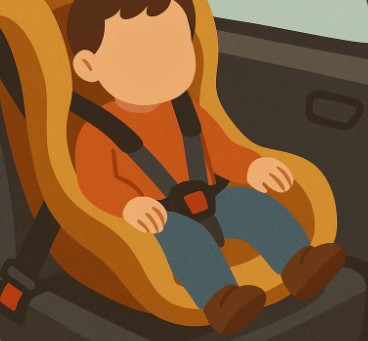
From the implementation date of the new rules, applicants for CCC certification of child restraint systems must follow the updated provisions. A transitional period allows certifications under either the old or new standards until July 1, 2025. After this date, all new certifications must comply with the updated GB 27887-2024 standard. Valid certificates issued under the old standard may continue temporarily but must undergo renewal or conversion by the respective deadlines—July 1, 2026, for non-built-in systems and July 1, 2027, for built-in systems. Failure to complete the transition on time may result in certificate suspension or revocation.
For more information on how CCC certification, the CCC Self-Declaration and voluntary CCAP or CQC certification may affect your company, or for more information about CCC certification in general, please visit our News Section where you will find current updates twice a week.
Please do not hesitate to contact us for further details and consultation. You can contact us via email, Chat, or call us (UK: +44 2071931135, Europe: +49 69 2713769150, US: +1 773 654-2673).
You can also check our free CCC-Brochure, which can be downloaded as a PDF file. The brochure also contains information on the CCC Self-Declaration and the voluntary CQC- and CCAP-Certification).
Updated CCC Rules for Automotive Certification in China
The China Automotive Certification Center Co., Ltd. (CCAP) has issued the fifth revision of the “Implementation Rules for Compulsory Product Certification for Automobiles” (CCAP-C11-01:2020), aligning with the TC11-2024-02 technical resolution and updated national standards. This revision modifies the certification basis and type test items for a broad range of automotive components and systems. Key updates include the incorporation of new and revised standards for areas such as energy consumption labeling, vehicle safety devices, battery systems, external vehicle features, and electric charging infrastructure. The changes affect test items listed in multiple annexes, including new provisions for school bus seats, drive motors, hydrogen systems, seat belts, reflective devices, fuel consumption limits, and lighting equipment. The production consistency control plan and requirements for enterprise testing resources have also been amended. Many automotive products usually require CCC certification in order to be approved for import and sale in China.
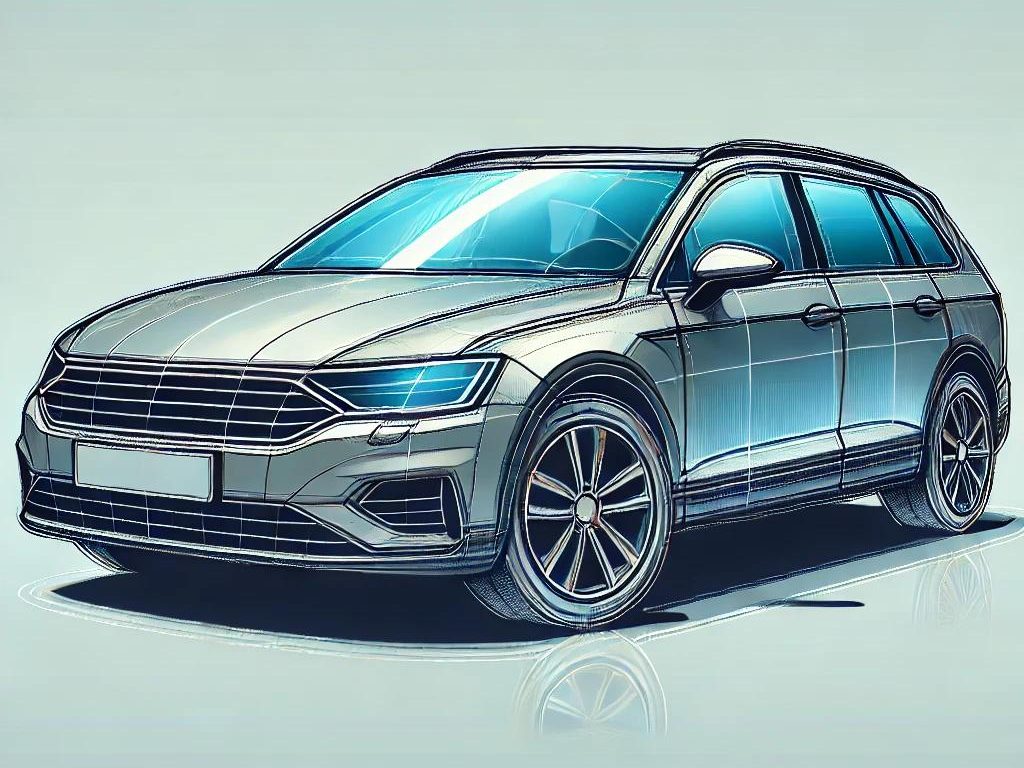
The updated rules took effect immediately upon release on February 21, 2025. Automotive product certifications from that date onward must comply with the new version. Certificates issued under previous versions remain valid during a transitional period managed through renewals, annual inspections, and other procedural updates. Certifications not converted within three months after the designated timeline may face suspension or revocation. Designated laboratories are instructed to update and file their technical capabilities and testing fees as per CNCA requirements. The revised implementation rules and supporting documents are available in the published annexes.
For more information on how CCC certification, the CCC Self-Declaration and voluntary CCAP or CQC certification may affect your company, or for more information about CCC certification in general, please visit our News Section where you will find current updates twice a week.
Please do not hesitate to contact us for further details and consultation. You can contact us via email, Chat, or call us (UK: +44 2071931135, Europe: +49 69 2713769150, US: +1 773 654-2673).
You can also check our free CCC-Brochure, which can be downloaded as a PDF file. The brochure also contains information on the CCC Self-Declaration and the voluntary CQC- and CCAP-Certification).
Revised CCAP Certification Rules for Seat Belts in Line with GB 14166-2024
China Automotive Certification Center Co., Ltd. (CCAP) has issued revised implementation rules for the CCAP mark certification of automobile seat belts under document CCAP-GZ-5810:2025. This revision aligns certification processes with the new national standard GB 14166-2024, “Seat belts and restraint systems for motor vehicle occupants,” which comes into effect on July 1, 2025, replacing GB 14166-2013. Key updates in the new rules include revisions to the certification basis, redefinition of certification units, modified requirements for key components and raw materials, updated factory inspection schedules, and changes to certification renewal processes. Seat Belts can obtain CCAP mark certification in order to be approved for import and sale in China.
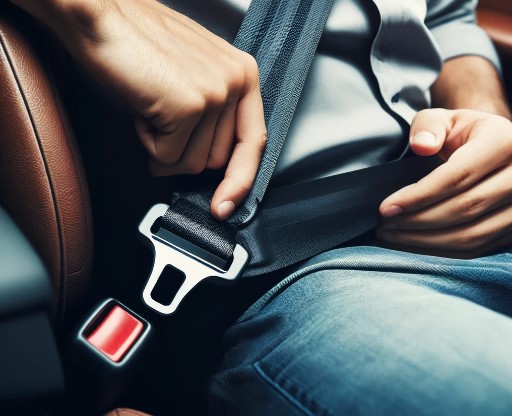
Under the new requirements, clients may voluntarily choose to certify using either the 2013 or 2024 standard prior to the latter’s enforcement date. Post-July 2025, certification must comply with the new standard. Existing certificates based on the 2013 standard remain valid but must be transitioned to the updated framework through renewal or extension. Non-updated certificates will be suspended starting July 1, 2026, and may be revoked if not updated within three months. Designated laboratories are required to submit updated testing capabilities and technical data per CNCA directives, and to report testing fees to CCAP accordingly.
For more information on how CCC certification, the CCC Self-Declaration and voluntary CCAP or CQC certification may affect your company, or for more information about CCC certification in general, please visit our News Section where you will find current updates twice a week.
Please do not hesitate to contact us for further details and consultation. You can contact us via email, Chat, or call us (UK: +44 2071931135, Europe: +49 69 2713769150, US: +1 773 654-2673).
You can also check our free CCC-Brochure, which can be downloaded as a PDF file. The brochure also contains information on the CCC Self-Declaration and the voluntary CQC- and CCAP-Certification).
New Battery Certification Standard GB38031-2025 replaces previous Regulation in China
The new Chinese standard GB38031-2025 was published on March 28, 2025, replacing the previously applicable version GB38031-2020. Mandatory implementation for new vehicles begins on July 1, 2026, while existing vehicles must provide proof of compliance by July 1, 2027. This results in a 12-month transition period to adapt to the updated requirements. Further details regarding implementation, including whether certain exemptions will apply, are not yet known and are expected to be clarified in upcoming TC11 announcements. EV batteries usually require battery registration in order to be approved for import and sale in China.
Key updates include revised requirements for thermal testing (“Thermal Propagation”) and the introduction of a new underbody test, the “Bottom Impact Test.” Additionally, the new standard includes a structured overview outlining which specific sub-tests at the pack level are required when component changes occur.
For more information on how battery registration, CCC certification, the CCC Self-Declaration and voluntary CCAP or CQC certification may affect your company, or for more information about CCC certification in general, please visit our News Section where you will find current updates twice a week.
Please do not hesitate to contact us for further details and consultation. You can contact us via email, Chat, or call us (UK: +44 2071931135, Europe: +49 69 2713769150, US: +1 773 654-2673).
You can also check our free CCC-Brochure, which can be downloaded as a PDF file. The brochure also contains information on the CCC Self-Declaration and the voluntary CQC- and CCAP-Certification).
New Standards Endorsed for PEM Electrolyzers in China
On March 28, 2025, the State Administration for Market Regulation and the Standardization Administration of China jointly announced the approval of 216 new recommended national standards. Among these are GB standards GB/T 45539-2025 related to the technical requirements for proton exchange membrane (PEM) electrolyzers and GB/T 45541-2025 for methods for testing their performance. These additions aim to support the development and standardization of hydrogen production technologies in line with national energy goals.
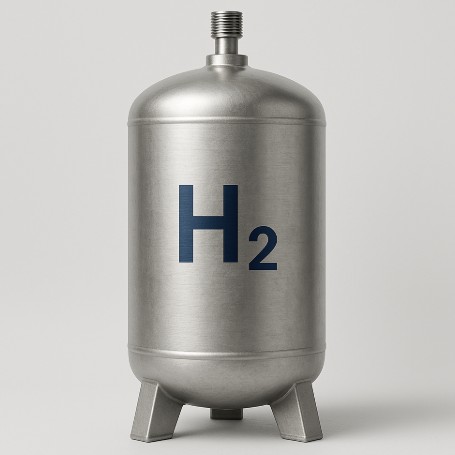
Technical requirements and performance testing methods for PEM electrolyzers usually require national standard approval in order to be approved for import and sale in China.
For more information on how Chinese national standard approvals may affect your company, or for more information about CCC certification in general, please visit our News Section where you will find current updates twice a week.
Please do not hesitate to contact us for further details and consultation. You can contact us via email, Chat, or call us (UK: +44 2071931135, Europe: +49 69 2713769150, US: +1 773 654-2673).
You can also check our free CCC-Brochure, which can be downloaded as a PDF file. The brochure also contains information on the CCC Self-Declaration and the voluntary CQC- and CCAP-Certification).
 We are part of the CERTANIA-Group.