


Schließen


Meituan backs AI chip startup, other Chinese tech giants also invest in semiconductors
Chinese AI chip start-up Axera recently raised $126 million from investors, including major food delivery service Meituan. As CNBC reports, other tech companies are also investing in in-house or local semiconductor manufacturing. Axera’s recent round of investment highlights investors’ desire to invest in Chinese semiconductor startups. Among the backers was venture capitalist Qiming Venture Partners. Electronic components must be awarded a CCC certificate in order for the products to be exported to China or manufactured locally.

The government in Beijing has made self-reliance in chip manufacturing and research and development in this area a top priority, as currently the entire local industry is dependent on foreign technology. Semiconductors and computer chips are now incorporated into many everyday items such as smartphones and cars, and are considered strategically important products by governments. The current global shortage of semiconductors has caused long delivery times for vehicles and electronic products such as game consoles and graphics cards.
The Chinese government’s announcement that it would focus more on semiconductors led to a wave of investment by technology companies in the relevant industries: last year, for example, Tencent invested in Shanghai-based Enflame Technology and unveiled three of its own computer chips. Baidu established its own AI chip development division and is already producing the second generation of its AI semiconductor. Online shopping giant Alibaba developed its own computer chips for its data centers.
Food and grocery delivery service Meituan now followed suit in these investments, backing startup Axera. Its products specialize in AI chips for image recognition. This enables computers to analyze and evaluate a large number of images, which is useful in facial recognition, for example. The high computing power required for this is provided by the special Axera chips. Since its founding in May 2019, the startup has already presented two different chips that can be used in urban areas (smart cities) and at home (smart homes), among other applications. Axera plans to use the money from the investment round to hire new professionals and expand the company.
CCC certification for electronic products is a complex project that requires professional supervision at all stages. For more information on how CCC certification, the CCC Self-Declaration and voluntary CCAP or CQC certification may affect your company, or for more information about CCC certification in general, the process, and the associated costs, please visit our website and our News Section where you will find current updates twice a week.
Please do not hesitate to contact us for further details and consultation. You can contact us via e-mail, or call us (UK: +44 2071931135, Rest of Europe: +49 69 2713769150, US: +1 773 654-2673).
Please don’t hesitate to also use our chat-window in the bottom right corner if you have any questions. (Please check your browser settings if you can’t see the window)
You can also check out our free CCC-Brochure, which can be downloaded right here as a PDF file or you consult our book (in English) “A Brief Guide to CCC: China Compulsory Certification”, which can be found directly here on Amazon.
Here you can download our brochure about the CCC Self-Declaration.
Here you can download our brochure about the voluntary CCAP or CQC certification.
Evergrande Hengchi 5 electric SUV rolls off the production line after long delay
The first full-electric car from China’s Evergrande Group left the production line in mid-January. This marks an important step for the estate developer, which doubled its investment in its EV business since last year. The Hengchi 5 is an all-electric compact SUV with a range of up to 700 kilometers on one battery charge. Evergrande New Energy Vehicle, which is responsible for building the vehicle, announced on January 2022 that it would begin mass production at its Tianjiin plant. Priced below 200,000 yuan (about $31,440), the EV is cheaper than the 300,000 yuan price mark, where Tesla’s strongest competitors from China, NIO, Xpeng Motors and Li Auto, are located. The Hengchi 5 is also being promoted by Evergrande as an alternative or replacement to internal combustion engine compact SUVs like the Audi Q3 or BMW X1. Vehicles and components must be awarded a CCC certificate in order for the products to be exported to China or manufactured locally.
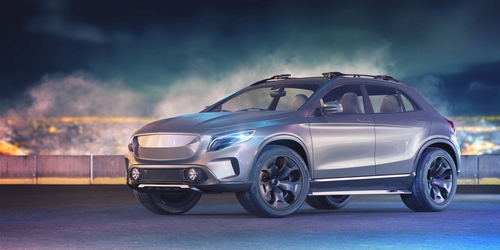
“If the Hengchi 5 sells well, it would be a glimmer of hope for Evergrande after the company has just managed to stay afloat for the past few months,” said Eric Han, a senior manager at Shanghai-based business consultancy Suolei. The long-delayed sales launch of the SUV marks a year of concern for Evergrande investors. Those had put up an additional $3.85 billion in funding on top of the IPO, in an effort to, as company founder Hui Ka-yan said, beat Tesla to the world’s biggest EV sales market. Still, Evergrande fell short of the second-half 2021 business figures it had targeted a year earlier.
To get to mass production of the Hengchi 5, Evergrande needed a large sum of cash. In mid-2021, the EV business had to suspend production after failing to pay suppliers. The Shanghai plant, one of three in China, was temporarily shut down and shares were sold to employees to finance it. Evergrande then unveiled three more models in February 2021, in addition to the six vehicles already unveiled in August 2020. The automaker plans to produce between 500,000 and 1 million EVs annually at its Shanghai, Tianjin and Guangzhou plants. Due to a lack of funding, Evergrande is initially focusing only on the Hengchi 5 and Hengchi 6 models.
CCC certification for vehicles is a complex project that requires professional supervision at all stages. For several years, MPR China Certification GmbH has been entrusted with large CCC projects for the vehicle manufacturers Lotus, Tesla and Bugatti. We will be pleased to provide you with non-binding advice on the scope and requirements of a China CCC certification.
For more information on how CCC certification, the CCC Self-Declaration and voluntary CCAP or CQC certification may affect your company, or for more information about CCC certification in general, the process, and the associated costs, please visit our website and our News Section where you will find current updates twice a week.
Please do not hesitate to contact us for further details and consultation. You can contact us via e-mail, or call us (UK: +44 2071931135, Rest of Europe: +49 69 2713769150, US: +1 773 654-2673).
Please don’t hesitate to also use our chat-window in the bottom right corner if you have any questions. (Please check your browser settings if you can’t see the window)
You can also check out our free CCC-Brochure, which can be downloaded right here as a PDF file or you consult our book (in English) “A Brief Guide to CCC: China Compulsory Certification”, which can be found directly here on Amazon.
Here you can download our brochure about the CCC Self-Declaration.
Here you can download our brochure about the voluntary CCAP or CQC certification.
RCEP free trade agreement helps Chinese engine manufacturer gain momentum
Engine manufacturer Guangxi Yuchai Machinery Group Co, Ltd, or Yuchai, plans to introduce environmentally friendly powertrains for foreign markets in the coming years. The leading Chinese internal combustion engine manufacturer made the announcement recently after the Regional Comprehensive Economic Partnership (RCEP) free trade agreement took effect in early January 2022. RCEP, the world’s largest free trade agreement, involves 15 countries, mostly from Southeast Asia. In addition to the markets covered by RCEP, Yuchai is also looking to expand its presence in Africa, the United States and the European Union. The company is also expanding its research capabilities to offer economical, durable and high-performance engines to global customers. Applications for Yuchai’s engines range from trucks, buses, ships, and power generation to agricultural and construction machinery and manufacturing industries. Yuchai was founded in 1951 and employs about 15,000 people. Currently, the company operates more than 30 subsidiaries with total assets of 50 billion yuan ($7.84 billion). The company has production sites in many provinces in China, including Guangdong, Jiangsu, Anhui, Shandong, Hubei, Sichuan and Liaoning. Vehicles and components must be awarded a CCC certificate in order for the products to be exported to China or manufactured locally.
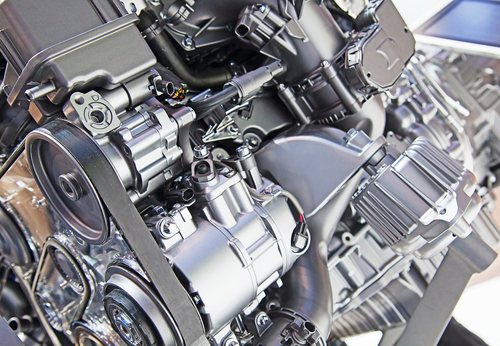
Due to the central location of the company’s headquarters in Yulin, Guangxi Zhuang autonomous region, within Asian countries, the state-owned Yuchai Company could ship more than 260,000 engines to surrounding countries by the end of 2021. Despite the impact of the COVID-19 pandemic, Yuchai was able to benefit from the China-ASEAN Free Trade Agreement as well as the New Silk Road (also known as the Belt and Road Initiative). As a result, 20,596 engines were shipped to various ASEAN member countries last year. This represents a 63 percent increase over the previous year.
Yuchai company CEO Li Hanyang said that in view of the rising environmental awareness of other countries coupled with the expansion of public transportation and stricter emission standards, the company is well prepared. In late December 2021, Yuchai unveiled China’s first hydrogen combustion engine for commercial vehicles, the YCK05N. In successful test runs, the efficiency of the new unit was comparable to fuel cell powertrains. The new engine is based on high-pressure multi-point injection with turbocharger and can be used in many applications such as municipal and cleaning vehicles as well as logistics and delivery. Furthermore, Yuchai has a hydrogen combustion engine for heavy-duty vehicles, the YCK15N, under development, which is expected to be ready for the market in the first half of 2022.
CCC certification is a complex project that requires professional support at all stages.
For more information on how CCC certification, the CCC Self-Declaration and voluntary CCAP or CQC certification may affect your company, or for more information about CCC certification in general, the process, and the associated costs, please visit our website and our News Section where you will find current updates twice a week.
Please do not hesitate to contact us for further details and consultation: You can contact us via e-mail, or call us (UK: +44 2071931135, Rest of Europe: +49 69 2713769150, US: +1 773 654-2673).
Please don’t hesitate to also use our chat-window in the bottom right corner if you have any questions. (Please check your browser settings if you can’t see the window)
You can also check out our free CCC-Brochure, which can be downloaded right here as a PDF file or you consult our book (in English) “A Brief Guide to CCC: China Compulsory Certification”, which can be found directly here on Amazon.
Here you can download our brochure about the CCC Self-Declaration.
Here you can download our brochure about the voluntary CCAP or CQC certification.
Honor presents its first foldable smartphone
Chinese smartphone manufacturer Honor Device Co, Ltd. unveiled its first foldable smartphone, the “Magic V” model, in early January 2022. With this step, the company aims to further spread foldable smartphones and hopes to help them go from a niche market to a mass product. The market launch of the Honor Magic V is illustrated by the manufacturer’s entry into this product category, where competitors like Huawei, Oppo and Xiaomi are already established. The Magic V has a 7.9-inch foldable screen that can be folded completely to protect the display. It also has an external 6.45-inch screen like conventional smartphones. Honor writes that the external display should make it easier for users to enter text as well as keep frequently used applications in view. Smartphones and electronic components must be awarded a CCC certificate in order for the products to be exported to China or manufactured locally.
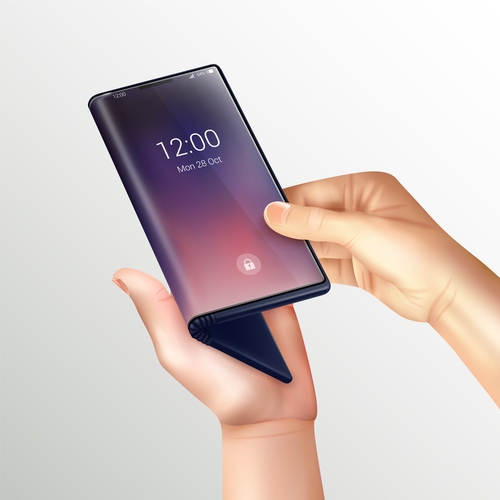
Speaking to Chinadaily, Honor CEO Zhao Ming said that foldable smartphones have been seen more as an innovative luxury product in the past. Now they want to bring the new product to the mainstream market, Zhao adds. In China, the Magic V will retail for around $1,569 (RMB 9,999). Honor also improved its operating system to make it more suitable for foldable smartphones. A report by the market research company “Counterpoint Research” estimates that around 9 million foldable smartphones were sold in 2021. This represents a threefold increase compared to the previous year 2020, and market researchers expect the delivery of ten times the amount of foldable cell phones by 2023.
CCC certification for this and other product categories is a complex project that requires professional supervision at all stages. For several years, MPR China Certification GmbH has been entrusted with large CCC projects for the vehicle manufacturers Lotus, Tesla and Bugatti. We will be pleased to advise you without obligation about the scope and requirements of a China CCC certification.
Please do not hesitate to contact us for further details and consultation. You can contact us via e-mail, or call us (UK: +44 2071931135, Rest of Europe: +49 69 2713769150, US: +1 773 654-2673).
Please don’t hesitate to also use our chat-window in the bottom right corner if you have any questions. (Please check your browser settings if you can’t see the window)
You can also check out our free CCC-Brochure, which can be downloaded right here as a PDF file or you consult our book (in English) “A Brief Guide to CCC: China Compulsory Certification”, which can be found directly here on Amazon.
Here you can download our brochure about the CCC Self-Declaration.
Here you can download our brochure about the voluntary CCAP or CQC certification.
Audi partners with Alibaba, Baidu and Tencent on vehicle technology
German luxury car brand Audi recently announced its collaboration with leading technology companies from China such as Alibaba, Baidu and Tencent. Part of the collaboration is said to include features such as infotainment, autonomous driving and connectivity for the automaker’s upcoming EV cars. In this way, Audi hopes to make its vehicles more attractive to Chinese customers, especially younger buyers. Giorgio Delucchi, Audi’s head of sales for China and Hong Kong, said the company aims to incorporate only the latest technologies in its soon-to-be-released EVs. The carmaker is working with Alibaba Group Holding, Baidu and Tecent Holding on Big Data, Internet of Things (IoT) and urban mobility. Delucchi said in an interview that he wants to ensure Audi is at the forefront of technical cooperation and development with its Chinese partners. Infotainment, autonomous driving and connectivity functions are key areas that Audi needs to tap into in order to stay ahead of the competition in the Chinese market, the sales executive added. Vehicles and components must be awarded a CCC certificate in order to export the products to China or trade them locally.
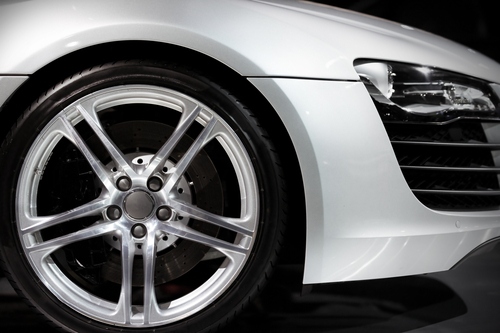
For Audi, as the leading brand in China for luxury vehicles for three decades, the electrification of vehicle models in the world’s largest car market has only just begun. Tesla and Chinese start-ups such as Xpeng, NIO and Li Auto are entering the EV market as serious competitors. Their target group, young drivers, has a preference for intelligent vehicle features such as driver assistance systems, voice recognition and large displays in the vehicles. The aforementioned three Chinese start-ups, with more than 10,000 EVs delivered in November, have the potential to drastically reduce Tesla’s market share, according to experts. Audi, as the luxury car brand of the Volkswagen Group, does not report separate sales figures for their EVs in China, but is estimated to be far behind Tesla and the local start-ups. Tian Maowei, sales manager at a major car dealer in Shanghai, agrees: “In today’s e-vehicle market, customers are more interested in automatic functions and range.” Maowei adds: “Mercedes, BMW and Audi are popular brands for cars with combustion engines. However, they need to adapt their EV strategy respectively models for the Chinese market to attract customers here as well.”
CCC certification for automotive products is a complex project that requires professional support at all stages. For several years, MPR China Certification GmbH has been entrusted with large CCC projects for the vehicle manufacturers Lotus, Tesla and Bugatti. We will be pleased to provide you with non-binding advice on the scope and requirements of a China CCC certification.
Please do not hesitate to contact us for further details and consultation. You can contact us via e-mail, or call us (UK: +44 2071931135, Rest of Europe: +49 69 2713769150, US: +1 773 654-2673).
Please don’t hesitate to also use our chat-window in the bottom right corner if you have any questions. (Please check your browser settings if you can’t see the window)
You can also check out our free CCC-Brochure, which can be downloaded right here as a PDF file or you consult our book (in English) “A Brief Guide to CCC: China Compulsory Certification”, which can be found directly here on Amazon.
Here you can download our brochure about the CCC Self-Declaration.
Here you can download our brochure about the voluntary CCAP or CQC certification.
China Green Label Certification for car tires
“Green Label Certification” is a product certification for sustainable products in China. The latest addition to the list are car tires that in addition to mandatory CCC certification can now also be certified as “green”. The CNCA (Certification and Accreditation Administration of the People’s Republic of China) just published the corresponding implementation rules.

Chinese consumers increasingly put a focus on sustainability, as well as saving energy and resources. The Chinese government also aims to encourage consumers to switch to “green” products. To achieve this goal the government launched the “China Green Label Certification” in 2017. The new certification scheme replaces several earlier ones that were not nearly as comprehensive. The certification scheme focuses on the product itself, the production methods, materials and recyclability of the product. For example, the production processes must be environmentally friendly, save water and produce as little CO2 as possible and the materials used should be either ecological or recyclable.
Overall, the “Green Label Certification” intends to spread awareness of sustainable products in the Chinese market. The new logo also increases familiarity and trust in the new system.
Authorities are constantly expanding the list of products to be certified. Recently the Chinese authority added a number of new consumer goods to the scope of certification. The latest additions to the list are car tires, refrigerators, air conditioners and washing machines. However, car tires must still be certified “green” according to GB/T 40718-2021.
In addition, CCC certification still applies to many products.
For more information on how CCC certification, the CCC Self-Declaration and voluntary CCAP or CQC certification may affect your company, or for more information about CCC certification in general, the process, and the associated costs, please visit our website and our News Section where you will find current updates twice a week.
Please do not hesitate to contact us for further details and consultation. You can contact us via e-mail, or call us (UK: +44 2071931135, Rest of Europe: +49 69 2713769150, US: +1 773 654-2673).
Please don’t hesitate to also use our chat-window in the bottom right corner if you have any questions. (Please check your browser settings if you can’t see the window)
You can also check out our free CCC-Brochure, which can be downloaded right here as a PDF file or you consult our book (in English) “A Brief Guide to CCC: China Compulsory Certification”, which can be found directly here on Amazon.
Here you can download our brochure about the CCC Self-Declaration.
Here you can download our brochure about the voluntary CCAP or CQC certification.
Huawei underlines its ambitions to develop their own EV
Chinese electronics giant Huawei Technologies is planning to develop an electric SUV in partnership with car manufacturer and supplier Seres. The SUV is expected to be the first production vehicle to be marketed under the premium EV brand AITO, which was recently launched by Seres. The vehicle will be equipped with Huawei’s “Harmony Cockpit” operating system. Drawing on 30 years of experience in the IT industry, Huawei will make utmost efforts to launch the AITO-branded mid-size luxury SUV, said Richard Yu Chengdong, executive director of Huawei Intelligent Vehicle Solutions. Vehicles and components must be awarded a CCC certificate in order for the products to be exported to China or manufactured locally.
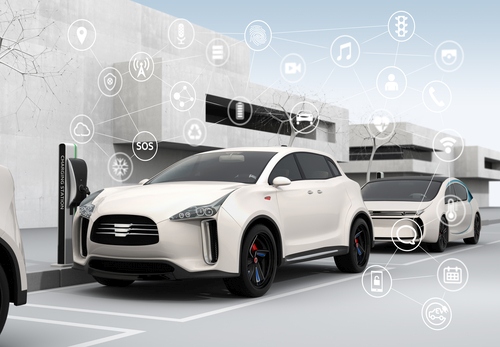
Entering the EV business could become an important new growth area for Huawei. The company has been sanctioned by the US from selling IT devices and smartphones and is now looking for new revenue streams. The AITO SUV is described by Seres as a smart vehicle that will be equipped by Huawei with technologies such as 4D imaging radar, autonomous driving functions, battery temperature management, lidar and 5G. Seres and Huawei plan to set up more than 1,000 sales outlets and experience centres in China to sell AITO’s EVs. Huawei has reported great progress since unveiling its smart car platform “Huawei HI” in April 2021. The company has since supplied car manufacturers such as Arcfox and Avatar Technologies with chips, lidar sensors and other components to connect vehicles to each other and to the internet.
CCC certification is a complex project that requires professional support in all phases. For several years, MPR China Certification GmbH has been entrusted with large CCC projects for the vehicle manufacturers Lotus, Tesla and Bugatti.
For more information on how CCC certification, the CCC Self-Declaration and voluntary CCAP or CQC certification may affect your company, or for more information about CCC certification in general, the process, and the associated costs, please visit our website and our News Section where you will find current updates twice a week.
Please do not hesitate to contact us for further details and consultation. You can contact us via e-mail, or call us (UK: +44 2071931135, Rest of Europe: +49 69 2713769150, US: +1 773 654-2673).
Please don’t hesitate to also use our chat-window in the bottom right corner if you have any questions. (Please check your browser settings if you can’t see the window)
You can also check out our free CCC-Brochure, which can be downloaded right here as a PDF file or you consult our book (in English) “A Brief Guide to CCC: China Compulsory Certification”, which can be found directly here on Amazon.
Here you can download our brochure about the CCC Self-Declaration.
Here you can download our brochure about the voluntary CCAP or CQC certification.
Chinese toy retailer 52Toys prepares for expansion
Specializing in collectible toys, retailer 52Toys recently closed a Series C investment round of $62.8 million. This quite remarkable success helps the company innovate and expand its store network, according to a senior executive at 52Toys. Considered the main customers, Generation Z, young adults born between 1995 and 2009, are affluent, pay more for emotional purchases and are active on social networks. As a result, customer demand is shifting from purely consumer items to personal items, Chen Wei, general manager of 52Toys told China Daily. Toys and similar products must be awarded a CCC certificate in order for the products to be exported to China or manufactured locally.
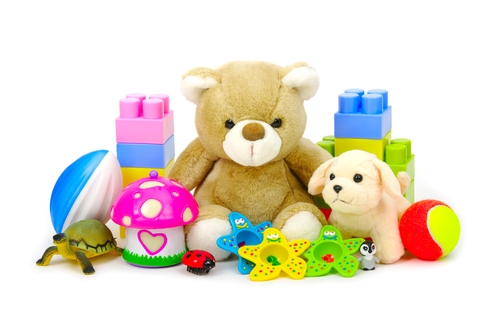
Since the company was founded in 2015, the Beijing-based company has developed as a brand name for collectible toys and invested heavily in research and development to provide a broad product portfolio. Within more than six years of growth, 52Toys rose to become a major collectible toy brand in China. During this time, 52Toys has built a large store network with more than 10,000 retail stores across China. It also opened its own stores in Beijing, Shanghai, Guangzhou, Shenzhen, Chengdu and other major Chinese cities by the end of 2021 to provide a comprehensive shopping experience for the younger generation.
The company said there are plans to open new stores overseas after the end of the Covid 19 pandemic, as it expects high demand and good growth opportunities there. Prior to the pandemic, 52Toys showcased its goods at numerous trade shows in New York, San Diego, Los Angeles and Tokyo. Guo Xin, a professor of marketing at Beijing Technology and Business University, also sees stable demand for 52Toys’ products in the domestic market. In addition to buying collectible figures, so-called “blind boxes” are currently the most popular. With a “blind box”, the buyer only knows the name of the toy series, but not the exact contents. Due to the low purchase price and high purchase frequency, customers of these products are considered to be very keen consumers. The toy market in China experienced the fastest growth in the world and, according to Bloomberg Intelligence, will become the largest global sales market towards the end of 2022, ahead of the USA with a market volume of 25 billion.
CCC certification is a complex project that requires professional supervision at all stages. For several years, MPR China Certification GmbH has been entrusted with large CCC projects for the vehicle manufacturers Lotus, Tesla and Bugatti. We will be pleased to provide you with non-binding advice on the scope and requirements of a China CCC certification.
A majority of toys need CCC certification for access to the Chinese market. For more information on CCC certification, the process, and the associated costs, please visit our website and our News Section where you will find current updates twice a week.
Please do not hesitate to contact us for further details and consultation. You can contact us via e-mail, or call us (UK: +44 2071931135, Rest of Europe: +49 69 2713769150, US: +1 773 654-2673).
Please don’t hesitate to also use our chat-window in the bottom right corner if you have any questions. (Please check your browser settings if you can’t see the window)
You can also check out our free CCC-Brochure, which can be downloaded right here as a PDF file.
Update of GB/T 19056-2021 Standard for Tachographs
The CNCA has published an updated version of the GB Standard for tachographs. The new Standard GB/T 19056-2021 for car driving recorders will come into effect starting July 1, 2022. Specific test items have been adjusted.

The mandatory CCC Self-Declaration, also known as China Supplier Declaration of Conformity, serves as a declaration by the manufacturer that the manufactured products comply with the Chinese standards.
The relevant manufacturers are required to complete a CCC Self-Declaration in accordance with the following:
- If the Self-Declaration has not already been completed and is still in the process: The Self-Declaration can be declared in accordance with the new standard between the effective date of this resolution and June 30, 2022. Starting from July 1, 2022 onwards all new Tachograph Self-Declarations must be in accordance with the new version of the standard.
- Those Self-Declarations that have already been completed, must be updated to the new GB Standard between the effective date of the resolution and June 30, 2023. Type test reports should be performed in accordance with the new test items.
- Any Self-Declarations that are still in accordance with the old GB standard GB/T 19056 but not with the new one will be cancelled by July 1, 2023.
Additionally, the Tachographs will implement a unique code to achieve traceability of the production, sales and usage.
Note: This resolution is implemented from March 1, 2022. You can find a list of the test items further below.
Do not hesitate to contact us to better understand how CCC certification, the CCC Self-Declaration and voluntary CCAP or CQC certification may affect your products. Please send us an e-mail, or call us (UK: +44 2071931135, Rest of Europe: +49 69 2713769150, US: +1 773 654-2673).
You can also use our chat-window in the bottom right corner if you have any questions. (Please check your browser settings if you can’t see the window)
For more information you can download our brochure about the CCC Self-Declaration, CCC-Certification as well as the voluntary CCAP/ CQC certification.
List of all Test Items (after the update)
| No | Test Items | GB Standard | Corresponding GB/Standard Clauses |
| 1 | General requirements | GB/T19056 | 5.1 |
| 2 | Electrical components | 5.2 | |
| 3 | Supply voltage adaptability | 5.3.1 | |
| 4 | Resistance to polarity reverse connection of power supply | 5.3.2 | |
| 5 | Resistance to overvoltage of power supply | 5.3.3 | |
| 6 | Power off protection performance | 5.3.4 | |
| 7 | Self-checking function | 5.4.1.1 | |
| 8 | Driving condition record | 5.4.1.2.1 | |
| 9 | Accident suspicious records | 5.4.1.2.2 | |
| 10 | Overtime driving record | 5.4.1.2.3 | |
| 11 | Driver information records | 5.4.1.2.4 | |
| 12 | Logging | 5.4.1.2.5 | |
| 13 | Data record storage format | 5.4.1.2.6 | |
| 14 | Audio and video recording function | 5.4.1.3 | |
| 15 | Data communication function | 5.4.1.4 | |
| 16 | Security warning function | 5.4.1.5 | |
| 17 | Display function | 5.4.1.6 | |
| 18 | Automatic time calibration function | 5.4.1.7 | |
| 19 | Positioning function | 5.4.2 | |
| 20 | Time recording error | 5.5.1.1 | |
| 21 | Velocity recording error | 5.5.1.2 | |
| 22 | The positioning performance | 5.5.2 | |
| 23 | Video image performance | 5.5.3 | |
| 24 | Data analysis system | 5.6 | |
| 25 | Data security | GB/T19056 | 5.7 |
| 26 | High temperature test | 5.8 | |
| 27 | High temperature placement test | 5.8 | |
| 28 | Low temperature test | 5.8 | |
| 29 | Low temperature placement test | 5.8 | |
| 30 | Constant damp heat test | 5.8 | |
| 31 | Vibration test | 5.9 | |
| 32 | Impact test | 5.9 | |
| 33 | Enclosure protection class | 5.10 | |
| 34 | Anti interference of automobile electric ignition | 5.11 | |
| 35 | Electrostatic discharge immunity | 5.12 | |
| 36 | Transient immunity | 5.13 |
New Standard GB 15084 for Mirrors Planned
The Chinese authority AQSIQ (General Administration of Quality Supervision, Inspection and Quarantine) are planning an update of the GB standard GB 15084 for car rear-view mirrors.
The new standard is expected to come into effect on January 1st, 2023.

Since the new version is still being finalized, it is currently unclear what the changes will be.
AQSIQ is the authority responsible for issuing new GB standards. They revise existing standards in regularly to ensure that the contents match current technical developments.
CCC certifications will continue to be carried out according to the current version until the new GB standard is implemented. Currently, CCC Self-Declaration is mandatory for mirrors. Additionally, many OEMs also require voluntary CQC or CCAP certification with product tests.
Although it is still unclear what the final changes the authority is planning, a recent draft describes possible modifications. The changes included some updated technical requirements, especially regarding camera monitoring systems (CMS). Among others, the draft lists the functional requirements that camera monitoring systems must fulfill. To prove compliance, products must be tested according to ISO 16505:2019. In addition, the brightness of camera monitors must be manually or automatically adjustable.
As soon as more information is available, you will find it here on our website.
Several other revisions of standards are currently in progress, including the standard for brake hoses (GB 16897). The authority also recently published a new standard for seat belt detection (GBT 24551-2021).
For more information on how CCC certification, the CCC Self-Declaration and voluntary CQC or CCAP certification may affect your company, or for more information about CCC certification in general, the process, and the associated costs, please visit our website and our News Section where you will find current updates twice a week.
Please do not hesitate to contact us for further details and consultation. You can contact us via e-mail, or call us (UK: +44 2071931135, Rest of Europe: +49 69 2713769150, US: +1 773 654-2673).
Please don’t hesitate to also use our chat-window in the bottom right corner if you have any questions. (Please check your browser settings if you can’t see the window)
You can also check out our free CCC-Brochure, which can be downloaded right here as a PDF file or you consult our book (in English) “A Brief Guide to CCC: China Compulsory Certification”, which can be found directly here on Amazon.
Here you can download our brochure about the CCC Self-Declaration.
Here you can download our brochure about the voluntary CCAP or CQC certification.
 We are part of the CERTANIA-Group.