


Schließen


Revised CCC Regulations for Motorcycle Lighting and Fuel Systems to Take Effect
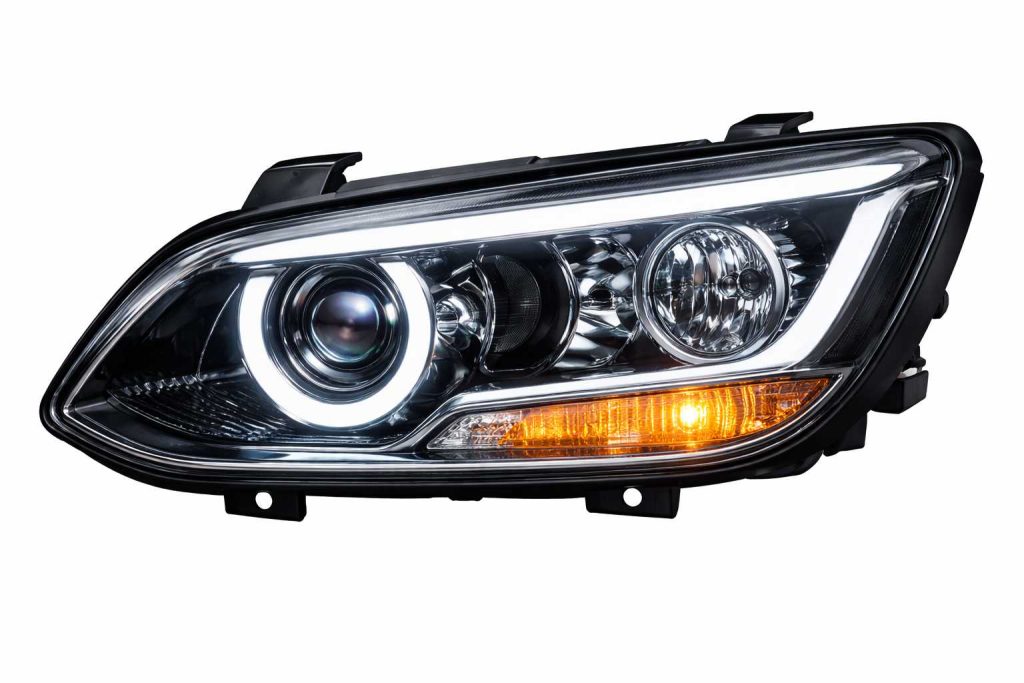
China has introduced revised technical standards and testing methods for the CCC certification of vehicle lighting systems and motorcycle fuel tanks. The updated standards GB4599-2024 (headlamps), GB5920-2024 (light-signaling devices), and GB19482-2025 (fuel tanks for motorcycles and light motorcycles) will come into force starting January 1, 2026. The changes apply to motorcycles and light motorcycles that are equipped with corresponding front lighting systems and fuel tanks. Lighting systems must now comply with both GB4599 and GB5920, particularly if they feature multifunctional designs such as adaptive headlamps or combined signaling functions. Fuel tanks must be retested according to the new GB19482-2025 standard. These updated regulations replace previous versions and, in some cases, introduce new testing requirements for both newly developed and existing products. A technical expert panel (TC12) has outlined how these changes are to be implemented during the transition period for both certified and new products. Lighting systems and fuel tanks for motorcycles and light motorcycles usually require CCC certification in order to be approved for import and sale in China.
For new products, certification must be carried out strictly under the new standards once they take effect. Already certified products must be updated according to the new requirements if any standard changes or additional test items apply. If no technical differences exist, certificates may be updated without retesting. Products no longer in production before the release of the new standards do not require recertification. The table on page 3 outlines in detail the specific requirements and transition deadlines for components such as LED lamps, reverse lights, and fuel tanks, with enforcement dates extending through January 1, 2028.
| Standard Nr. | Product Category | Testing | Implementation |
| GB 19152-2025 | Front headlights | Test required (no material test required for identical plastic lens parts) | For newly commissioned certification of front headlamp products: Implementation from January 1, 2026; for already certified front headlamp products: Implementation from January 1, 2027. |
| GB 4599-2024 | Front fog lights (for motorcycles and light motorcycles equipped with front fog lights) | F3 class front fog lamps: test required; B class front fog lamps: retest required in accordance with new standard. | For newly commissioned certification of fog lamp products: implementation from July 1, 2025; for already certified fog lamp products: implementation from July 1, 2028. For newly commissioned certification of models and already certified models: implementation from July 1, 2028. |
| GB 17510-2025 | Front position light, rear position light, brake light, direction indicator (turn signal), reverse light, and license plate light | Light signal systems with light intensity control function must undergo a functional test; in addition, a test of the requirements for light color and color limits is required (except for license plate lighting); other points do not require testing. | For newly commissioned certification of front position lamps, rear position lamps, brake lamps, direction indicators (turn signals), reversing lamps, and license plate lamps: Implementation from January 1, 2026; For already certified front position lamps, rear position lamps, brake lamps, direction indicators (turn signals), reversing lamps, and license plate lamps: Implementation from July 1, 2026; Section 5.1.2 of the standard: Implementation from January 1, 2028. |
| GB 5920-2024 | Daytime running lights (DRL), front position lamp, rear position lamp, license plate light, brake light, direction indicator (turn signal), rear fog light, reversing light – used for the above-mentioned lights on motorcycles and light motorcycles | Daytime running lights (DRL), front position lights, rear position lights, license plate lights, brake lights: previously not approved for use, testing according to new standard required. Direction indicators (turn signals), reversing lights, rear fog lights: – Turn signals (type 2b): minimum luminous intensity test required. – Reversing lights: Reversing lights with LED light sources must be tested according to the new standard. – Other lights: test required. | For newly commissioned certification of daytime running lights (DRL), front position lights, rear position lights, license plate lights, direction indicators (turn signals), rear fog lights: Implementation from July 1, 2025; Brake lights and reversing lights: Implementation from January 1, 2027. For already certified daytime running lights (DRL), front position lights, rear position lights, license plate lights, brake lights, direction indicators (turn signals), rear fog lights, reversing lights: Implementation from July 1, 2028. For newly commissioned certification of models and already certified models: Implementation from July 1, 2028. |
| GB 18100-2025 | Motorcycles and light motorcycles | Retesting according to the new standard | For newly commissioned model certification: (except for the requirements in 5.1.1 and 5.2.1) Implementation from January 1, 2026. For requirements 5.1.1 and 5.2.1: Implementation from July 1, 2027. For already certified models: Implementation from July 1, 2027. |
| GB 15365-2025 | Motorcycles and light motorcycles | Retesting according to the new standard | For newly commissioned model certification: Implementation from January 1, 2026. For already certified models: Implementation from January 1, 2028. |
| GB 19482-2025 | Fuel tank (motorcycles and light motorcycles with fuel tank) | Retesting according to the new standard | For newly commissioned product certification: Implementation from January 1, 2026. For already certified products: Implementation from January 1, 2027. |
For more information on how CCC certification, the CCC Self-Declaration and voluntary CCAP or CQC certification may affect your company, or for more information about CCC certification in general, please visit our News Section where you will find current updates twice a week.
Please do not hesitate to contact us for further details and consultation. You can contact us via email, Chat, or call us (UK: +44 2071931135, Europe: +49 69 2713769150, US: +1 773 654-2673).
You can also check our free CCC-Brochure, which can be downloaded as a PDF file. The brochure also contains information on the CCC Self-Declaration and the voluntary CQC- and CCAP-Certification).
Surge in German Investment Expected to Drive Demand for Product Certifications in Taiwan
German direct investment in Taiwan surged by 264% year-on-year in 2025, reaching US$209 million, according to data from Taiwan’s Department of Investment Review cited by the German Trade Office Taipei. The sharp rise reflects growing confidence among German companies in Taiwan’s role as a key technology and R&D hub in the Asia-Pacific region. Major firms such as Infineon Technologies AG and Merck Group have recently expanded their presence, underscoring the deepening strategic ties. The increasing involvement of German firms in Taiwan’s technology and industrial sectors is expected to boost the demand for certifications such as VSCC, NCC, BSMI, and ITRI.

In addition to investment growth, bilateral trade between Taiwan and Germany reached US$21.7 billion in 2025, marking a 6% increase year-on-year and maintaining a level above US$20 billion for the fifth consecutive year. This trend reflects resilient trade relations and strong economic complementarities, particularly in areas like semiconductors, green energy, and smart transportation. According to Eva Langerbeck of the German Trade Office Taipei, Taiwan and Germany are strengthening cooperation in net-zero strategies and smart automation to build more robust, high-value industrial partnerships in response to global supply chain transformations.
Feel free to contact us any time if you need assistance or have any questions regarding certifications for Taiwan like VSCC, NCC, BSMI or ITRI.
Tel. Europe: +49-69-271 37 69 150
Tel. US: +1 773 654-2673
Email: info@china-certification.com
For more information on VSCC Certification you can download our free brochure “Taiwan Certification Made Easy – The Booklet“.
China Updates CCC Certification Requirements for EV Charging Cables under New GB/T 33594-2025 Standard
The updated Chinese standard GB/T 33594-2025 for electric vehicle charging cables was issued on October 5, 2025, and will take effect on May 1, 2026, replacing the previous version GB/T 33594-2017. In line with this, the China Quality Certification Centre (CQC) has revised the applicable certification rules under code CQC11-463426-2024, affecting product subcategory 011033. Key revisions include the replacement of the reference standard, changes to unit classification and sample requirements for type testing (Annex 1), and updated factory quality control testing requirements (Annex 2). EV charging cables usually require CCC certification in order to be approved for import and sale in China.
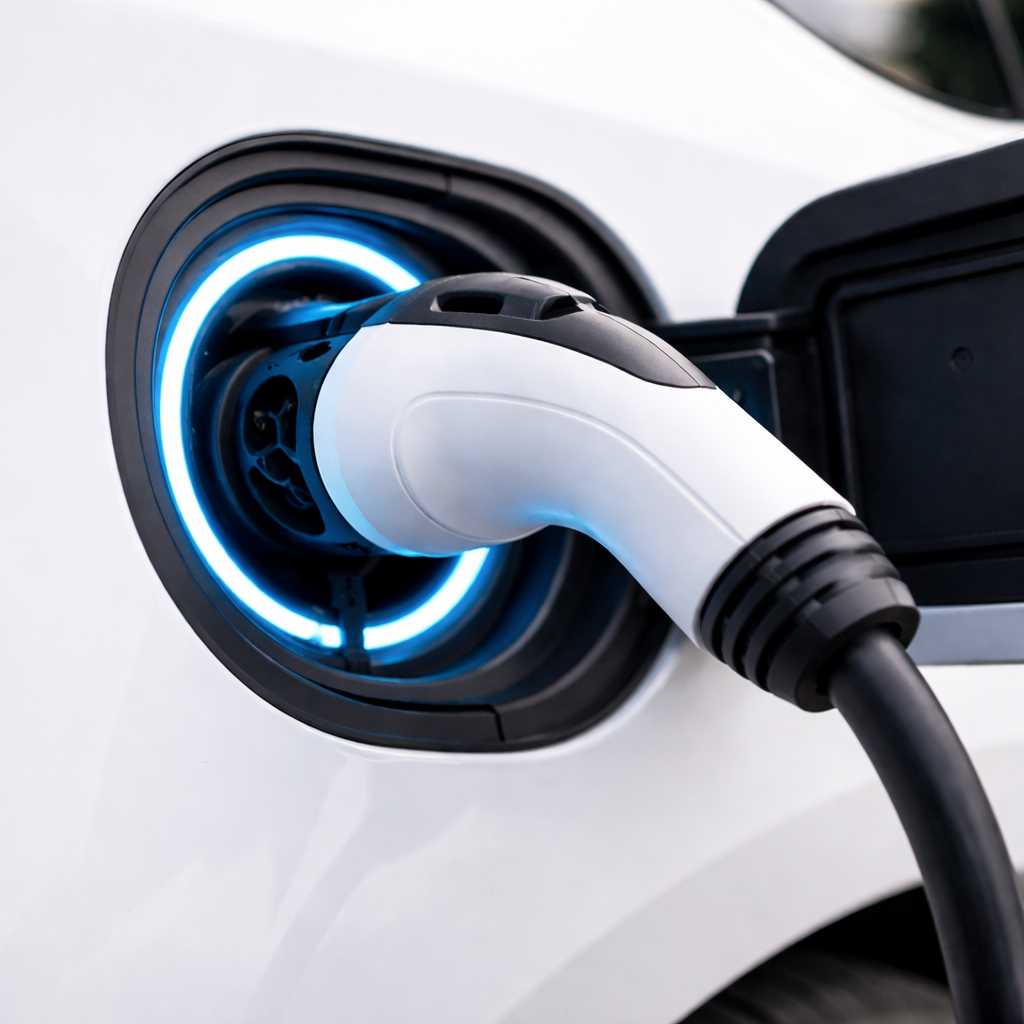
Effective immediately, the CQC has begun accepting certification applications based on the new standard. Certificates under the old version will no longer be issued after May 1, 2026. Certificate holders of products certified under the 2017 version must apply for a transition to the 2025 standard and undergo testing that addresses the differences between the two versions. A separate test report must be submitted for each product series. All transitions must be completed by April 30, 2027. Certificates not converted by this deadline will be suspended, and if the process remains incomplete by July 30, 2027, the old certificates will be revoked.
For more information on how CCC certification, the CCC Self-Declaration and voluntary CCAP or CQC certification may affect your company, or for more information about CCC certification in general, please visit our News Section where you will find current updates twice a week.
Please do not hesitate to contact us for further details and consultation. You can contact us via email, Chat, or call us (UK: +44 2071931135, Europe: +49 69 2713769150, US: +1 773 654-2673).
You can also check our free CCC-Brochure, which can be downloaded as a PDF file. The brochure also contains information on the CCC Self-Declaration and the voluntary CQC- and CCAP-Certification).
China Updates CCC Certification Requirements for Automobiles and Components
Following the release of Technical Decision TC11-2025-01 by the Certification and Accreditation Administration of China (CNCA), the China Quality Certification Center (CQC) has revised its implementation rules CQC-C1101-2020 for compulsory product certification of automobiles. The center also issued an implementation plan outlining how the new standards are to be adopted. These updates include requirements for new certification applications, guidance for transitioning to the revised standards, and deadlines for compliance. Automobiles and automotive parts usually require CCC certification in order to be approved for import and sale in China.
Simultaneously, the China Certification Center for Automotive Products (CCAP) revised its regulation CCAP-C11-01:2020 for the sixth time, aligning it with both Technical Decision TC11-2025-01 and other applicable regulatory provisions. Both CQC and CCAP have updated their certification procedures to reflect the new technical standards, ensuring compliance across vehicle models and components. Specific implementation requirements are outlined in a dedicated annex.
| New Standards | |||||
|---|---|---|---|---|---|
| No. | Standard Number | Standard Title | Replaces | Issue Date | Implementation Date |
| 1 | GB 20071-2025 | Occupant Protection in Side Impact for Automobiles | GB 20071-2006 | 25.04.2025 | 01.07.2026 |
| 2 | GB 20072-2024 | Rear Collision Safety Requirements for Passenger Cars | GB 20072-2006 | 31.12.2024 | 01.07.2026 |
| 3 | GB 38031-2025 | Safety Requirements for Traction Battery in Electric Vehicles | GB 38031-2020 | 28.03.2025 | 01.07.2026 |
| 4 | GB 11555-2025 | Technical Specification for Defrosting and Demisting Systems of Vehicle Windscreens | GB 11555-2009 | 28.03.2025 | 01.01.2026 |
| 5 | GB/T 13594-2025 | Performance Requirements and Test Methods of Anti-lock Braking Systems for Commercial Vehicles and Trailers | GB/T 13594-2003 | 25.04.2025 | 01.08.2025 |
| 6 | GB/T 17350-2024 | Classification, Naming, and Type Coding for Special Purpose Vehicles and Trailers | GB/T 17350-2009 | 31.12.2024 | 01.01.2026 |
| 7 | GB/T 31484-2015 (Amendment No. 1) | Cycle Life Requirements and Test Methods for Traction Battery in Electric Vehicles | — | 28.02.2025 | 01.04.2025 |
| 8 | GB 9743-2024 (Amendment No. 1) | Passenger Car Tires | — | 25.04.2025 | 01.05.2025 |
| 9 | GB 9744-2024 (Amendment No. 1) | Truck Tires | — | 25.04.2025 | 01.05.2025 |
For more information on how CCC certification, the CCC Self-Declaration and voluntary CCAP or CQC certification may affect your company, or for more information about CCC certification in general, please visit our News Section where you will find current updates twice a week.
Please do not hesitate to contact us for further details and consultation. You can contact us via email, Chat, or call us (UK: +44 2071931135, Europe: +49 69 2713769150, US: +1 773 654-2673).
You can also check our free CCC-Brochure, which can be downloaded as a PDF file. The brochure also contains information on the CCC Self-Declaration and the voluntary CQC- and CCAP-Certification).
Revised CCC Requirements Reintroduced for Automotive and Industrial Goods in China
On January 7, 2026, China’s Certification and Accreditation Administration (CNCA) issued Announcement No. 57, marking a significant update to the China Compulsory Certification (CCC) Catalogue. This announcement reverses the previous approach of allowing CCC Self-Declaration (SDOC) for certain products and reintroduces the requirement for full traditional CCC certification. A total of 16 product categories across automotive and industrial sectors are affected, including automotive seat belts, safety glass, indirect visibility devices, various electric tools, and arc welding machines.
According to the revised regulations, the SDOC standard CNCA-00C-008-2019 will no longer apply after December 31, 2026. From July 1, 2026, certificate holders must begin converting their existing SDOC certificates to traditional CCC certificates, a process to be completed by the end of that year. Additionally, new SDOC certificates will not be issued for the affected products starting from that date. Certification will be overseen by authorities such as the China Certification Center for Automotive Products (CCAP) and the China Quality Certification Center (CQC), based on newly introduced CNCA implementation rules. Guidelines for the conversion process are expected to be released soon.
For more information on how CCC certification, the CCC Self-Declaration and voluntary CCAP or CQC certification may affect your company, or for more information about CCC certification in general, please visit our News Section where you will find current updates twice a week.
Please do not hesitate to contact us for further details and consultation. You can contact us via email, Chat, or call us (UK: +44 2071931135, Europe: +49 69 2713769150, US: +1 773 654-2673).
You can also check our free CCC-Brochure, which can be downloaded as a PDF file. The brochure also contains information on the CCC Self-Declaration and the voluntary CQC- and CCAP-Certification).
Chinese Authorities closed at Turn of the Year – 2025/26
At the beginning of 2026, the Chinese authorities and certification bodies will be closed.
The New Year’s celebrations will take place on January 1, 2026. Regular operations will resume on January 2, 2026. These closing times can cause delays in certification processes during this time.
While New Year’s Eve is celebrated in China in a rather modest way compared to the Chinese New Year, also known as the Spring Festival, it still remains a remarkable time. The Spring Festival, the most important festival in the country, is based on the Chinese lunar calendar. In the coming year, the closing days of the authorities will fall on the period from 17 February to expectedly 22 February 2026.
MPR China Certification GmbH continues to provide you with reliable support in your certification processes. If you would like to have your products checked with regard to the CCC obligation, we will also be happy to help you by phone or e-mail between the holidays.
We wish you a successful New Year 2026!
 We are part of the CERTANIA-Group.