

China Automotive Technology & Research Center (CATARC, CAQC)
31. October 2023CATARC (China Automotive Technology & Research Center, CAQC; 中国汽车技术研究中心) is one of the most influential state-affiliated technology and testing organizations in China’s automotive industry. The organization combines standardization work, vehicle testing, safety assessment, and CCC certification under one roof, and is directly involved in market access procedures for vehicles and automotive components in China through its own subsidiaries.
CATARC – Quick Overview
| Feature | Detail |
| Full name | China Automotive Technology & Research Center Co., Ltd. |
| Chinese name / short name | 中国汽车技术研究中心 (中汽中心) |
| Abbreviation | CATARC |
| Founding | Approved in December 1983 by the State Science and Technology Commission; groundbreaking on May 25, 1985 in Tianjin |
| Headquarters | No. 68 Xianfeng East Road, Dongli District, Tianjin, China |
| Corporate form | Central state-owned enterprise (Central SOE) |
| Supervisory authority | State-owned Assets Supervision and Administration Commission of the State Council (SASAC) |
| Own certification subsidiary (CCC) | CATARC Huacheng Certification (Tianjin) Co., Ltd. |
| Best-known assessment program | C-NCAP (China New Car Assessment Program), launched in 2006 |
| Domestic structure | Headquarters in Tianjin plus regional centers in, among others, East China, South China, Central China, and Southwest China |
| Swiss subsidiary | China Automotive Standards International Center, Geneva – China's first overseas specialized standardization agency of its kind |
What Is CATARC (CAQC)?
China Automotive Technology & Research Center Co., Ltd. was established in the early 1980s on state initiative to provide China’s automotive industry with a central technical support body. The State Science and Technology Commission approved its founding in December 1983; the actual groundbreaking for the Tianjin headquarters took place on May 25, 1985, a date that many sources cite as CATARC’s official founding year. Since 2003, CATARC (CAQC) has been under the direct supervision of the State-owned Assets Supervision and Administration Commission of the State Council (SASAC) and is classified as a central state-owned enterprise.
CATARC describes itself as an “independent, impartial third party” for China’s automotive industry and positions itself as a technical support body for the relevant state authorities. The organization has evolved from a pure research institute into a comprehensive corporate group with activities spanning the entire automotive value chain.
CATARC (CAQC): Business Areas and Service Portfolio
CATARC (CAQC) covers a broad range of services for authorities, manufacturers, and suppliers. Its core business areas include:
- Standardization and technical regulation on behalf of state authorities
- Management of manufacturer and product catalogs, as well as WMI/VIN assignment (vehicle identification numbers)
- Testing and inspection of vehicles, components, and systems
- Operation of the C-NCAP and C-ICAP assessment programs
- Operation of proving grounds and forensic vehicle examination
- Technical research and development services
- Digitalization and big data applications for the automotive industry
- Technical engineering design
- Consulting services for manufacturers and suppliers
- Certification services, including CCC certification through a dedicated subsidiary
According to its own statements, the organization operates six national and 21 provincial or municipal research platforms and places strategic emphasis on new energy vehicles and intelligent, connected vehicle technology.
CCC Certification via CATARC Huacheng Certification
CCC certification (China Compulsory Certification) for complete vehicles within the CATARC group is handled by its subsidiary, CATARC Huacheng Certification (Tianjin) Co., Ltd. This entity was officially designated as a certification body for CCC approval of complete vehicles through CNCA Announcement No. 25 of December 20, 2019.
This makes CATARC Huacheng Certification one of currently three bodies accredited by CNCA for CCC approval of complete vehicles, alongside the China Certification Centre for Automotive Products (CCAP) and the China Quality Certification Centre (CQC). Depending on the vehicle category (M1, M2, M3, N1, N2, N3, O), different technical requirements apply based on the relevant GB standards, which must be demonstrated through type testing, factory inspection, and registration as part of the CCC procedure.
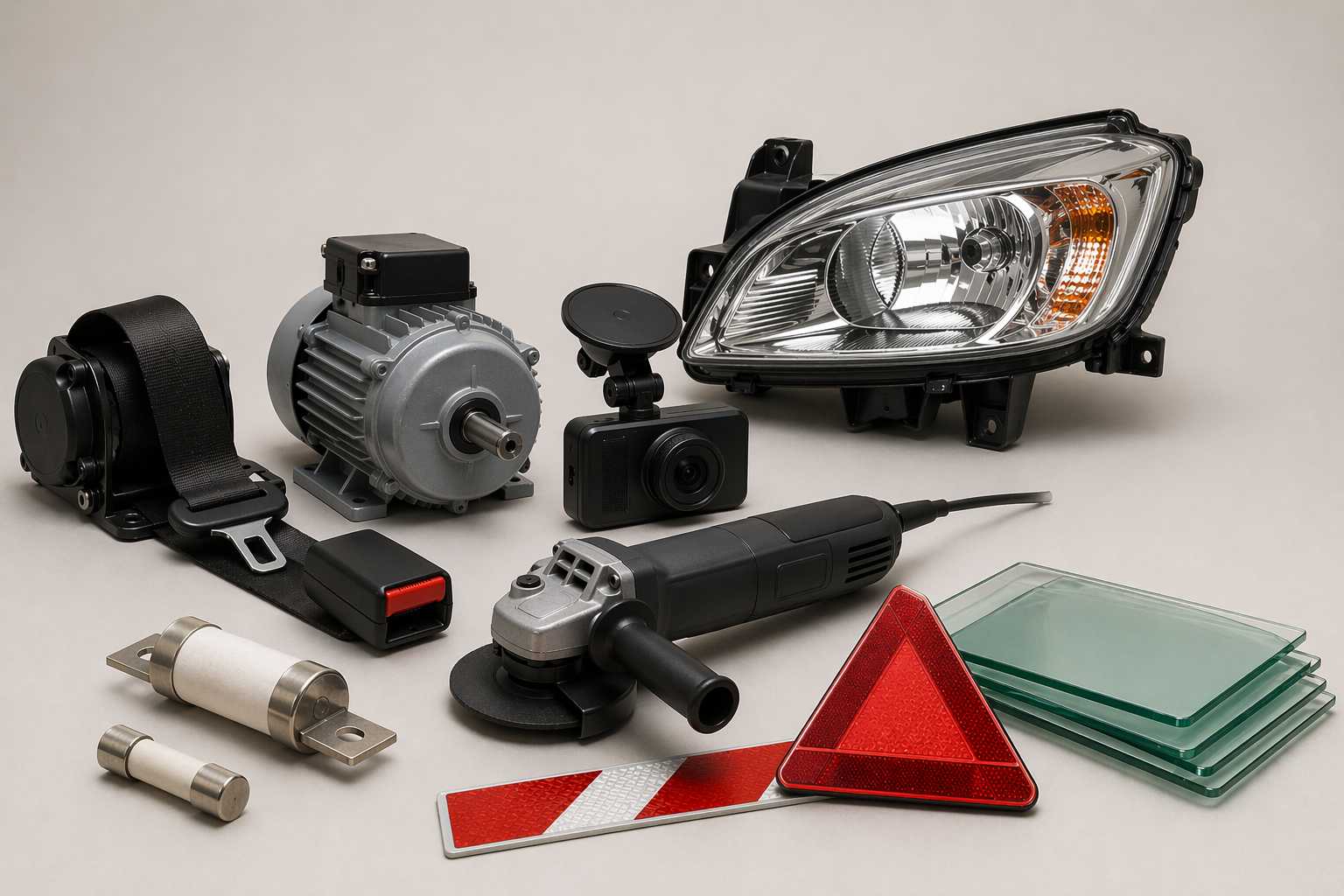
Testing facilities operated by CATARC (CAQC), such as CATARC Automotive Test Center (Tianjin) Co., Ltd., also carry out the product testing required for CCC and voluntary certifications — for example, for complete vehicles, chassis, engines, automotive lighting, electrical systems, drive batteries, and drive motors.
C-NCAP: China’s Own Vehicle Safety Assessment Program
One of the best-known and most widely cited programs of CATARC (CAQC) is the China New Car Assessment Program (C-NCAP), which CATARC introduced in March 2006, modeled on the European Euro NCAP. C-NCAP assesses the safety performance of new vehicles through crash tests, simulated and virtual impact tests, static design evaluation, and active safety system tests, awarding a star rating from zero to five stars.
The protocol has been revised several times since 2006, most recently with the C-NCAP 2024 version, which took effect on July 1, 2024. Among other changes, this revision increased test speeds for frontal and side impact tests and, for the first time, directly incorporated driver monitoring systems and road feature recognition systems into the safety assessment. In addition, CATARC operates C-ICAP (China Intelligent Connected Vehicle Assessment Program) to evaluate intelligent and connected vehicle functions, introduced in December 2022.
A C-NCAP rating is not a legal requirement for market access, but it carries significant weight in vehicle manufacturers’ market communication in China and is regularly compared by international trade media to Euro NCAP and other NCAP programs.
International Structure of CATARC (CAQC) and Relevance for Foreign Manufacturers
CATARC (CAQC) has expanded its international network in recent years. A particularly notable role is played by the China Automotive Standards International Center in Geneva, initiated by CATARC and recognized as China’s first overseas specialized agency in the field of vehicle standardization. This body is intended to promote the international compatibility of Chinese standards and regulations.
For foreign vehicle manufacturers and suppliers seeking to bring vehicles or automotive components to market in China, CATARC or CAQC is relevant in several respects:
- as one of the designated bodies for CCC certification of complete vehicles (via CATARC Huacheng Certification)
- as an operator of extensive testing capacity for active and passive vehicle safety, energy efficiency and emissions, new energy vehicle technologies, and connected vehicle systems
- as the publisher of the C-NCAP safety rating, which is increasingly used internationally as a reference point for the safety performance of vehicles manufactured in and sold on the Chinese market
- as a standardization body with influence over the technical regulations underlying CCC certification
CATARC / CAQC FAQ
For products within the scope of the CCC system — such as complete vehicles — CCC certification is legally required. Through its subsidiary CATARC Huacheng Certification, CATARC / CAQC is one of currently three bodies designated by CNCA for CCC approval of complete vehicles. Whether CATARC or another designated body is responsible in a specific case depends on the vehicle type and application route.
CCC certification is a legally mandated minimum requirement for market access in China. C-NCAP, by contrast, is a voluntary, comparative safety assessment program that assigns vehicles a star rating, serving primarily to inform consumers and provide market transparency. Both procedures are carried out within the CATARC environment but follow different legal logics.
CATARC, CQC, CCAP, and other bodies designated by CNCA have partially overlapping and partially distinct responsibilities in the automotive sector. CATARC stands out for its particularly broad standardization and research activities, its operation of the C-NCAP assessment program, and its comparatively extensive international network of representative offices, including its standardization presence in Geneva.
CNCA (Certification and Accreditation Administration of the People’s Republic of China) is the overarching state certification authority that formally designates and oversees bodies such as CATARC Huacheng Certification for specific areas of CCC certification. CATARC itself carries out the operational certification work under this designation.
MPR China Certification GmbH – Specialist for CCC Certification of Vehicles and Automotive Components in the CATARC / CAQC Environment
MPR China Certification GmbH supports vehicle manufacturers and suppliers in classifying and practically managing Chinese certification procedures that fall within the scope of CATARC (CAQC) and its certification subsidiary, CATARC Huacheng Certification. The focus is on the automotive sector: complete vehicles, chassis, drivetrain systems, and safety-relevant components that must be tested and certified under the CCC system.
As part of the certification support process, MPR China Certification GmbH provides:
- Regulatory analysis to determine the applicable vehicle category (M1, M2, M3, N1, N2, N3, O), the relevant CCC implementation rule, and the designated certification body responsible
- Coordination of the required type testing in accordance with the applicable GB standards
- Review and preparation of technical documentation for the application
- Coordination of factory inspections as part of the CCC procedure
- End-to-end support throughout the certification process, from application preparation through certificate issuance and ongoing maintenance
Through its specialization in the vehicle and automotive components sector, MPR China Certification GmbH has the technical depth to guide manufacturers through the specific regulatory and technical requirements arising from the CATARC / CAQC environment — from correctly identifying the applicable certification procedure to practical coordination with the responsible designated certification body.